

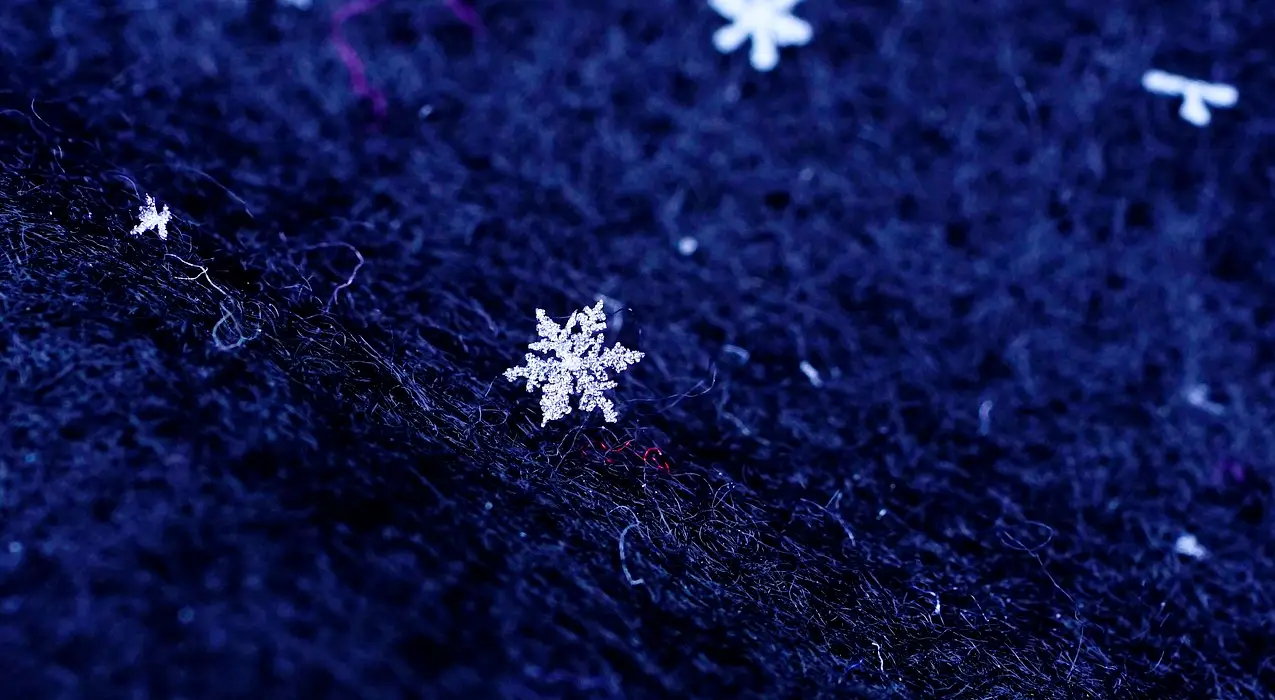
Snowflakes have gotten a bad rap in recent days. The word has become a label for unstable individuals who don’t handle the pressures of life very well. Alas, our sad culture!
Real snowflakes, however, are indeed fragile, but they are anything but flighty and insubstantial like their cultural counterparts.
In fact, snowflakes are miniature ice sculptures in a million varieties. They are one of many expressions of God’s gratuitous artistry in the world. He creates these little masterpieces seemingly just to create them because the vast majority of them will never be examined by the human eye.
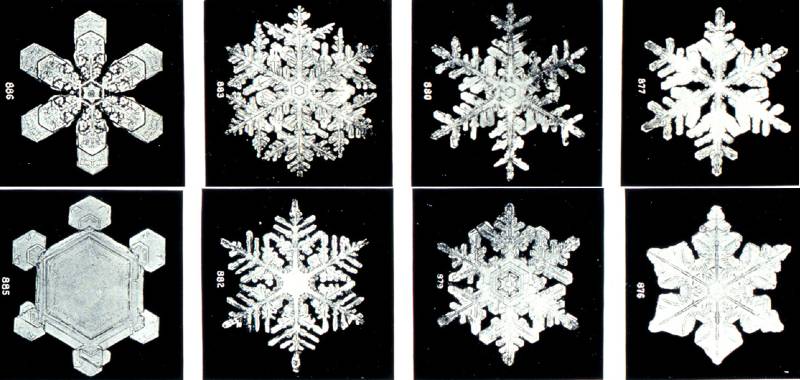
They say that no two snowflakes ever have the same design—but how is that even possible when millions of flakes fall to earth in any given snowstorm? Well, as the Archangel Gabriel has said, “Nothing is impossible for God” (Lk 1:37).
In a previous article I made the point that God “paints with minerals” in crafting the beauty of the earth. I think that snowflakes prove that He also sculpts with minerals, as each tiny flake is a frozen mineral lacework of incredible delicacy and beauty.
The Pioneer
A Vermont farmer named Wilson Bentley was the pioneer in the study of ice crystal formation in the early 1900s. He made it his life’s work to take pictures of snowflakes—wouldn’t that be an interesting hobby? We have him to thank for the theory that no two snowflakes are ever the same.
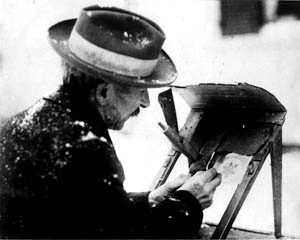 His technique was fascinating. He collected the falling flakes by walking out into the falling snow and holding out a black velvet cloth as the flakes came down. He then picked one flake at a time off the cloth with a toothpick and placed it onto a glass slide and then photographed its crystalline beauty before it melted.
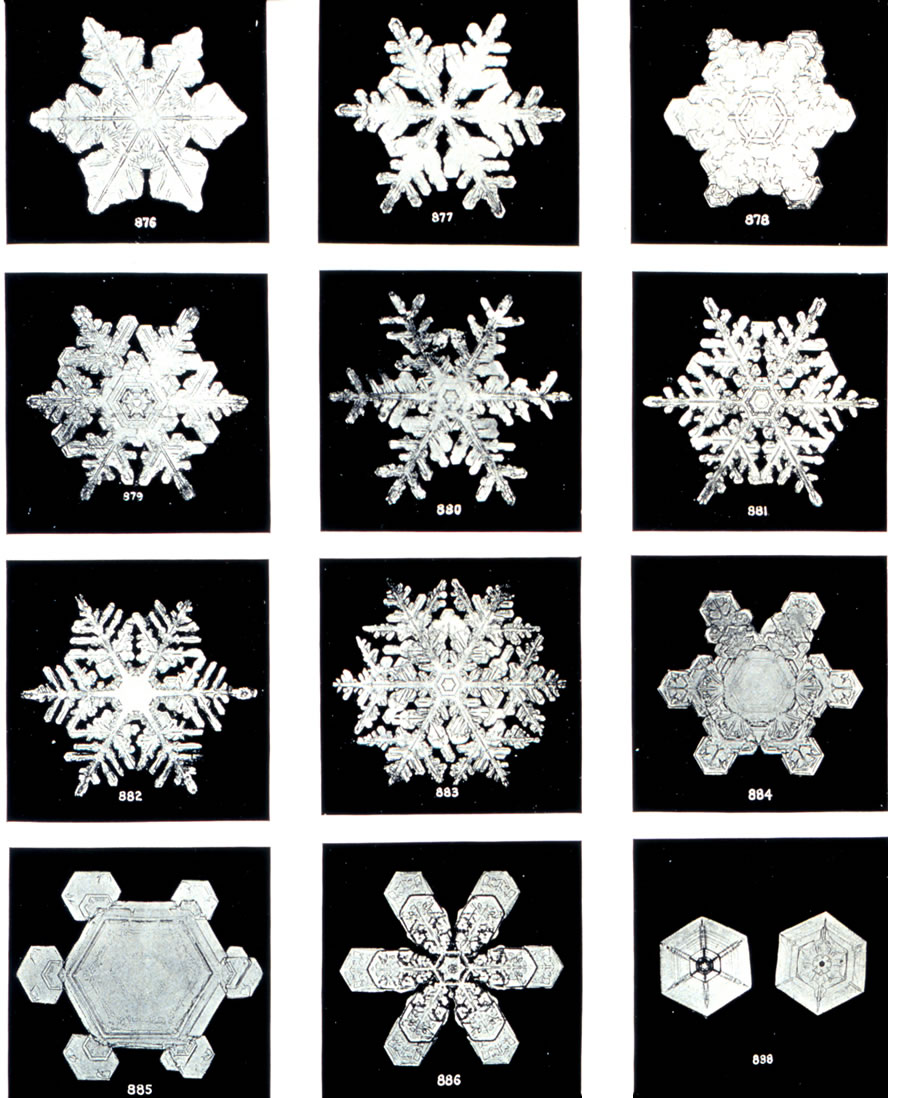
He made some 5000 photographs of snowflakes, every one unique. Amazing!
“Under the microscope,” he wrote in 1925, “I found that snowflakes were miracles of beauty and it seemed a shame that this beauty should not be seen and appreciated by others”.
In the end, Bentley was a victim of his own passion. He got caught in a blizzard one snowy night in 1931 and died from pneumonia shortly afterward. He never lived to see the publication of his book, Snow Crystals, which came out two weeks after his death. But his pioneering work was done, and humanity as a whole is now more knowledgeable about this icy world of wonder thanks to him.
Hexagonal Structure
By observing these little creations, Bentley concluded that every snowflake was actually a six-sided crystalline structure. But he was not entirely accurate in that, as  modern science has found.
Snowflakes can occur in the shapes of tubes, needles, cups, and bullets. The one thing that is consistent in every shape, however, is the hexagonal structure. And there’s a completely logical explanation for that. It’s a matter of chemistry: snowflakes are frozen water.
Water’s molecular structure consists of one oxygen and two hydrogen atoms. And when water molecules change from a liquid to a solid state, they crystallize into a kind of netting of hexagons loosely connected by molecular bonds. As the individual snowflakes form, they retain their hexagonal form.

How Do Snowflakes Form?
The creation of snowflakes is another fascinating bit of chemistry. And here’s where God’s artistic technique is on full display. The combination of water vapor (clouds), freezing temperatures, and dust particles are the conditions that initiate the formation of snowflakes.
- When water vapor latches on to a dust particle at or below the freezing point, the vapor crystalizes around the particle. The crystal in its initial formation resembles a six-sided plate and forms the nucleus of the snowflake, which you can see in the center of any snowflake, large or small.
- The crystalized water clinging to the dust is now denser than the vapor, so the particle begins to fall to earth. At that point, however, other forces begin to operate on it to form the six arms of the crystalline structure that extend out from the center.
- The wind sends the snowflakes into a chaotic dance in the upper atmosphere where variations of temperature, humidity, pressure, and wind add new and unique crystal patterns to the arms.
- The speed of the crystallization is the key element in creating the beautiful patterns of the flake. When water crystallizes slowly (such as ice on earth’s surface) it retains that flat plate-like form so its crystal structure is not outwardly evident.

- When water crystallizes rapidly, however, its crystals take the form of jagged shards or complex patterns that attach to the six sides of ice. In effect, God sculpts these masterpieces as they are flying through the air.
- Remember the delicate Quierolo sculpture that took seven years to carve? God does this a million times in a matter of minutes.
- As it bobs around in the atmosphere, the snowflake gains more mass and variation in its crystal limbs and eventually falls to earth. The infinite variety of factors that affect its formation make each crystal into a unique creation, so it is really true that there are no two snowflakes that are exactly the same.
- It’s almost as if each snowflake has its own “personality” due to the chaotic and oftentimes random factors that form it. (Kind of like humans when you think about it.)
Sleet and Freezing Rain
Even its journey to earth, however, is affected by multiple factors that determine whether it will still be a snowflake by the time it gets there.
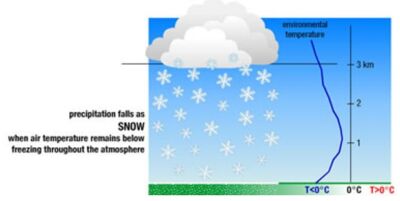 Snowflakes only reach the ground in their beautiful patterns if the temperature from the cloud to the ground remains at or below the freezing point.
If the snowflake, while in the process of formation, falls through a band of hotter air in the atmosphere, its jagged edges melt and turns to sleet as it refreezes in the atmosphere closer to the ground. Ugh!
Likewise, if the band of warmer air is even thicker, the snowflake emerges from its fall as an even slushier substance we generally call freezing rain.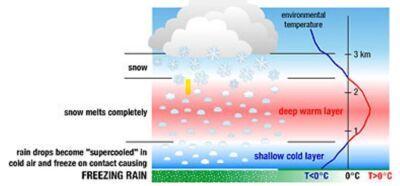
I’ve experienced the real beauty of pristine snowstorms when the flakes are coming down fresh, but the remaining months of living in snow are another story.
As a current resident of Florida, I have to say that I sure miss all that slush, sleet, and freezing rain…Not.
A Natural Miracle
I try not to attribute miracles in the world to God’s intervention when there is a natural explanation for what takes place. In reality, though, Nature itself is kind of a miracle. In so many phenomenal ways around us we see “natural miracles” taking place every day.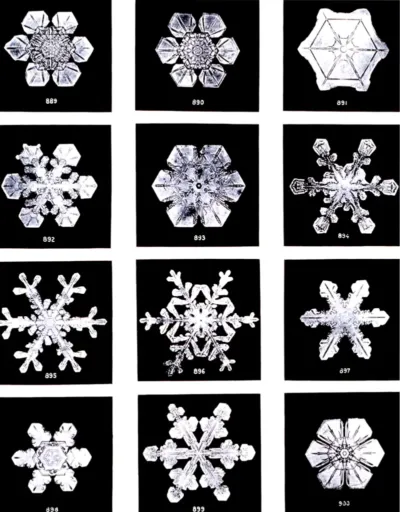
The ultimate Source of those natural phenomena, of course, is the God who creates the natural laws, the chemistry, and the order of the universe, despite its tendency to fall into chaos constantly. The most astounding thing, however, is that these “natural miracles” are also works of art!
Snowflakes are a perfect example of the dynamism of the created and redeemed universe. God could have programmed the natural laws to make these crystals fall to earth like little plates of ice, but He was not content with boring pieces of ice.
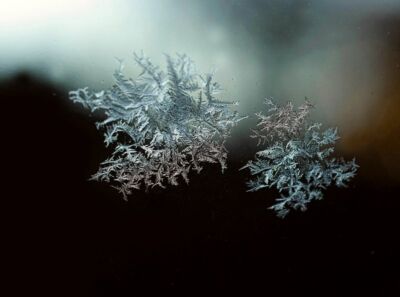 Rather, He made them into little ice sculptures so we could experience radiant beauty in and though nature’s normal winter processes. He even takes little pieces of dirt flying through the atmosphere and turns them into little sparkling diamonds.
Then again, He did create man out of the mud of the earth (Gen 2:7), so He has a track record of turning dirt into something valuable. Pretty amazing.
God’s Grandeur
The Fathers of the Church were not only versed in Scripture but were keen observers of God’s handiwork. They used to say that everything in the Universe, from the largest planet to the tiniest plant, speaks of the glory of God.
They did not have the insights of modern science, or the power of modern observational instruments like telescopes and microscopes, but if they did, they would have said the same thing: this amazing world is a sacred window of His creative and dynamic love, where He takes the homely stuff of the earth and turns it into a glorious display. If only we have eyes to see.
If you’d like to see a marvelous collection of snowflake photos taken with modern microscopes and cameras, please click this link to browse the collection. It will put you right in the mood for a White Christmas.
———-
Photo Credits via Wikimedia: Water Molecule (MsKDinh); Bentley with camera (Historic NWS Collection); Bentley Single Flake; Bentley collection; NOAA snowflakes (via geology.com); NOAA precipitation graphics; other images via Pixabay.
[Note: This article is a reproduction of the Sacred Windows Email Newsletter of 12/14/25. Please visit our Newsletter Archives.]





Leave A Comment