

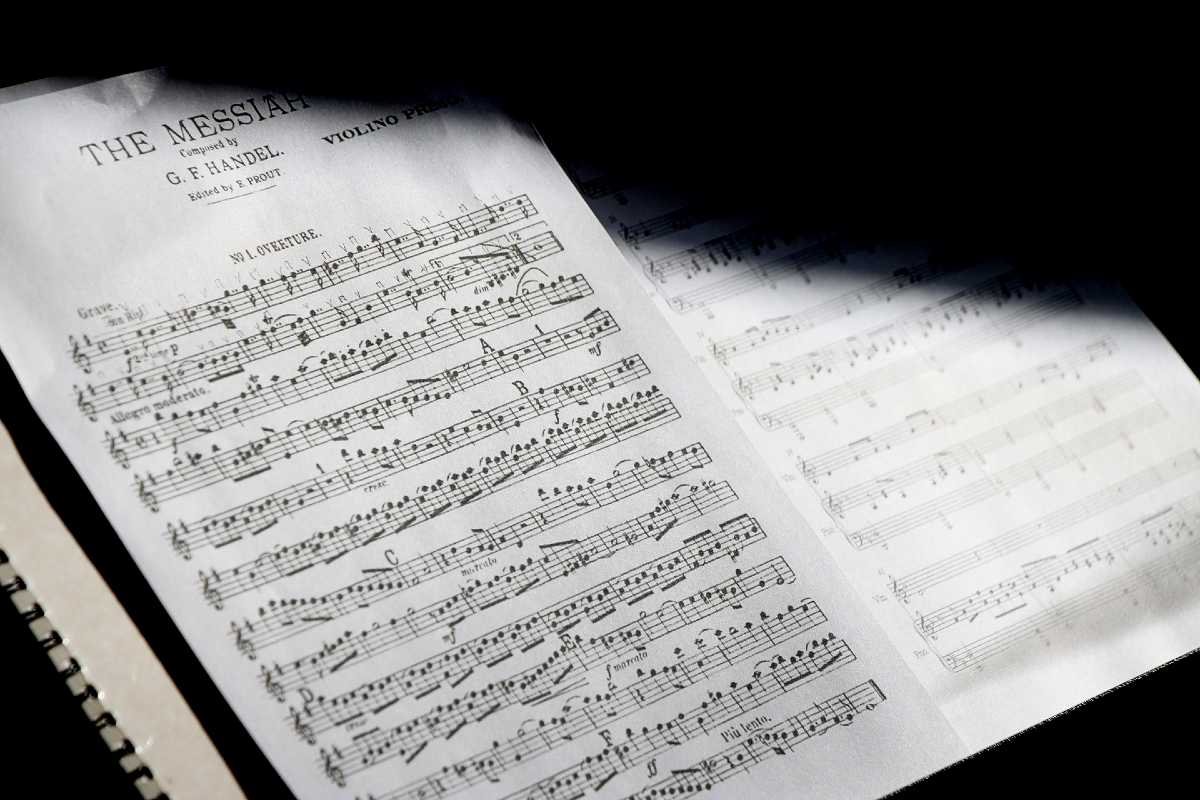
If you were a musician and the celebrated Ludwig von Beethoven called you “the greatest composer who ever lived,” you might take that as a compliment. And indeed it was. Beethoven gave that title to George Frideric Handel (1685-1759) – and it was well-earned.
(Right: Portrait of George Frideric Handel, 1727)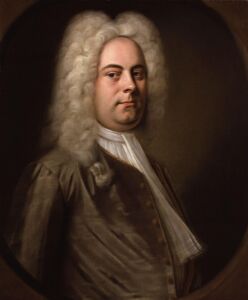
Here is just a small estimate of Handel’s genius. In his lifetime (74 years), he composed
- 42 operas
- 25 oratorios
- 120 cantatas, duets, trios, arias, odes, and sonatas
- 18 major orchestral concerts, and
- 12 organ concertos
making him one of the most prolific composers in history. He kept composing music in the last four years of his life despite having gone completely blind.
A Musical Prodigy
Handel was born in the Duchy of Saxony, in Prussia, which in the 18th century was a confederation of smaller kingdoms before the modern country of Germany was formed.
His father, also named George, was a surgeon who wanted his son to become a lawyer. Fortunately, little George Frideric exhibited extraordinary talent for music at a young age and spent his formative years with the greatest musical tutors Prussia had to offer. He composed his first full opera at the age of 18.
 His fellow Prussian and contemporary, Johann Sebastian Bach, whom Handel never met, was also a genius but was cut from a different mold. Bach lived exclusively on the patronage of the noble classes requiring him to focus his talents on chamber and religious music. Bach wrote mostly for the church organ and the clavichord.
Handel, on the other hand, wrote mostly for the human voice and focused his talents on music for popular consumption, such as operas and arias. After he became famous, he periodically created music for royalty when asked, but that was not his preference. Then again, how does one say no to a king?
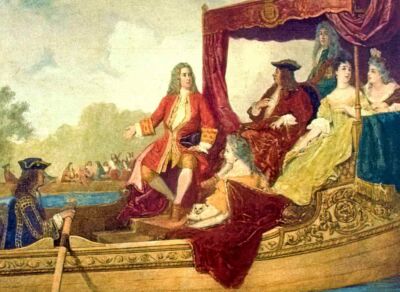
(His famous “Water Music,” for example, was written for an orchestra on a barge to accompany King George I whenever he wanted to float down the Thames River with his retinue.)
The Oratorio
Opera, however, turned out to be a springboard to the form of music in which Handel exhibited his greatest talent, the oratorio – essentially, a religious opera. In modern parlance, we might say that in the oratorio Handel had found his niche.
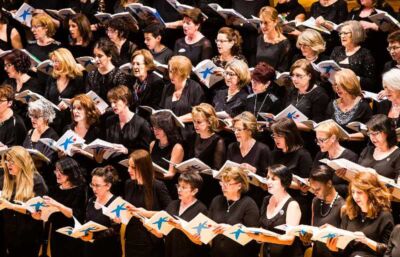 According to Marta López Fernández of the Royal College of Music in London, Handel was an unsurpassed genius in writing for singers. His masterpiece, The Messiah, makes that abundantly clear, as you’ll see in the videos below.
Handel moved to England permanently in 1712 to ply his craft in a culture where he could achieve success in music without being dependent on the patronage of the nobility. Handel was as much an entrepreneur as he was an artist. He became quite wealthy through the clever promotion of his own talent.
He was also known to be very generous to worthy causes both during his life and afterward. Handel never married, so when he died, he left most of his fortune to charity, friends, and family with one relatively small sum provided for his own tomb to be placed in Westminster Abbey, where you can visit his grave to this day.
The Messiah: Genius or Inspiration?
 When he wrote The Messiah, Handel was already a famous composer with a successful opera company. His friend and business partner, Charles Jennens, urged him to write an oratorio about the Lord Jesus Christ based on a collection of scriptural texts Jennens had compiled from the King James Bible. (Portrait: Jennens)
Handel’s last Italian opera was performed in July of 1741 which turned out to be a watershed moment for Handel’s career. He abandoned the secular opera and never went back to it. The following month he took up Jennens’s challenge and set to work on an oratorio about the Savior of humankind.
In fact, the way he did it was utterly amazing. Here’s where we have to ask whether the composition of The Messiah was simply a matter of sheer genius or a work of divine inspiration.
For the next three weeks (twenty-four days to be exact) Handel locked himself in his London home and composed the entire 53-movement oratorio in an atomic burst of creative energy that produced one of the world’s most beloved and memorable pieces of music.
The entire handwritten manuscript runs to 259 pages – and every word of it is scripture. Wow!
Inspiration and Hard Work
Imagine sequestering yourself in your home for twenty-four solid days doing nothing but eating, sleeping, and composing music in the heat of a London summer. The question remains: was Handel’s three-week immersion just an extraordinary feat of human talent, or was he literally taken over by some holy, inspired spirit that gave him the creative insight to produce such a masterpiece?
My best guess is that it was both.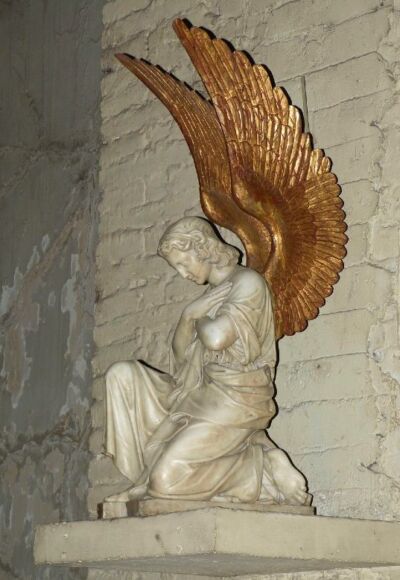
On the natural talent side, Handel was known to have been an immersion artist, expressing a similar intensity of creative focus in composing a number of other works too, though none quite as rapid and perfect as the Messiah.
But, given the subject matter, the influence of the divine Word as his text, and his own deep faith, it is not hard to imagine some bright angel leaning over his shoulder humming tunes into his ear.
Handel was born a Lutheran but was also a sincere Christian whose motivation was exactly as he wrote at the top of the final page of the composition: Soli Deo Gloria, “To God alone be the glory.”
Like a hand in a glove, inspirations from heaven can work through the human actor to produce extraordinary beauty for the glory of God and the edification of man. The music is, of course, nothing short of a masterpiece and easily the greatest expression of the oratorio genre.
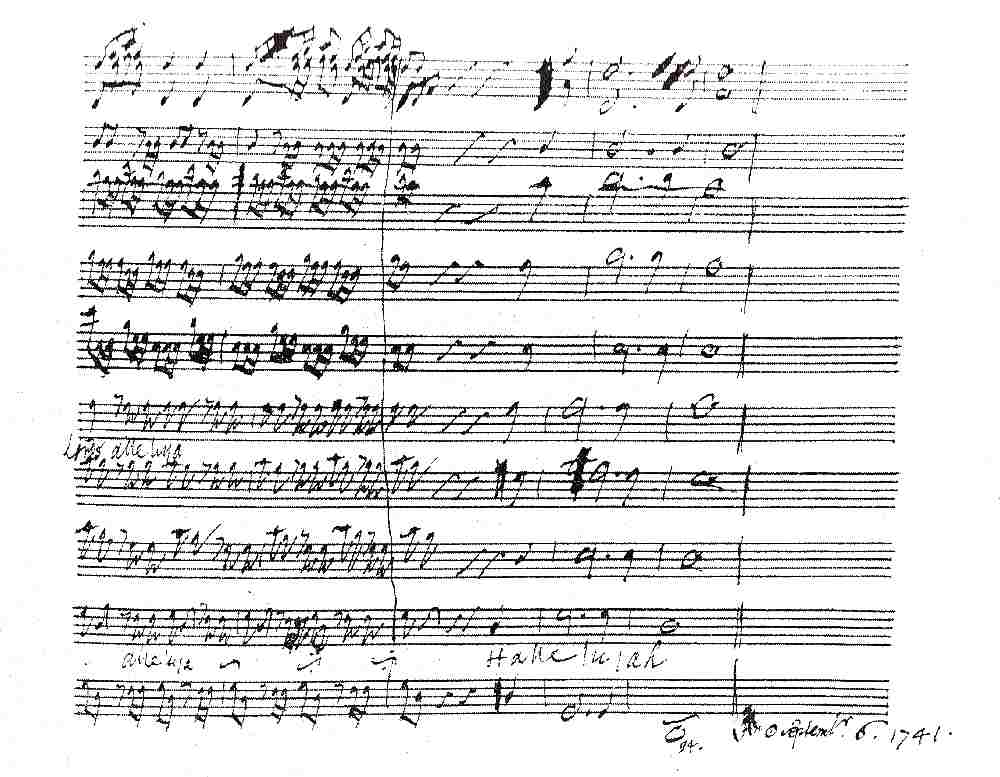
Here is an image of the last few measures of the “Hallelujah Chorus” that shows a man writing notes at a feverish pitch, hearing the music in his mind, and probably ending exhausted after he wrote the last note! It is a glimpse into the extraordinary personality of a musical genius.
The Reception
The New Music Hall in Dublin, Ireland hosted the very first performance of Handel’s Messiah the next Easter, April 13th, 1742, and it was an instant success with the Catholic Irish. It took longer to be accepted in Protestant England for some reason, but eventually it did catch on, and soon the oratorio’s fame spread across the globe.
It is not commonly known that Handel didn’t take a single penny of profit from the first performance but donated the proceeds to three hospitals and a debtor’s prison where he secured the release of 142 men who went back to their families to lead productive lives again.
Ironically, Handel intended the oratorio to be performed at Easter (and its debut in Dublin was on Easter Sunday of 1742), but The Messiah has become a standard of the Christmas season in every English-speaking country around the world. That is probably owing to the First Part, which is dedicated to the prophecy and birth of the Lord Jesus.
 There is a famous story that King George II attended an early performance of The Messiah and stood up when he heard the glorious “Hallelujah Chorus” (initiating the tradition of standing that endures to this day). That account is most likely a legend to explain the surge of enthusiasm that audiences naturally feel whenever the climactic movement of the oratorio is performed.
Mozart himself later commented on Handel’s style, saying that “When he chooses, he strikes like a thunderbolt.” It’s true: if you’re in the audience when Handel’s “Hallelujah Chorus” strikes, you simply have to stand!
Four Movements
At the risk of overwhelming you with beauty this Easter, I’ve included four out of the 53 movements of this great oratorio to illustrate Handel’s talent and to fill your heart with joy on this most joyous day of our liturgical year.
It should become obvious by watching even a few moments of these clips that not just anyone can sing them. Handel was writing for professionals, and his performance standards were extremely high. Yet, the performers make these difficult pieces look simply effortless.
Even a couple minutes of each will refresh your spirit today, but if you are pressed for time, you should at least listen to the incomparable “Hallelujah Chorus.” And when it starts, don’t be surprised if you find yourself standing up in Easter joy!
For Unto Us A Child Is Born (duration, 4:23)
“For unto us a child is born, unto us a Son is given: and the government shall be upon His shoulder: and His name shall be called Wonderful, Counsellor, The Mighty God, The Everlasting Father, The Prince of Peace.” (Isaiah 9:6)
Rejoice Greatly O daughter of Zion (duration, 4:26)
“Rejoice greatly, O daughter of Zion! Shout, O daughter of Jerusalem! Behold, thy King cometh unto thee! He is the righteous Saviour, and He shall speak peace unto the heathen.” (Zechariah 9:9-10)
The Hallelujah Chorus (duration, 3:47)
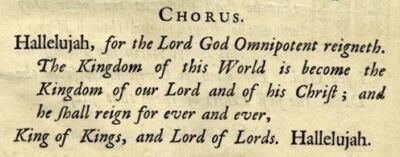
“Hallelujah: for the Lord God omnipotent reigneth. The kingdom of this world is become the kingdom of our Lord, and of his Christ; and he shall reign for ever and ever. King of Kings, and Lord of Lords. Hallelujah!” (Revelation 11:15; 19:6,11)
The Trumpet Shall Sound (duration, 9:03)
The trumpet shall sound, and the dead shall be rais’d incorruptible, and we shall be chang’d / For this corruptible must put on incorruption, and this mortal must put on immortality.” (1 Corinthians 15:51-53)
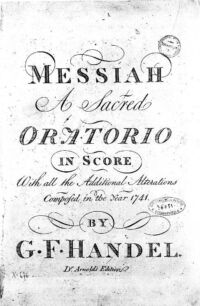
Photo Credits: Handel Portrait (Attributed to Balthasar Denner); Water Music (Edouard Hamman); Scripture quote (printed); Messiah Program Cover (Bibliothèque nationale de France); Singers (Magaraba); Angel (falco); other images from Pixabay.
———-
[Note: This article is a reproduction of the Sacred Windows Email Newsletter of 4/5/26. Please visit our Newsletter Archives.]



.jpg)

Leave A Comment