

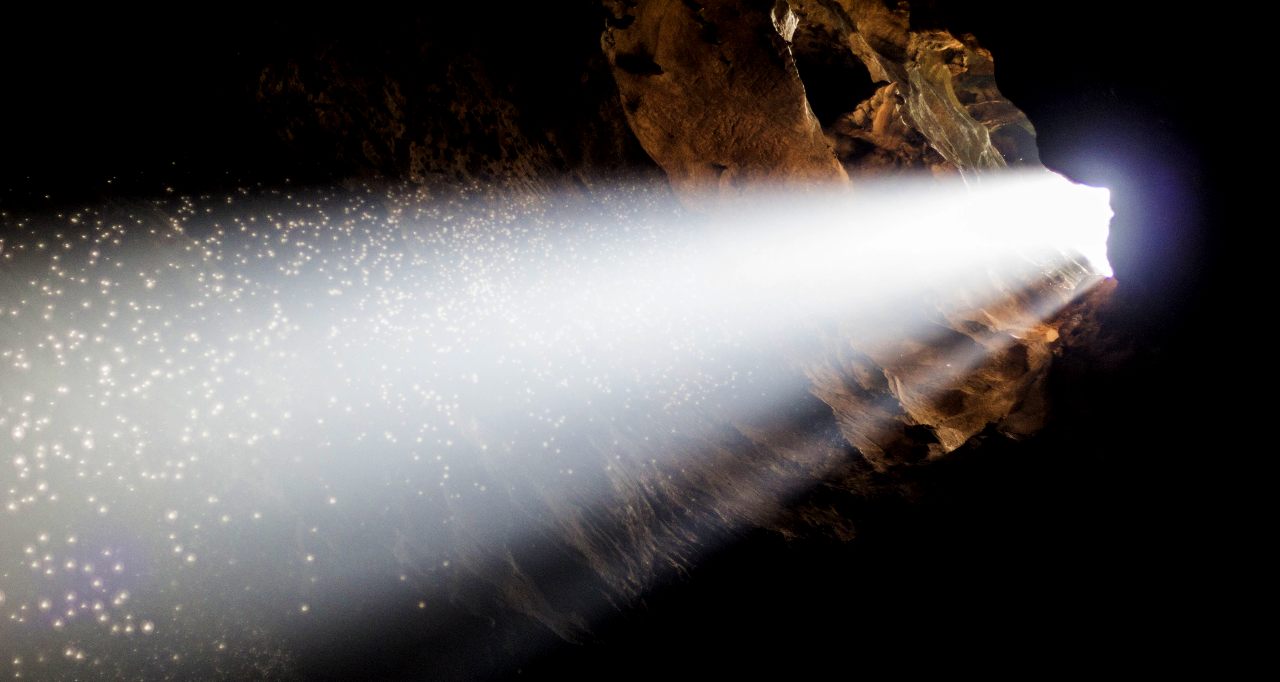
If you’re prone to seeing symbolism in nature as a reflection of eternal things, you might need to pause to reflect a bit when you see images of the deepest cave in the world. Its symbolism is not immediately apparent.
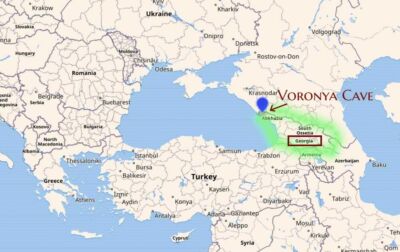 It’s called the Voronya Cave, and it’s in Georgia. As a resident of Florida, I was already gearing up to make a road trip to see this amazing cave in my neighboring state until I realized that this Georgia is on the other side of the world…not the US state. Darn.
Anyway, Voronya Cave is nestled deep within the Caucasus mountains and was hidden so well that it was only discovered in the early 1900s. It is one of three deep caves in the same mountain system, and they are considered to be the three deepest caves in the world.
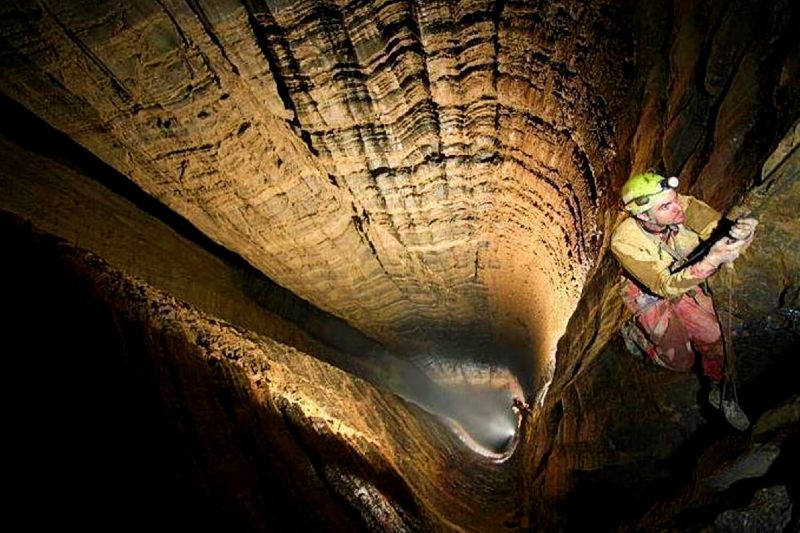
In Russian, “voronya” means “crow,” and the cave was so named for the inhabitants of the upper parts of the tunnel. Here’s an impressive two hundred feet of it. Whoa!
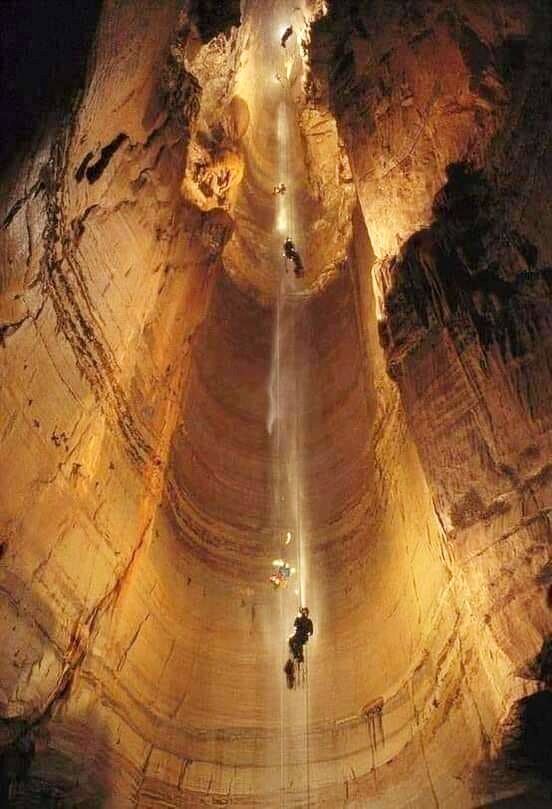
Viewing it as a religious symbol, Voronya’s deep cave imagery can be interpreted in two ways:
- As an image of what Scripture calls the Great Abyss (otherwise referred to as Hades, Tartarus, Gehenna, or Hell), which our Church understands as the abode of demons, literally (see Lk 8:31; Rom 10:7; 2 Pt 2:4; Rev 9:1-3; 11:7; 20:1-3); OR
- As an image of the place called Sheol, which was not the place of the damned as such but was understood by the early Church as the “holding” place for those who awaited the coming of Christ.
(Rather than delve into details here, I have written a little about this mysterious place in a previous article, which you might find interesting: “When Were the Gates of Heaven Opened?”)
Adam and Eve Were There
Both of these images remind us of the time when Christ went down into a very dark, abysmal place after His death to vanquish the devil in his own dwelling. It is said that on the “third day” Jesus then blasted out of it into the glory of His Resurrection with the souls of Adam and Eve under each arm.
Okay, I’m exaggerating a bit on the way He hauled our first parents out of the lower regions, but my image captures the core of the ancient tradition. It describes Christ’s Descent Among the Dead as essentially a rescue operation. It’s based on St. Peter’s first letter (1 Pt 3:19) that says Our Lord Jesus descended into the abode of the dead “to preach to the spirits in prison” and thus to redeem the first sinners of the human race.
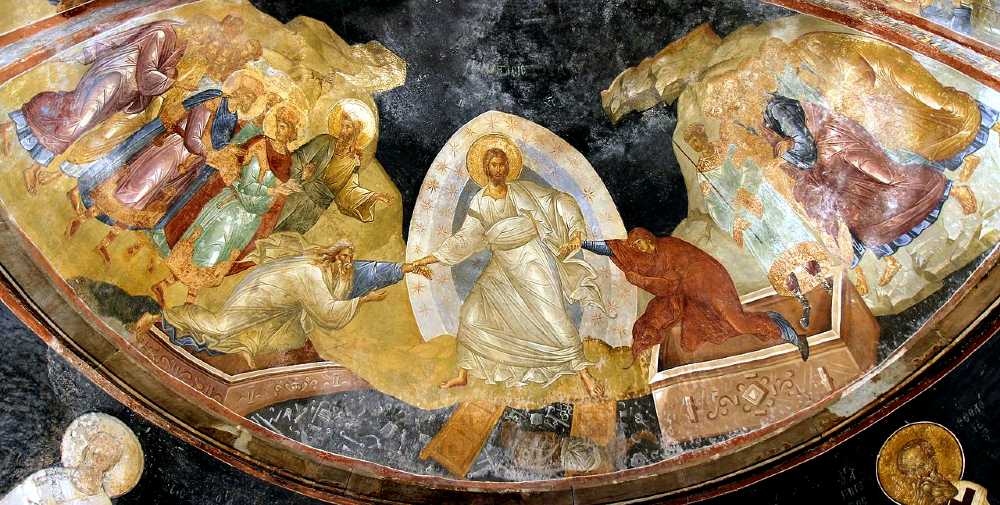
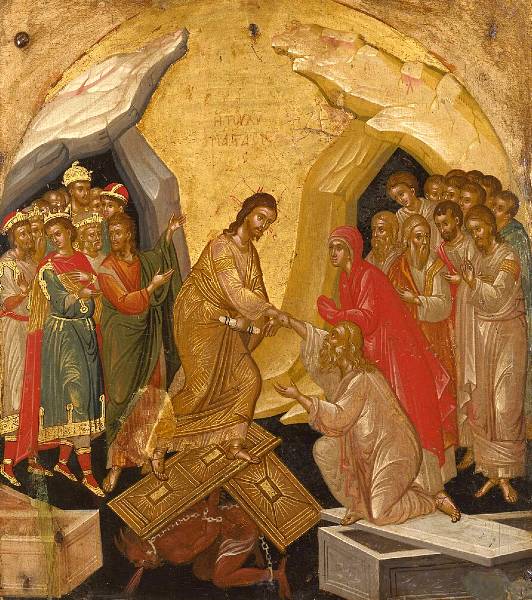
One of the most famous images of the “Harrowing of Hell” is this fresco in the 5th century Chora Church in Istanbul, Turkey. Notice that Jesus is standing on the broken gates of Hell and pulling Adam and Eve out of their graves.
So, the deepest cave in the world can either be a terrifying symbol of despair (because of the demons/prison symbolism) or it can be a metaphor of everlasting hope (because of Christ’s conquering victory). I’m going to go with hope because the alternative is too frightening to contemplate. As it should be.
Remember the familiar story about Jesus driving the “Legion” demons into the herd of swine (Lk 8:26-39)? Well, the evil spirits actually begged Him not to send them back into the Abyss. And if they don’t want to go there, neither do I.
Voronya Cave
As to the cave, it is truly one of the natural wonders of the world. In the early 1900s they thought it was less than 1000 feet deep. Then, by the 1960s they realized it was deeper, but they didn’t know just how deep it was. By 2010, however, researchers confirmed a depth of five times the original estimate, at 5600 feet!
But even then, they were not done. An intrepid Ukrainian spelunker (cave diver) named Gennady Samokhin reached the definitive bottom of the cave in 2012 and determined that Voronya was indeed, absolutely, positively, undoubtedly the deepest cave in the world, reaching to a depth of 7,215 feet.
That includes several hundred feet of freezing water filling the bottommost portion of the tunnel, into which he dove with scuba gear to get his final reading. Amazing! For perspective, recall that one mile = 5,280 feet. This cave is nearly 2000 feet deeper than a mile! They call it the “Mt. Everest of Caves.”
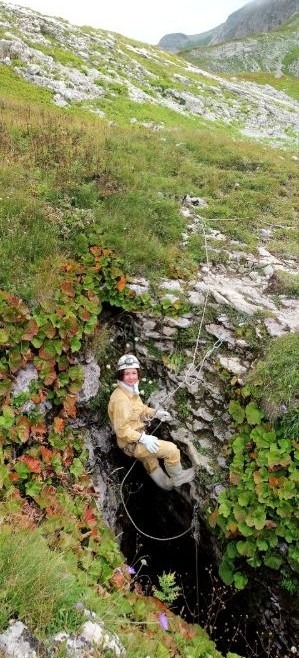
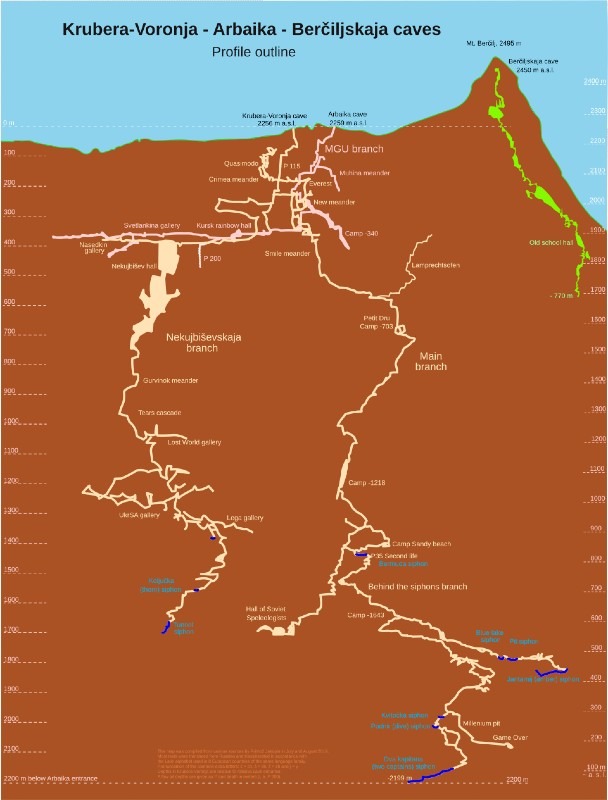
But we would not see it correctly if we just saw its depth. Voronya is essentially a system of tunnels with tributaries branching off the main tunnel in numerous places along the route. There are six separate entrances to the Cave (only two are shown on the map above), all of which are thin crevices in the surface as you can see in the picture. The entire tunnel system consists of over 43,000 feet of tunnels (8+ miles).
Metaphor of a Metaphor
We must first understand that Christ’s Descent Among the Dead was a very real journey for Him. Our Lord didn’t go into the Realm of Death with a team as human adventurers would do. The truth is that no one else made that journey with Him because no one could have made that journey.
The early Church historian, Eusebius of Caesarea (~300 AD), offers a remarkable insight into how even the holy angels were afraid to accompany their Lord into that place:
The bitterest of the sufferings heaped upon [Jesus], was that not one of the angels who were propitious and eager to be of aid, or any of the Divine powers, dared set foot in the domain of death or work with Him to relieve the souls present there. He alone could actually go on without fear, since it was only for Him that the gates of death had opened, and the prison guards of death were terrified at seeing Him advance alone. [cf. Danielou, The Angels and Their Mission (Ave Maria Press, 1957), 30.]
Perhaps Eusebius was given a grace to know something like this, but it seems truly astounding. Our Lord went alone into the stronghold of Satan because only the God-Man could break down the gates of death.
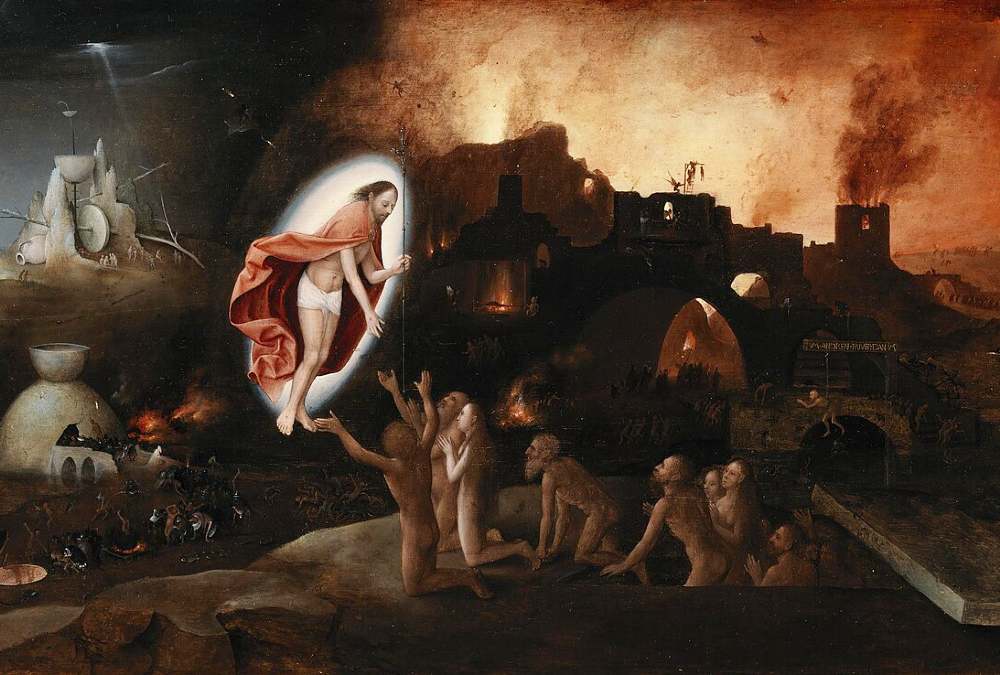
Indeed, most of the traditional depictions of the Descent (both in the East and the West), show Christ alone when He rescues our first parents. (Left: Greek icon; Right: European Renaissance painting.)
A Dangerous Journey
If we take into account some of the challenges that divers face when they go down into Voronya, we may get a sense of the reality of the dangers of a journey to the bottom of an abyss.
Climbers (who are really descenders for the first half at least) have to do a kind of reverse mountain climb using all the same equipment as mountaineers with all the same perils, yet their orientation is downward rather than upward. That’s just for starters. Consider some of the other challenges cave divers must face:
- The journey to the bottom of Voronya and back takes eight days. There are several “camps” along the way so the climbers can sleep.
- 99% of their journey is in total darkness through solid rock, which cuts them off from all light, all electronic signals, and all contact with the surface: at times they get disoriented and run the risk of making basic climbing mistakes.
- Most of the surfaces of the cave are wet and sharp, so they risk slipping and falling as well as shredded ropes and broken equipment when they slip.
- They climb in near-freezing temperatures (it’s a chilly 37° F in Voronya most of the way) and can only wash with freezing water at certain points in the descent.
- Some crevices are so tight they have to turn sideways to squeeze through them.
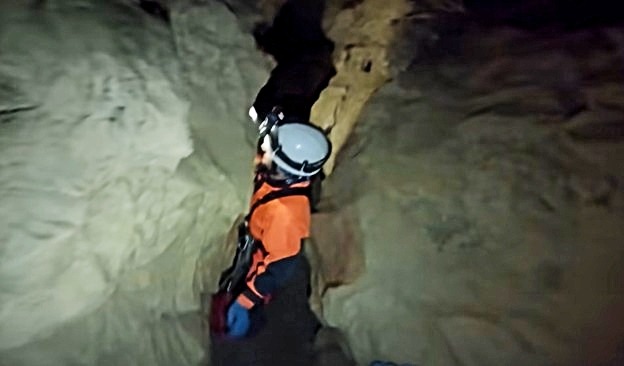
- They regularly have to dodge rockfalls and vertical flashfloods from rainwater rushing down from the surface. Some of the tunnels periodically go horizontal and get entirely filled with water, with no air pockets, so they have to swim through them to make progress.
- The climbers periodically encounter weird, slimy creatures of the darkness that have turned transparent and eye-less due to the lack of light.
Most importantly, (at least for the pioneers) the danger of getting lost in a tangent tunnel is incalculable. Can you imagine a risky journey of this type?
The Guide
One video I watched captured the harrowing journey of a group of cave divers descending to the bottom of Voronya, and they were smart about it. They went down there guided by Gennady Samokhin himself, who had been the first to discover the full depth of the tunnel in 2012.
And that is the essential lesson of the cave, is it not? Life leads all of us at one time or another into deep, dark abysses of despair and suffering. Unfortunately, they are unavoidable parts of life.
But, if we’re smart about it, we’ll make the journey into an abyss with Someone who has been to the bottom already—and knows the way out.
—
Photo Credits: Cave images via Flickr. Squeeze passage (video screenshot); Harrowing of Hell (Till Niermann, Markos Bathas, Follower of Hieronymus Bosch); Tunnel Map Outline (PJakopin); Veronya Cave Opening (PJakopin); Map (Google Maps).
[Note: This article is a reproduction of the Sacred Windows Email Newsletter of 4/19/26. Please visit our Newsletter Archives.]


.jpg)
.jpg)


Leave A Comment