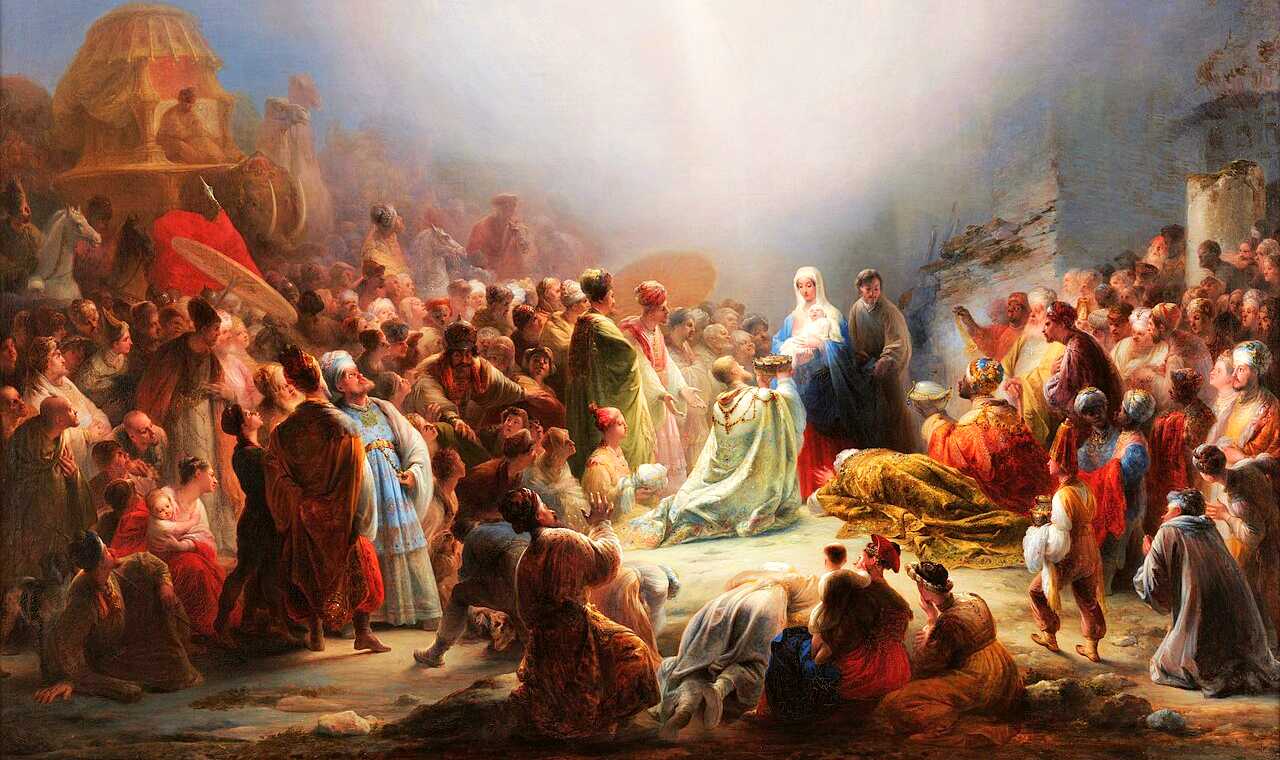
“The kings of Tarshish and the islands shall offer presents; the kings of the Arabians and of Saba shall bring him gifts: and all the kings of the earth shall adore him.”
Psalm 72:10-11
Each new year when Epiphany arrives (last week’s feast), I am enamored of the many fabulous images I see of the Three Kings bowing down in worship of Jesus, the Infant King, to whom they gave gifts befitting His identity: incense for God, gold for a king, and myrrh, the anointing oil for a prophet.
 Of course, we don’t know if the Magi were actually kings, astrologers, diviners, or just wise and holy men—the Tradition has given them all those titles—but we do know that they sought Him out at the guidance of a star and adored Him when they found Him.
The Unknown Sages
Other than their traveling “from the east”, very little else is known about them. For example, we presume there were only three Magi because we infer it by the number of gifts, but there could have been more.
Artistic representations show them arriving in great caravans with camels and servants, etc. That is all the wonderful artistic and devotional embellishment of Tradition that often “fills in the gaps” of our scriptural knowledge.
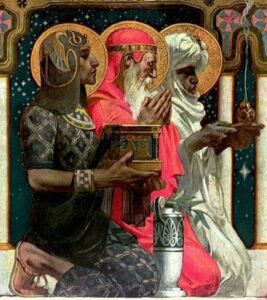 Tradition, not Scripture, supplies us with their names: Caspar, Melchior, and Balthazar. The legends that accompany these men are varied, but a general consensus claims that
- Melchior (the oldest of the three) was the king of Persia (present day Iran but standing symbolically for the Near East) and brought the gift of gold; his name is a form of the Hebrew word for “king” (melek);
- Caspar was a king from India (a general term for the pagan nations of the Far East) who brought frankincense; his name traditionally means “bringer of gifts”; and
- Balthazar was a king from Arabia, i.e., Africa, who brought myrrh and is usually depicted as dark-skinned, although that is a later artistic development.
These men are, in a metaphorical way, the fulfillment of the prophetic Psalm 72 at the beginning of this article: the kings of Tarshish, Arabia, and Saba—symbolically all the gentile nations of the world. As the psalm notes, they came bringing gifts and adoring the Messianic king.
Magnificent Art
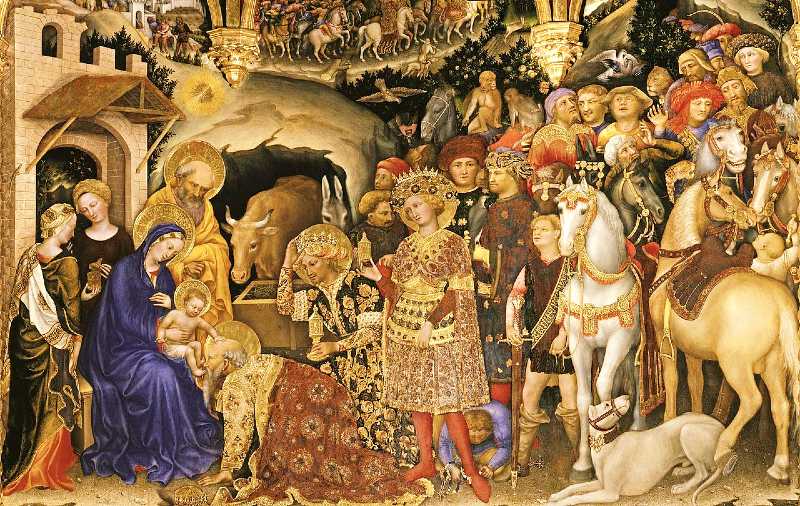
I particularly love those images from the Medieval and Renaissance eras which depict the Magi bowing down before the Baby and kissing His little feet as shown in my favorite image of the Magi by Gentile da Fabriano (1423 AD). Don’t you love the Baby Jesus placing His little hand on Melchior’s bald head?!
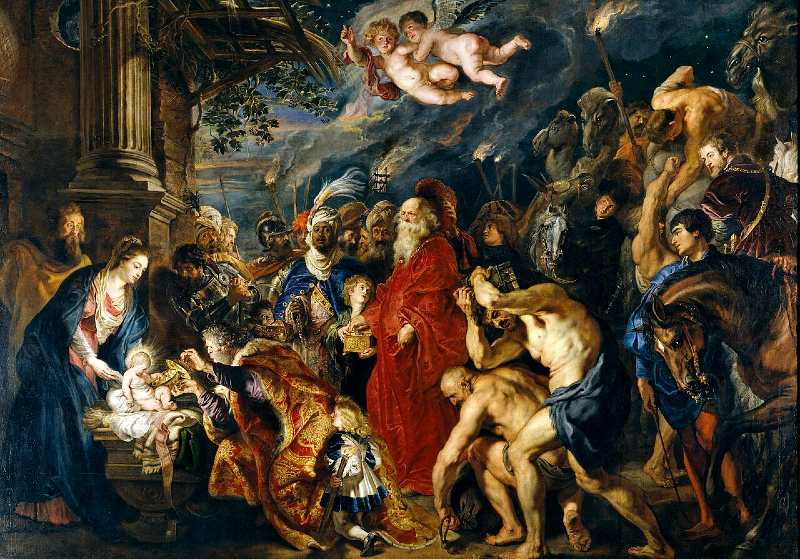
Peter Paul Reubens (1629) has one of the most lovely and expressive scenes of the visit. In the image below, the Baby Jesus seems to be curiously sifting through the vessel of myrrh or incense, as a child would do. There is a half-clad man to the right of the red-cloaked Magi who looks like he is hefting a heavy chest of gold coins on his back. The horse at the far right even appears to be bowing down in worship.
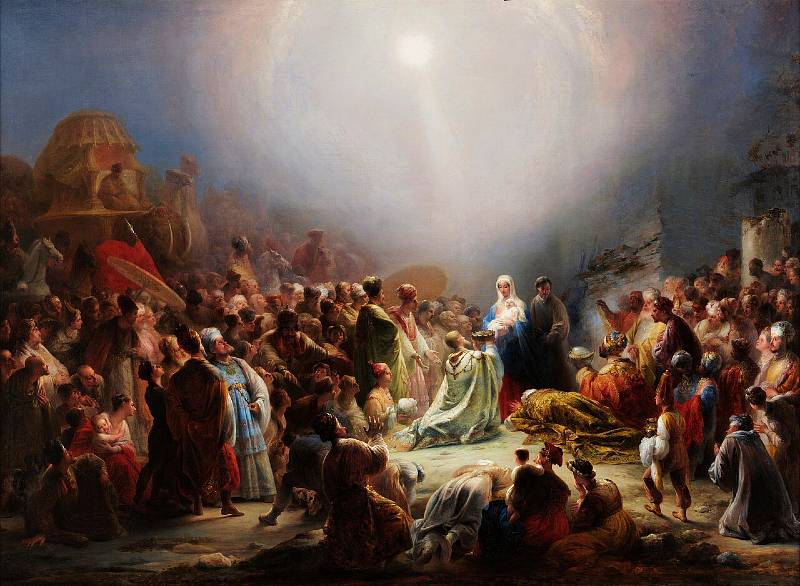
And this image by Portuguese artist, Domingos Sequeira (1768-1837) is nothing short of breathtaking (notice the prostrated Magus to the right of center, in the brown robe):
Such wonderful depictions of the Magi fill our Christmas Nativity sets with delicious beauty and wonder, don‘t they?!
They “Fell Down” Before Him
Despite the general lack of information about these men, one thing is clear from the biblical account. It says that the Magi “prostrated themselves and did him homage” (Mt 2:11) when they saw Him.
Wow, think of that. Kings falling down before a Baby…in worship. I’m sure nothing like that ever happened before (or since) in all of human history.
But how do we know that this phrase meant “worship” as such? Well, two chapters later in the same Gospel, Matthew recounts the temptation of Jesus in the desert, and on the lips of the Evil One we find the same Greek term, which is even more explicit:
“All these I shall give to you, if you will prostrate yourself and worship me” (Mt 4:9).
The statement drips with wickedness. Satan was lucky the Three Kings weren’t around just then. But Jesus’ rebuke was even more forceful than a punch in the nose from the Magi. Jesus quoted scripture:
“The Lord, your God, shall you worship, and him alone shall you serve.” (Mt 4:10, citing Dt 6:13).
 Worship is the innate response of the human heart to God. It is inborn. It doesn’t need to be taught, though it certainly needs to be cultivated in every day and age, which is why we need formal religion in our lives.
The man who claims he is “spiritual but not religious” is deluded. The devil is also spiritual but certainly not religious. He worships himself! and happily draws all those self-styled “spiritual persons” into his deceptive form of false worship.
A Most Beloved Worship Tradition
The Magi, on the other hand, represent a worship tradition that goes straight to the heart of God. It has an immense beauty and transformative power over the human soul: Eucharistic Adoration. The Church documents often refer to it as “Worship of the Eucharist Outside of Mass” to emphasize that this devotion is as an extension of our liturgical worship.
The practice of Eucharistic Adoration, in effect, grew out of the Church’s age-old sense of devotion to her Eucharistic Lord. It’s as if the Church has placed a brilliant spotlight on the only sacrament we call the “Blessed Sacrament” in order to highlight the fact that it is not just a means of grace for us, as are all the sacraments.
It is, in fact, the SOURCE of all grace.
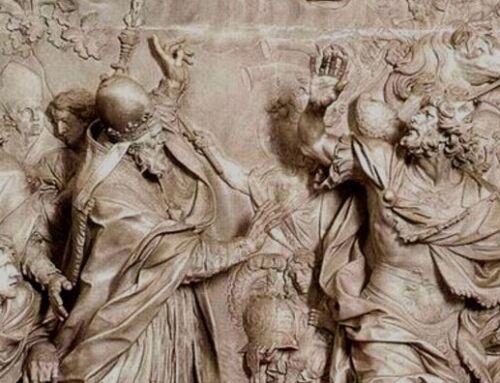
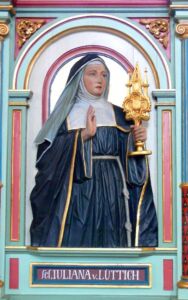 In the 13th century, a Belgian nun, St. Juliana of Liège (1192-1258), received a mystical vision of a moon with a dark spot in it. Jesus told her that one important feast was missing from the Church’s calendar just like the moon was unable to give off its full glow in the vision. St. Juliana spent the rest of her life promoting the worship of the Body and Blood of Jesus in the Eucharist.
The feast of Corpus Christi was established in 1264 to formalize the devotion that had grown in the heart of the Church for centuries. Eucharistic Adoration is the Magi-like practice of meeting the Lord very personally, face-to-face as it were, bowing down in our bodies and souls before Him, and in a metaphorical sense, kissing His little feet.
Overflowing Devotions
You might be familiar with the practice of genuflecting on both knees to adore the Presence of the Lord in the Eucharist. It’s the only occasion in the Church’s devotional life where we go down on both knees before we enter the pew to pray. It’s the equivalent of “falling down before Him”—like the Magi.
Today, more than 7 centuries after the establishment of the feast, we have a host of practices for this highly personal devotion to the Person of Jesus in the Eucharist:
- Processions (usually on the feast of Corpus Christi)
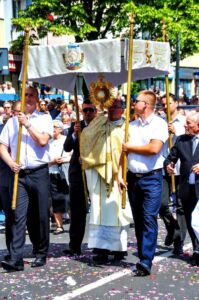
- Making “holy hours” before tabernacles in churches
- Special chapels set aside for the exclusive purpose of adoration
- The special vocations of certain contemplative religious orders
- Benediction services with a formalized ritual for groups
- The practice of “40 Hours Devotion” with exposition of the Blessed Sacrament
- Eucharistic Congresses and conferences (as the Catholic Church in America celebrated in 2024)
It stands to reason that the Sacrament which brings the fullness of grace and life to the faithful would have such a diversity of expressions in the life of the Church.
Incidentally, if you have ever participated in a Benediction service or a procession (as in the picture above), you might wonder why the priest puts a covering over his shoulders as he holds up the monstrance to bless the people. Here is how I explained it in my book Praying with Fire:
[The priest] wears a sort of veil around his shoulders called a humeral veil (from the Latin, humerus, meaning “shoulders”) which also flows down and covers his hands as he holds the vessel. Because he puts the veil between his hands and the metal of the monstrance, he does not actually touch the vessel, which indicates that it is not he, the priest, who is offering the blessing but rather Jesus Himself in the Eucharist who blesses the worshippers at that moment!
The Monstrance
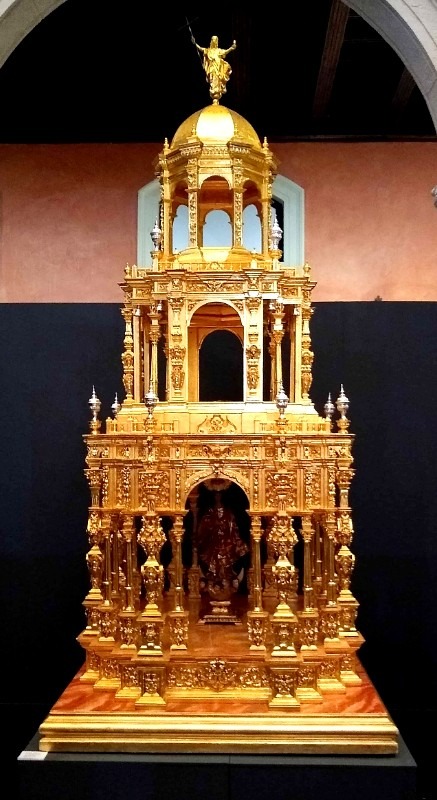
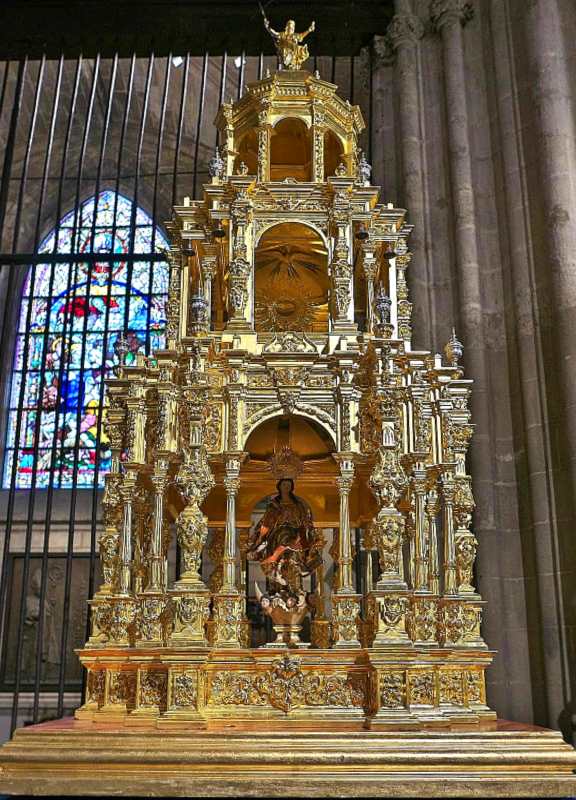
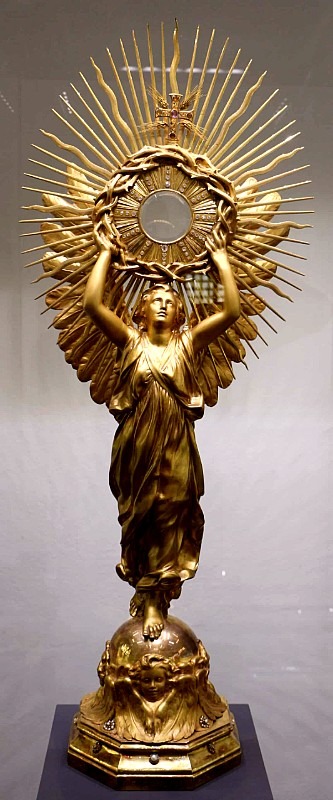
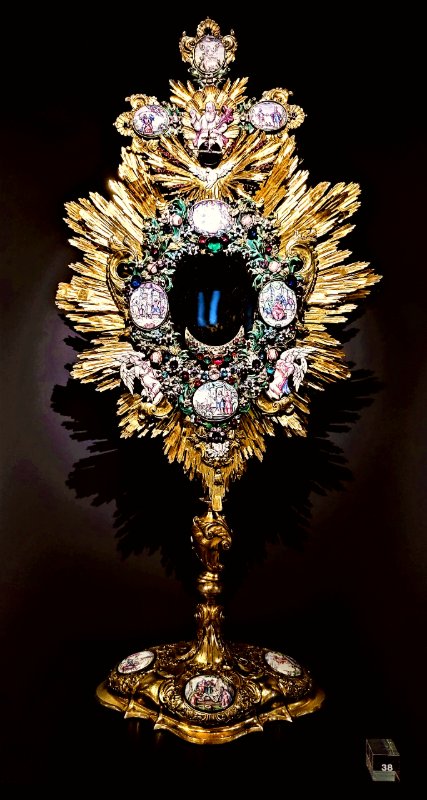
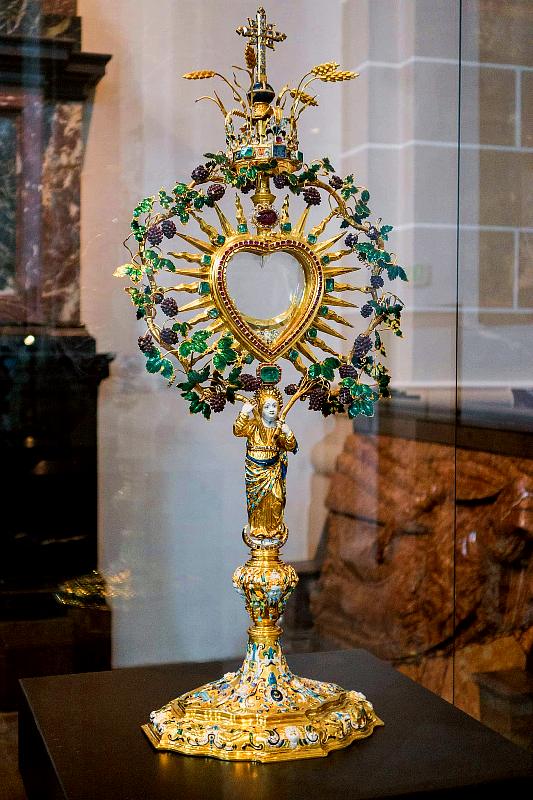
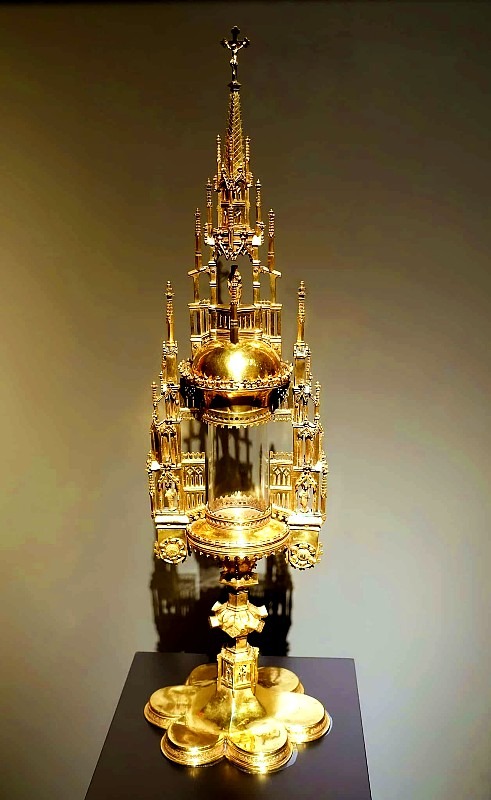
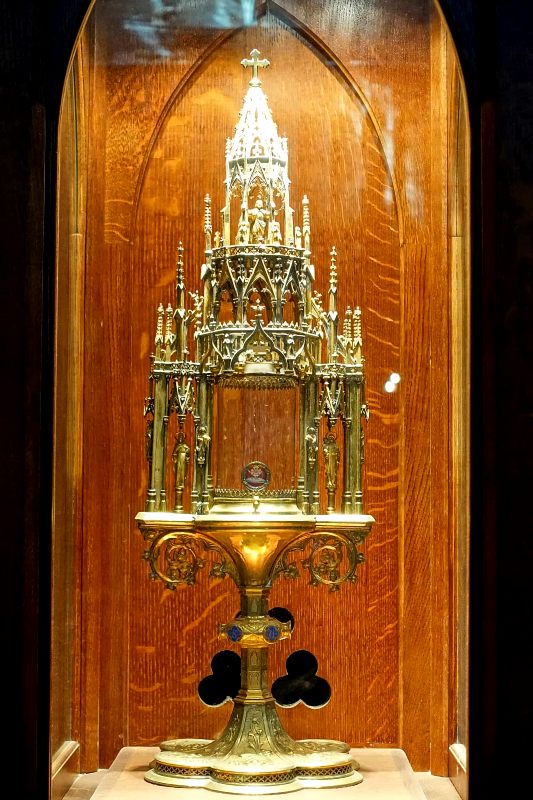
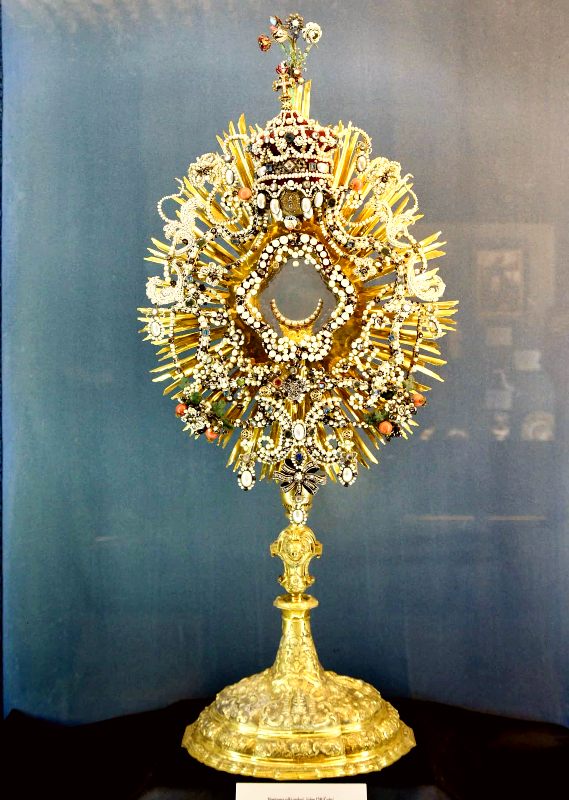
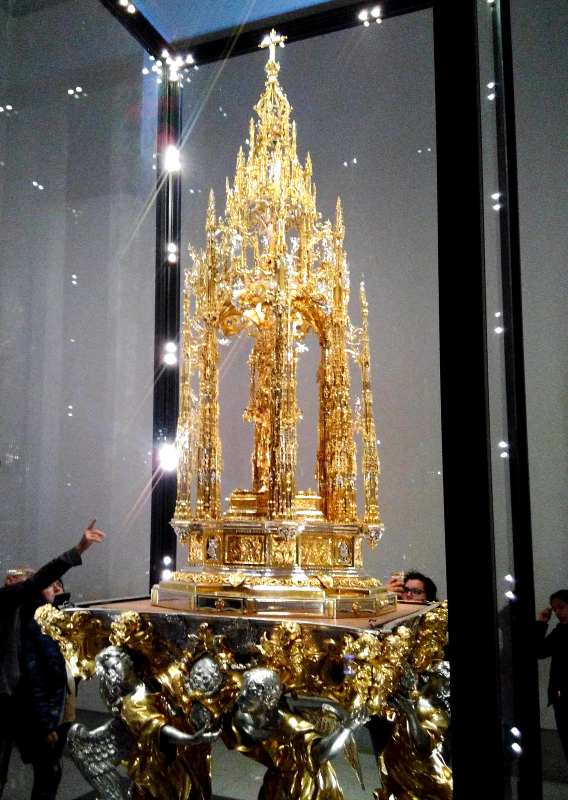
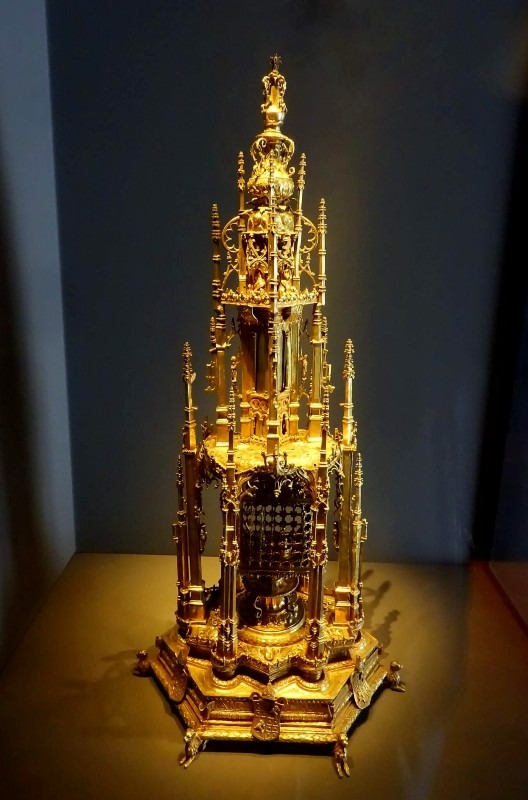
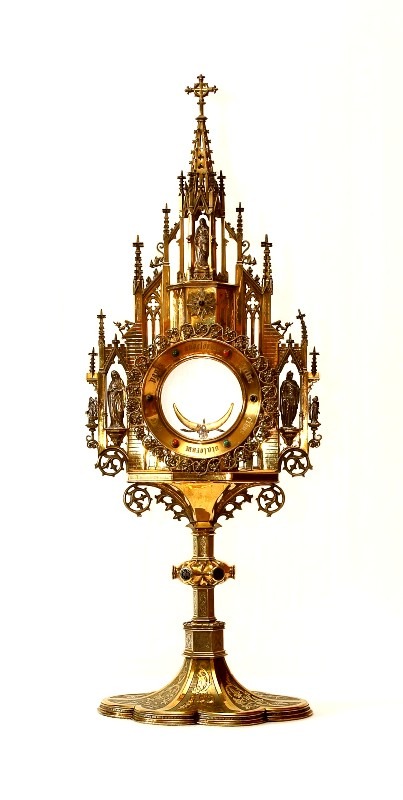
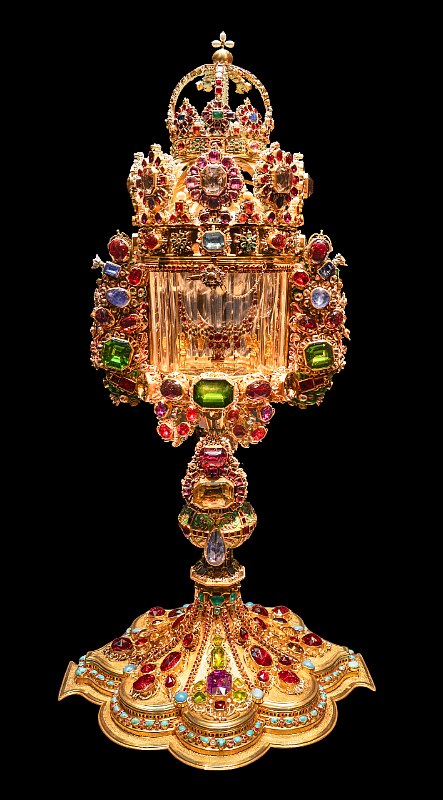
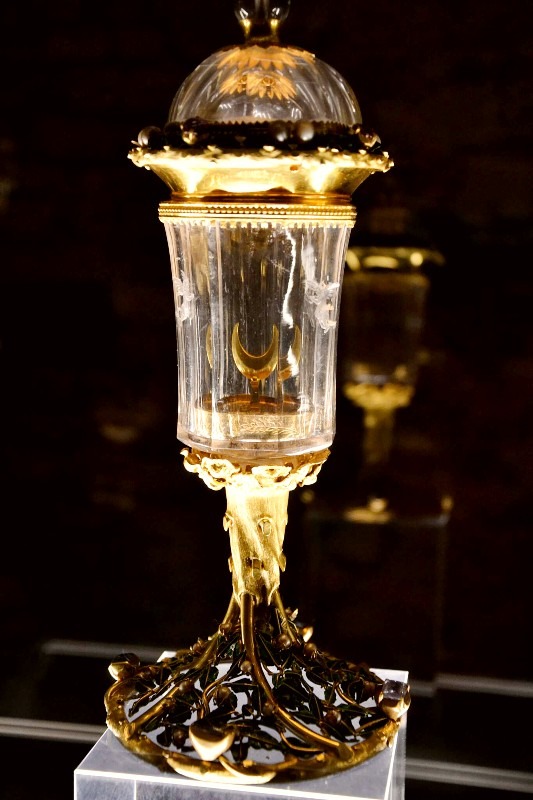
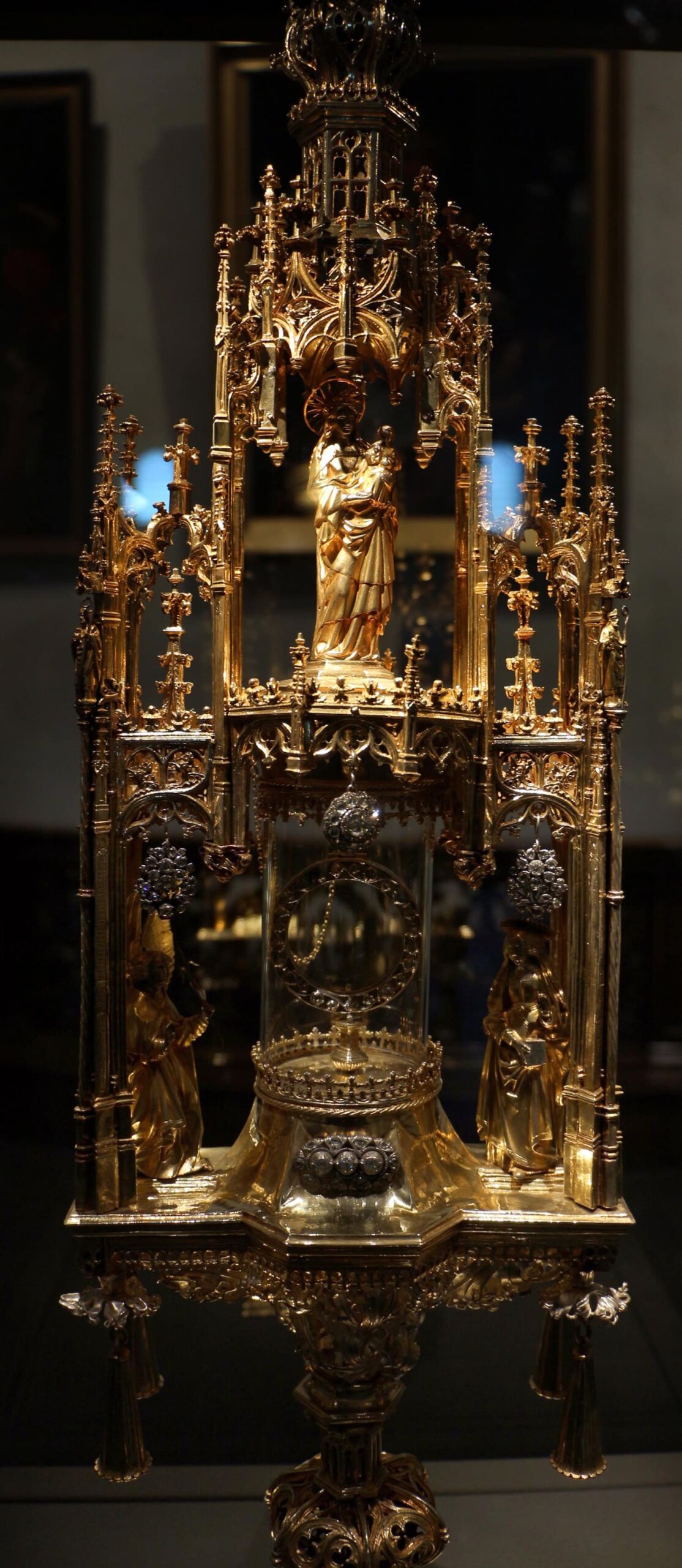
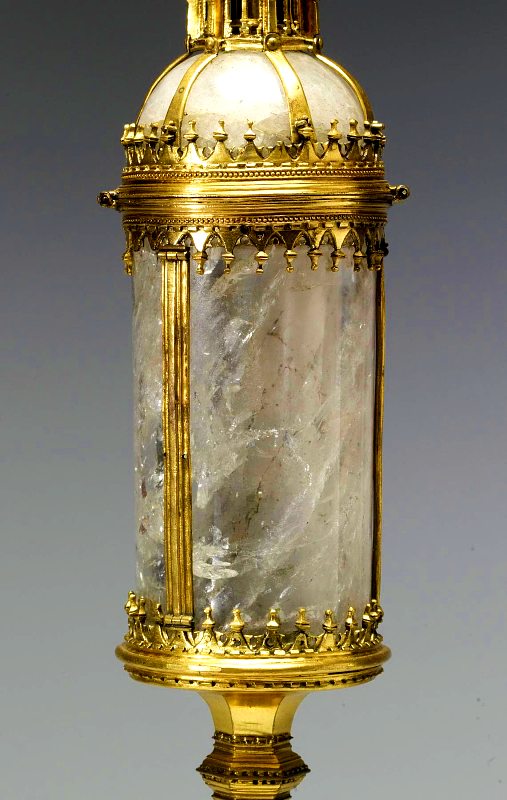
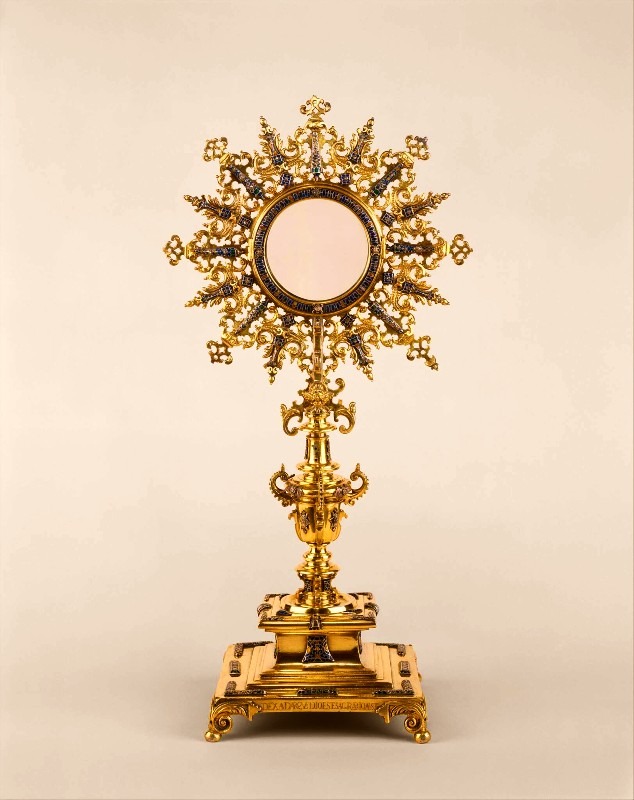
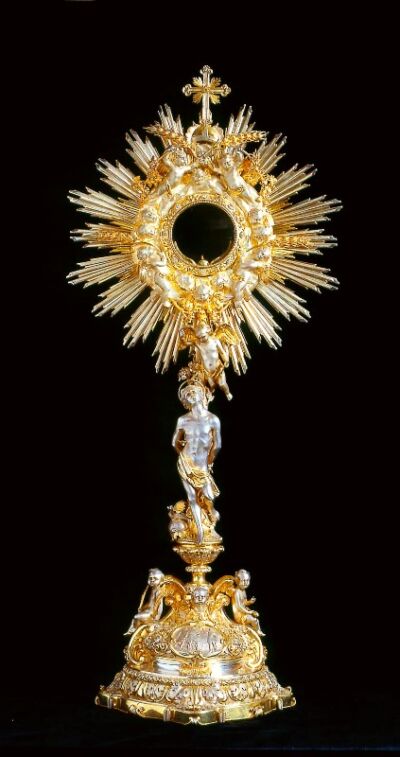 This leads us to the myriad of beautiful sacred windows that I want to show you: monstrances for Adoration. I’ve already primed the pump above with images of some pretty amazing monstrances. But there are so many more, which I display below in order to show the vitality and diversity of the Church’s adoration of Christ in the Blessed Sacrament.
The name “monstrance” simply means “a vessel for showing” (Latin: monstrare). In most of the Romance languages it is called a “custodia” from the Latin custos, meaning simply, a “container”. Sometimes it is referred to as an “ostensorium” from the Latin meaning to display.
All of the vessels below, some centuries old, are still used for Adoration of Our Lord today. As you marvel at them, think of them as continuing the tradition of the Magi.
Those holy men had the privilege of seeing the Christ Child with their own eyes, but if they were with us in the modern age, they would bow down like us to adore the Lord in the Sacrament.
And they would also encourage the faithful and indeed all “men and women of good will” who are not of our faith to come and prostrate themselves before the Eucharistic Lord who came to us by way of a star and left us Himself as an eternal gift.
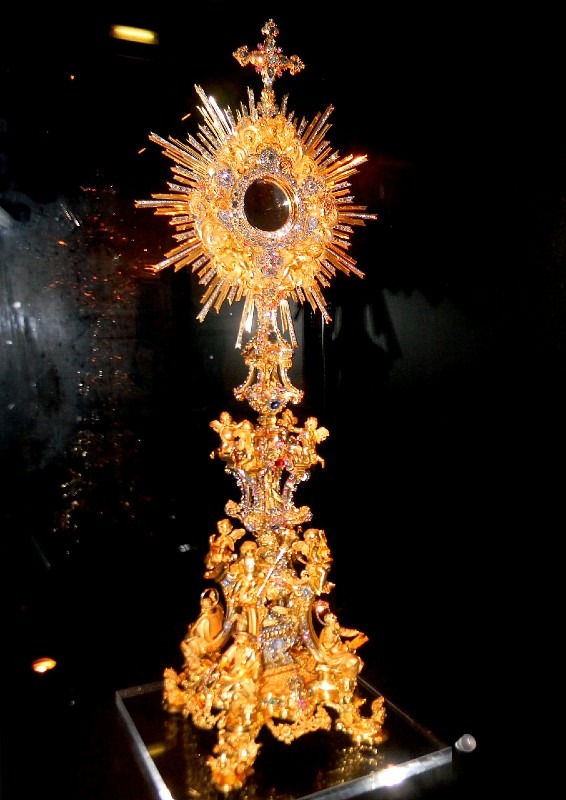
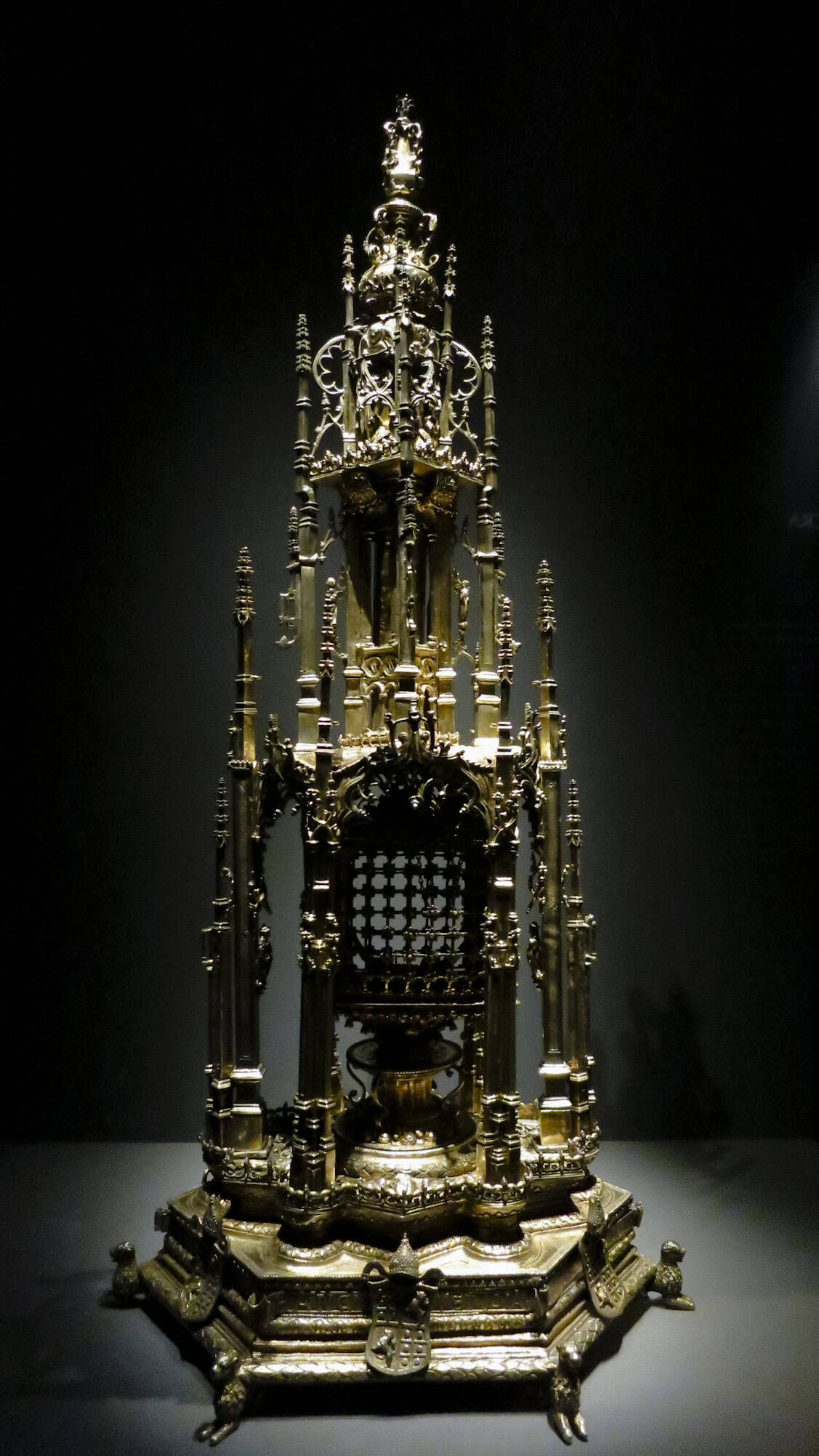
Feature Image: Stained Glass; St. Juliana of Liège (Andreas Praefcke); Gentile da Fabriano; Peter Paul Rubens; Domingos Sequeira; other images of Magi via Pinterest; Monstrances: Toledo; Monaco; Seville 1; Seville 2; Córdoba; S. Sebastian; German; Cologne; Cologne 2; Brussels; Belgian; Lisbon; Prague; Czech; Peru; Coimbra 1; Coimbra 2; Calabria; Vilnius; Milano; Italian.
———-
[Note: This article is a reproduction of the Sacred Windows Email Newsletter of 1/11/26. Please visit our Newsletter Archives.]

_-_stained_glass,_sacristy_tympanum,_Host_%26_Monstrance.jpg)


.jpg)
.jpg)


_-_Pfarrkirche_K%C3%A4rlich.JPG)


_(26159214052).jpg)


,_Church_Heritage_Museum_in_Vilnius01(js).jpg)


Leave A Comment