

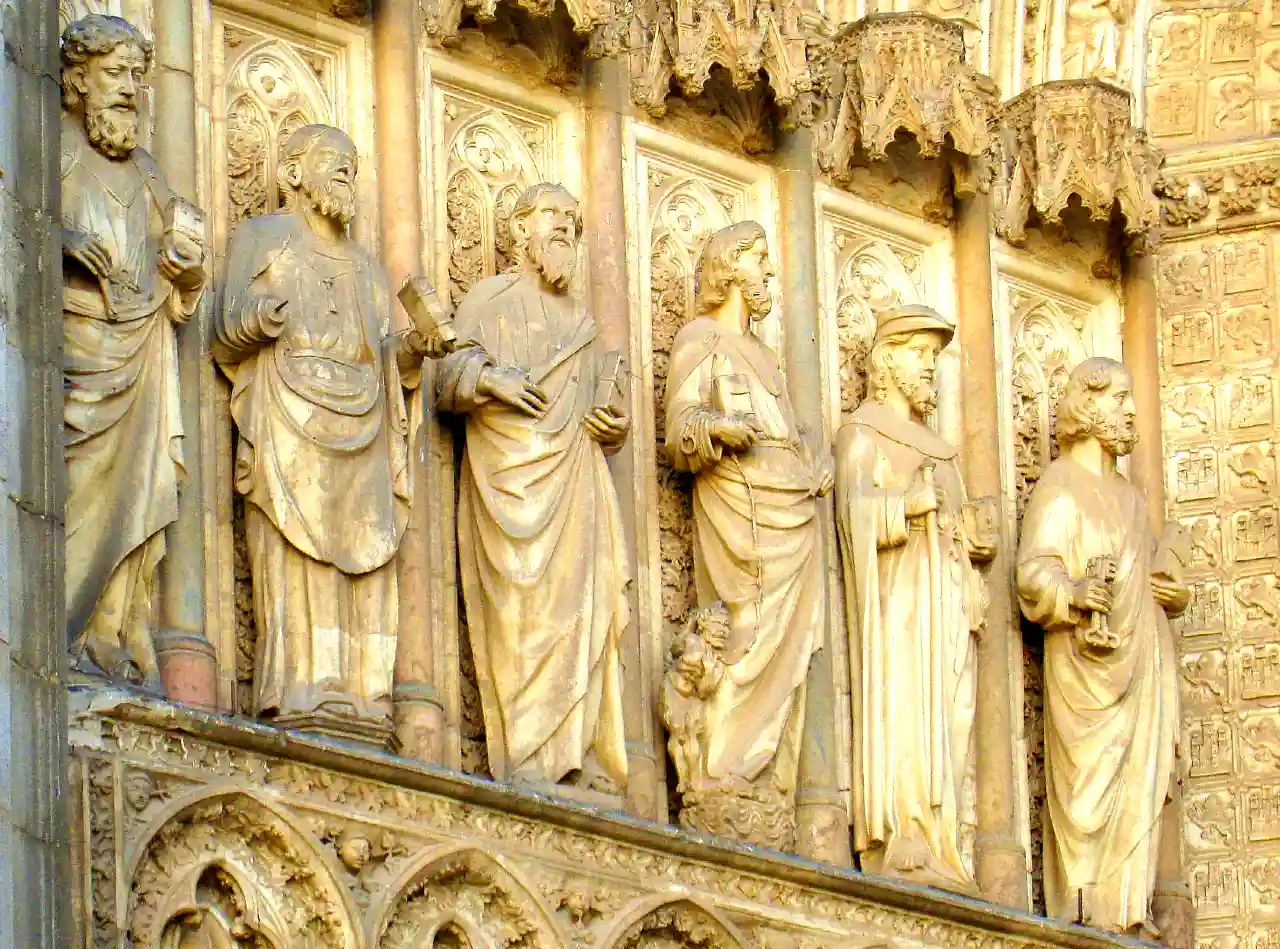
A young commentator on CNN has recently gained some notoriety by showing a few surprising graphs and charts on air and exclaiming, “Holy Toledo!” It’s a funny old expression, isn’t it? And it’s ironic to hear it coming from a young man on a secular news station. It just goes to show how deeply some things are embedded in the popular mind.
Holy Toledos
But a common American expression like that has to come from somewhere, and I’m guessing that the “holy” part is probably related to the strong Catholic presence in a midwestern town of that name. (There are 27 Catholic parishes in the city of Toledo and 123 in the Diocese.) As always, the background has some history to it.
The name “Catholic” means “universal,” and you’d be hard-pressed to find a better expression of the universality of the Church than in a comparison of the cathedrals of two cities named Toledo which are actually 4,000 miles apart, as the crow flies.
- Our Lady, Queen of the Most Holy Rosary Cathedral in Toledo, Ohio, and
- The Metropolitan Cathedral of Saint Mary of the Assumption in Toledo, Spain
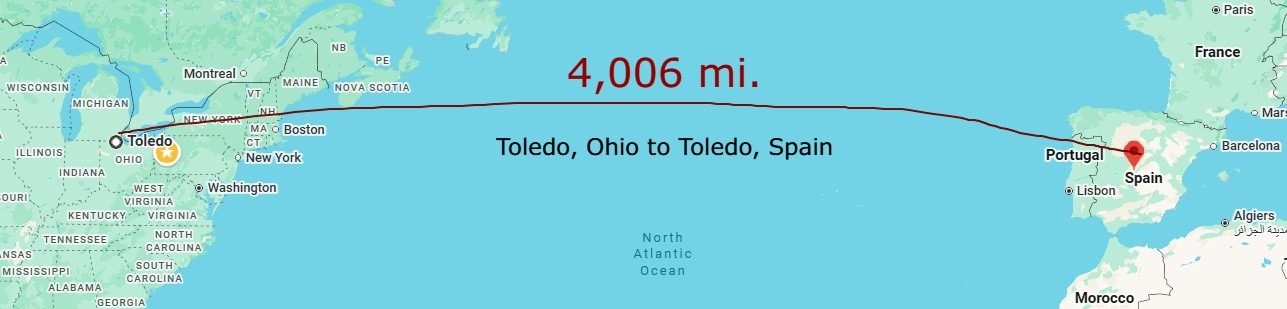
Universality doesn’t mean the kind of “diversity” we hear bandied about today, which emphasizes polarizing differences rather than common values. When we use terms like diversity and universality, we mean the ability to fuse diverse cultures together into a unity—in this case spiritual—without losing the distinct identity of any of the elements.
Catholicism does that better than any institution in history, and the evidence of this fusion in the two Toledos is absolutely stunning, as I’ll show below. If we replace the term “diversity” with the fuller idea of universality, we could describe these churches as “two towering Toledos with one glorious faith, spanning centuries.” They are, in a manner of speaking, holy Toledos.
The Spanish Toledo
The city of Toledo in Spain lies about an hour’s drive south of the country’s capital, Madrid—at the exact center of the Iberian Peninsula. In the late Middle Ages it was the religious heart of the Kingdom of Castile, ruled by Ferdinand and Isabella, who, in 1492, commissioned Christopher Columbus to find the passage to India. 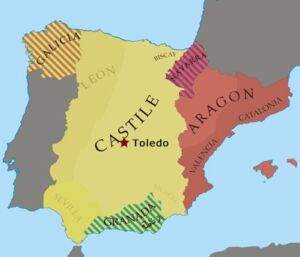 All Americans know how that voyage turned out.
The city has been continuously inhabited since before the Romans made it the capital of their province of Hispania. St. Paul desperately wanted to travel there to evangelize the native peoples (Rom 15:24) but never got the chance because of that little matter of getting beheaded by the Romans! The best laid plans…
Despite that, the roots of Christianity in Spain go very deep. In fact, they go back to the Apostles. Legend has it that St. James the Greater was the first Christian to set foot in Spain, and the earliest Christians were all evangelized by him. The shrine of Santiago de Compostela in the Province of Galicia (northwest corner of Spain) is said to house his relics:
- After the Fall of Rome, the barbarian invaders—the Visigoths—took control of Toledo in 507 AD. They were newly converted to Christianity by a heretical sect called Arianism (which denied the divinity of Christ).
- The Visigothic King Recarred converted to Roman Catholic Christianity in 589 AD and worshiped God in a form of liturgy that is still celebrated today, called the Mozarabic Rite.
- The Muslims invaded and conquered the region in 711 AD and built a mosque over the existing Christian church.
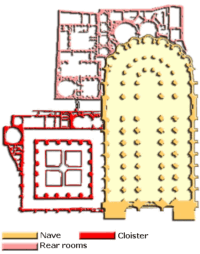
- Spanish King Alfonso then reconquered the region 1085, and in turn built a church on top of the mosque! The floorplan of the old church / mosque formed the foundation of the cathedral that we see today.
- The cornerstone of the Cathedral of the Assumption was laid in 1229, at the height of the Gothic period. Its style is a Spanish version of French Gothic, which is one of only three of such churches in Spain.
The cathedral is a marvel to behold because it exhibits some distinct flavor of all the influences of that region: the ancient Christian foundation, the square dimensions of the mosque; the Gothic style of the period, and the Mozarabic liturgy. Pretty amazing.
Incidentally, the name Toledo probably comes from the Hebrew word “Toledoth” (meaning “generations” or “descendants”) owing to the large Jewish population that had been thriving in Toledo in the Middle Ages. So, even the name is holy!
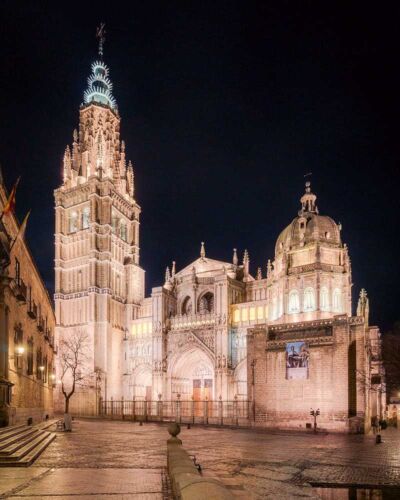 A Few Features
One thing to note as you look at these pictures is that the Cathedral is not built in the form of a cross like most French Gothic churches. Rather, it is a wide rectangle because it was built to cover what was a square mosque structure. The humungous tower on the side was built over a building connected to the mosque.
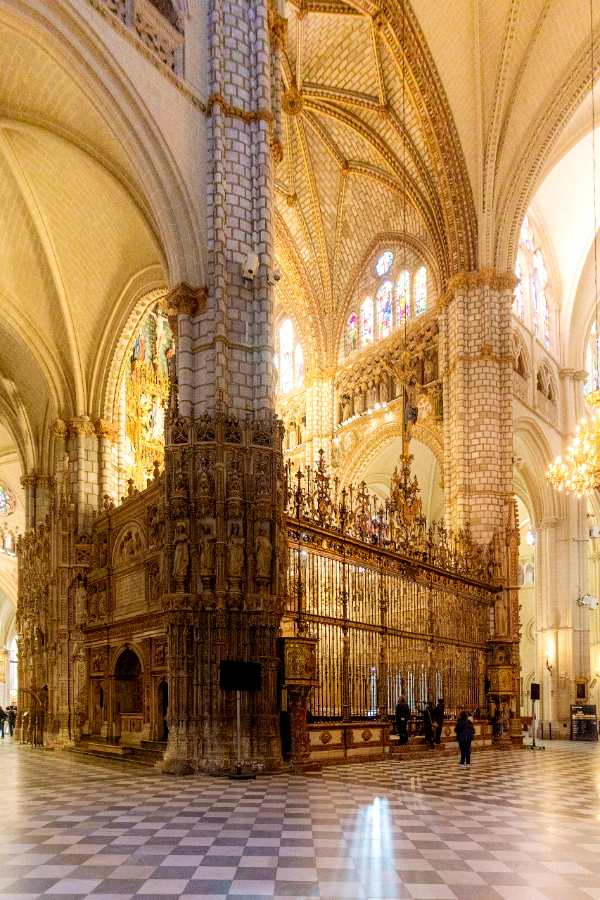
Because of its immense width, there is a large walled off area in the center which is called the Choir, where the cathedral monks or canons prayed the liturgy.
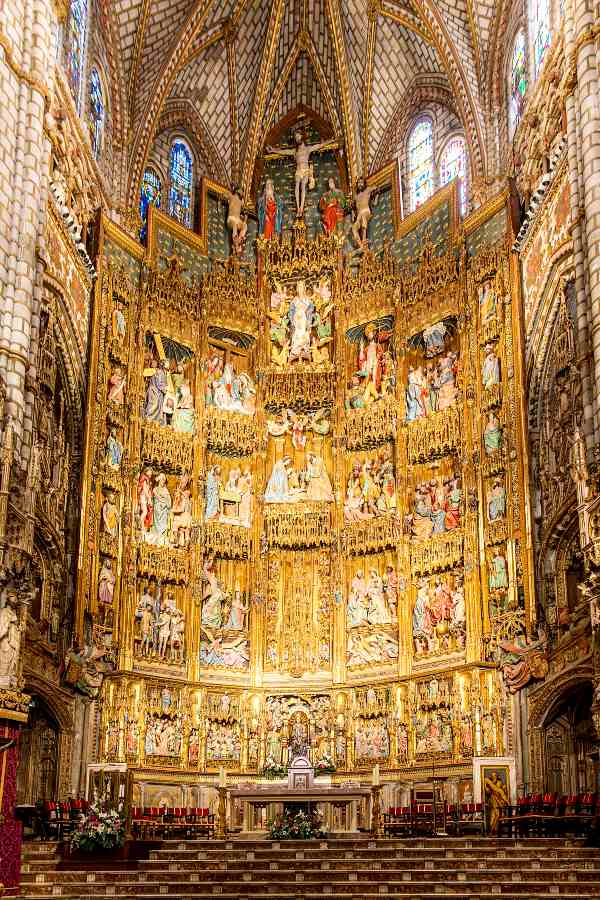
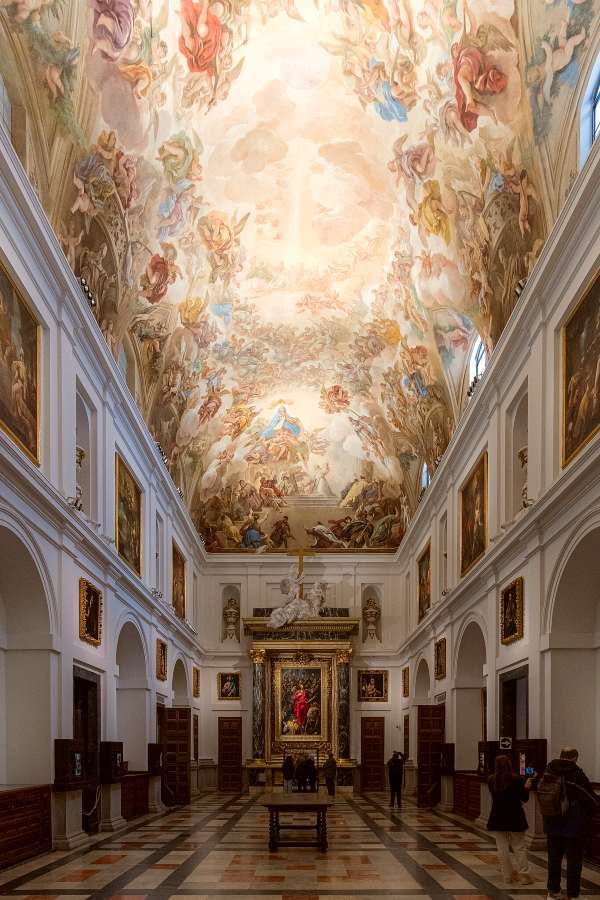
The sanctuary is at the back of the Church where you see the massive Spanish reredos on the back wall, which is just unbelievable. And don’t miss the wondrous ceiling of the sacristy which probably dates from the Renaissance or Baroque period. Does the sacristy of your local parish look like that?
The Cathedral’s Dimensions
Length: 390 ft. | Width: 194 ft. | Height: 146 ft. | Height of the Tower: 302 ft
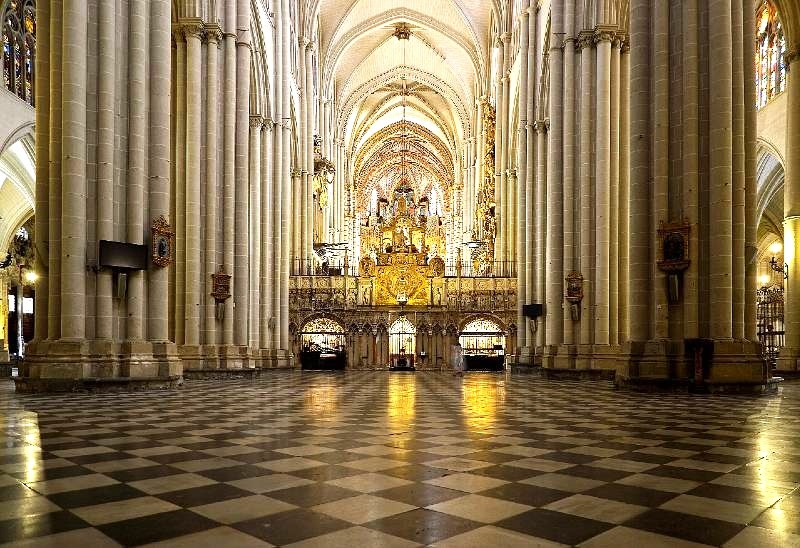
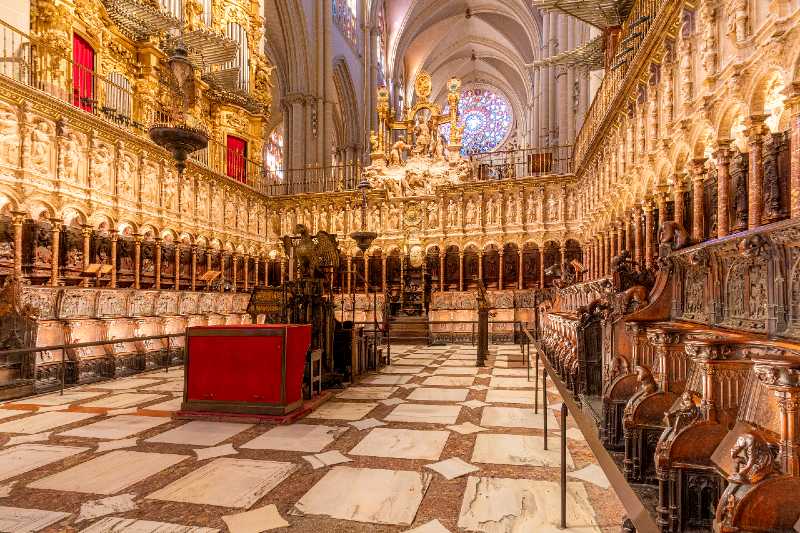
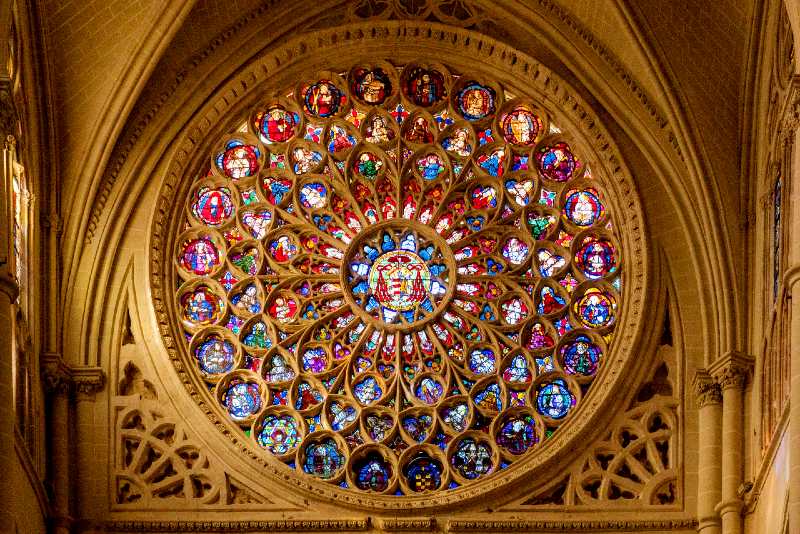
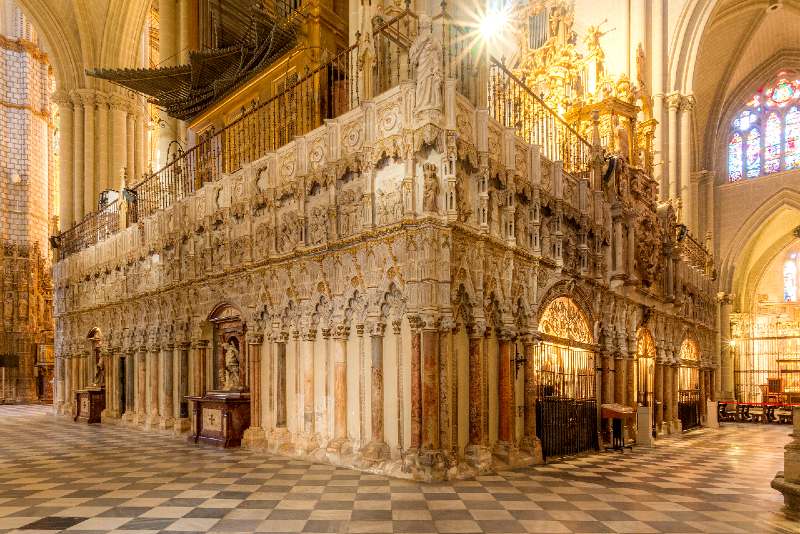
The Toledo of the Midwest
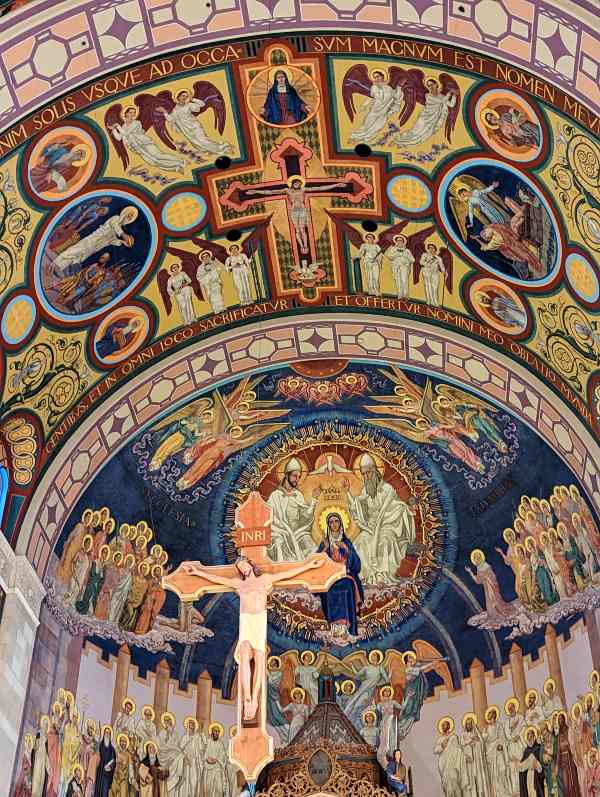
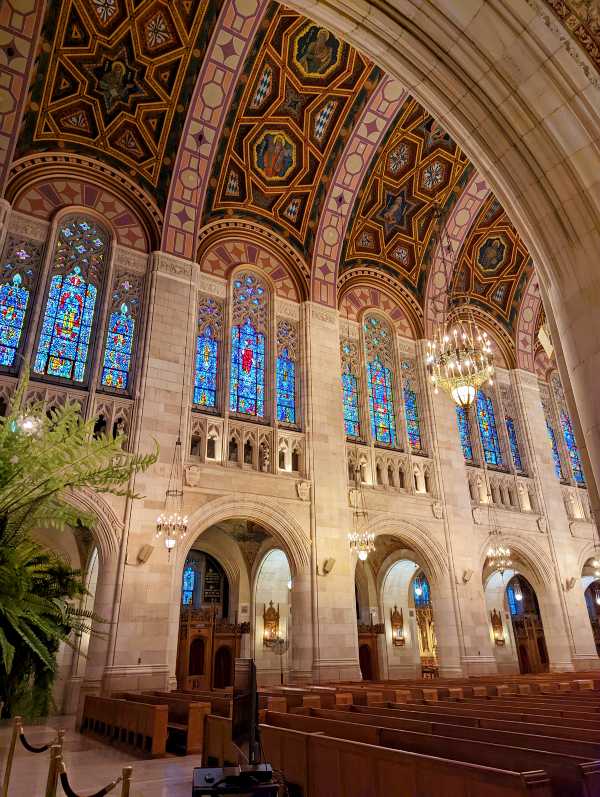
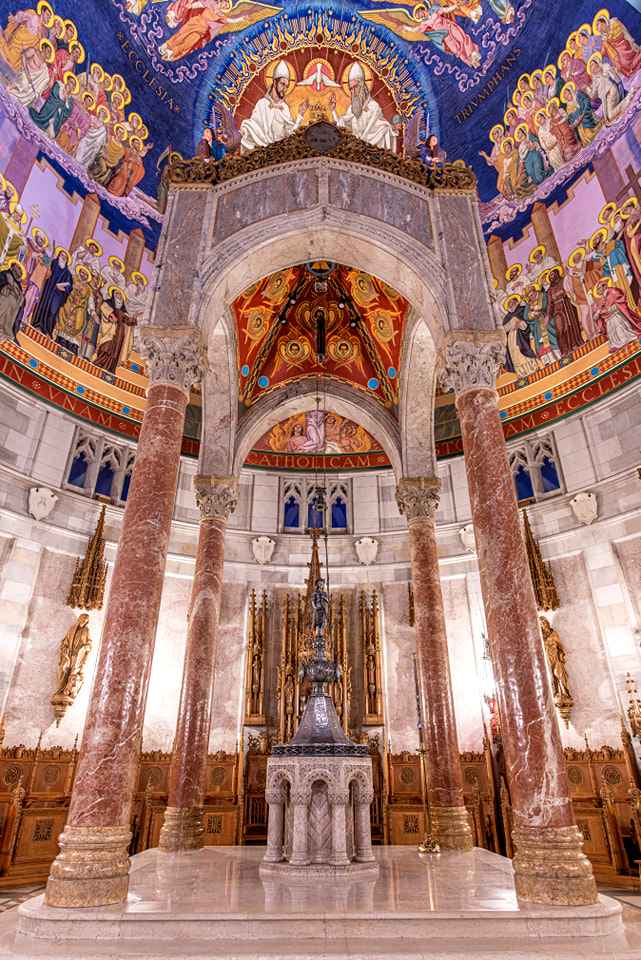
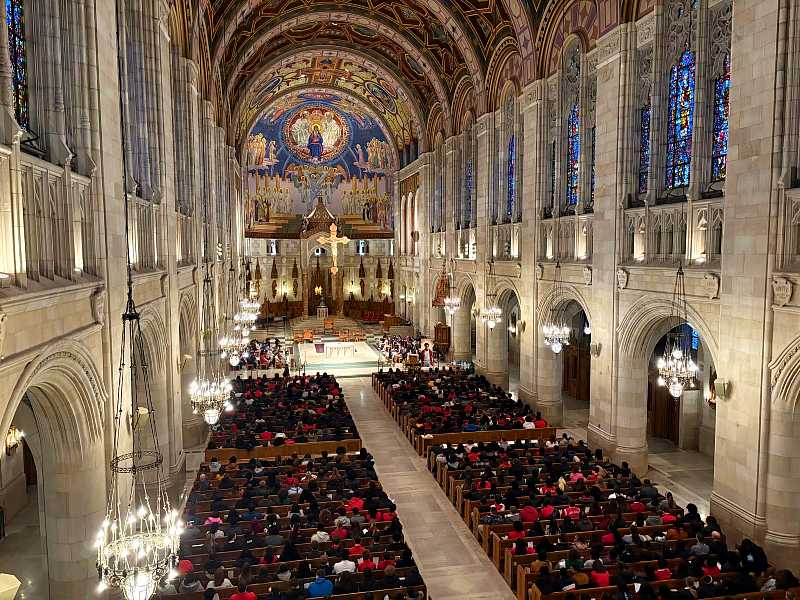
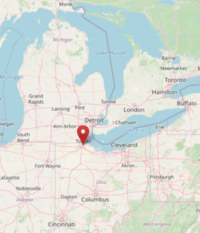 Not to be outdone in holy grandeur, the Catholic cathedral in Toledo, Ohio is one of the most magnificent churches in America. It, too, was dedicated to the Blessed Mother, although some 700 years after the one in Spain.
Perched on the far western tip of Lake Erie, Holy Rosary Cathedral is a bit shorter in length (285 ft.) and height (96 ft.) than its namesake in Spain, but it is also wider (215 ft.). It is really a massive and impressive church due not only to its size but also to its fabulous art.
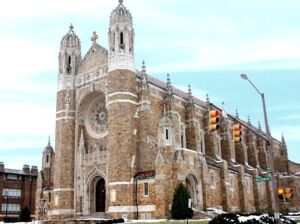 It was made in the basilica format, meaning it has one long aisle flanked by huge pillars. Its style is known as “Platteresque” (roughly: silver-guilded) which has its origin in Spain and self-consciously combines elements of Renaissance and Gothic architecture.
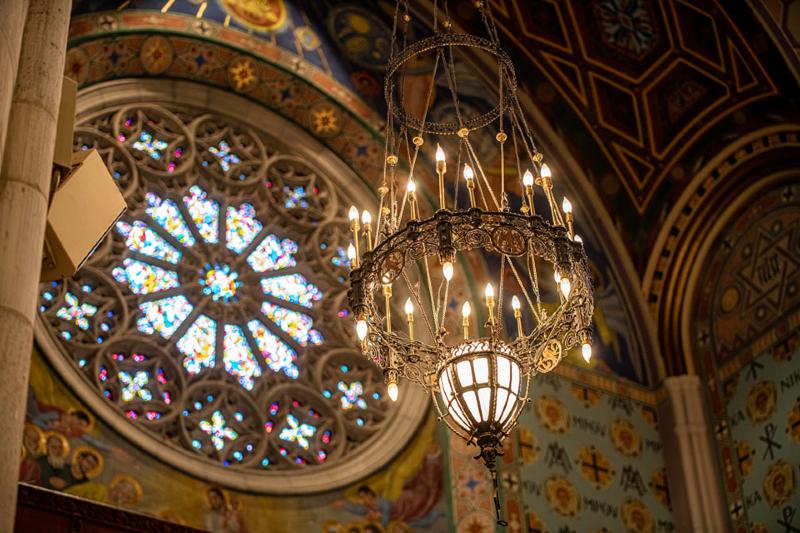
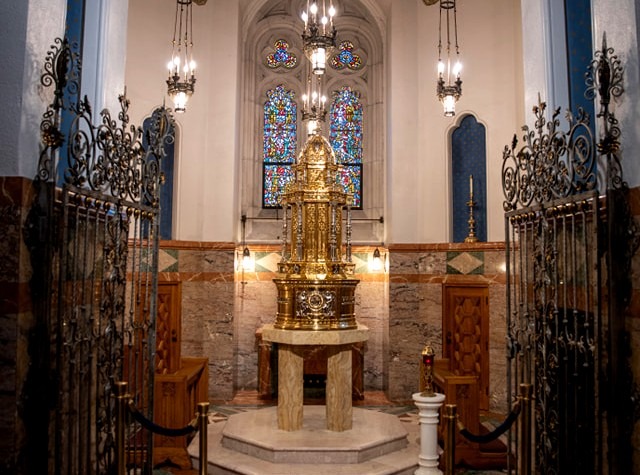
The Renaissance influence is seen mostly in the barrel vault ceiling and the round arches. The Gothic is quite evident in the external flying buttresses, the rose window (28 ft. wide), and much of the art. Here are a few stunning views.
[I am deeply grateful to Benjamin Cousino who graciously gave permission for the use of his photos. Other credits at the end.]
Mosaics Galore
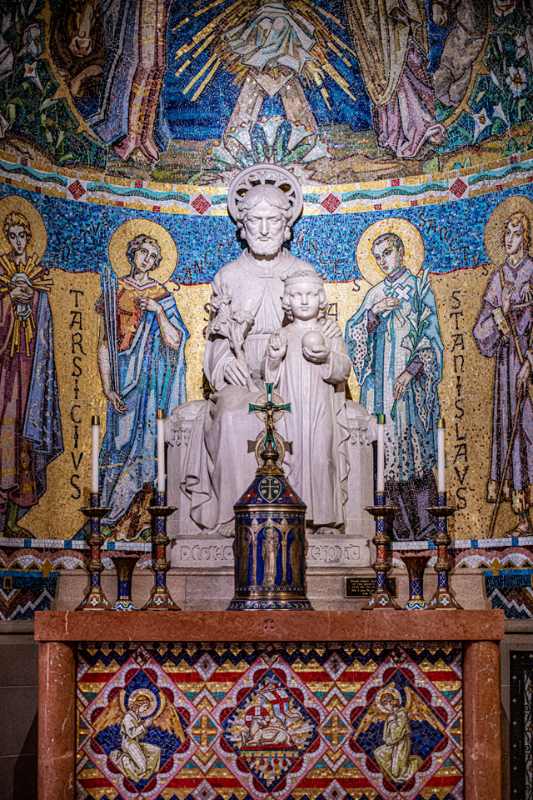
And like many other major churches built in that era in America (St. Louis, Washington DC), Holy Rosary Cathedral is full of the most colorful and fascinating mosaics that lift the heart to heaven. Here are a few of them.
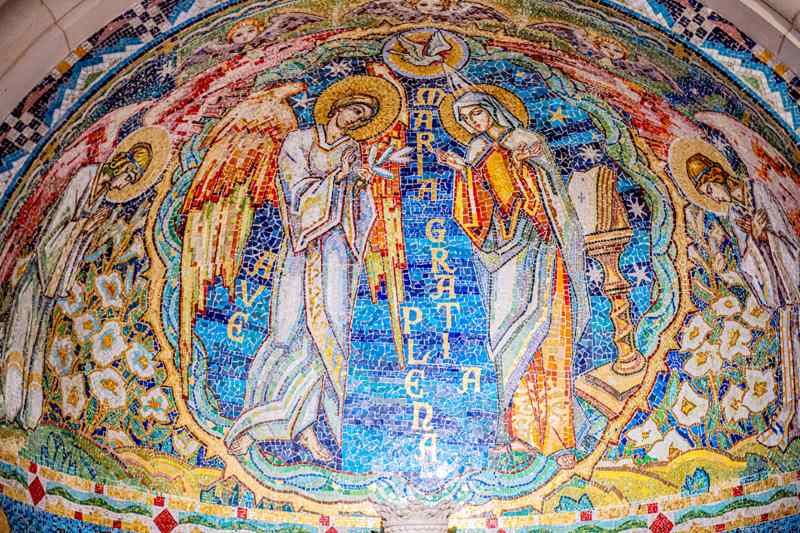
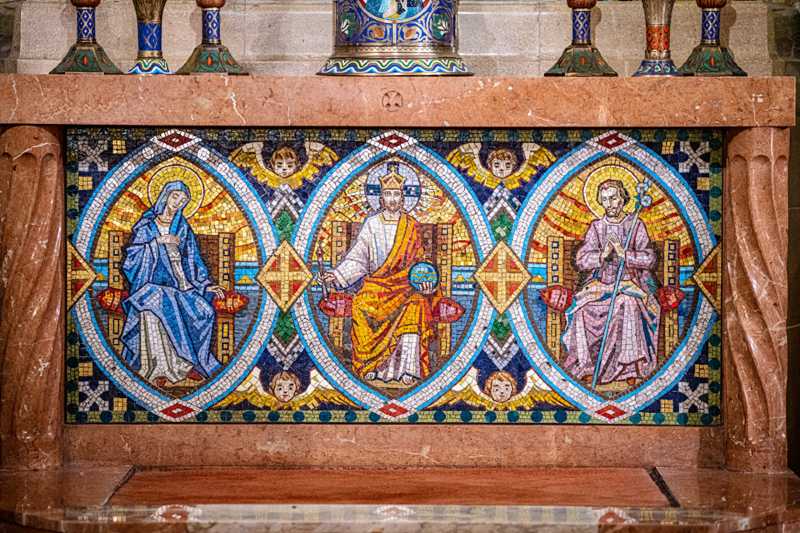
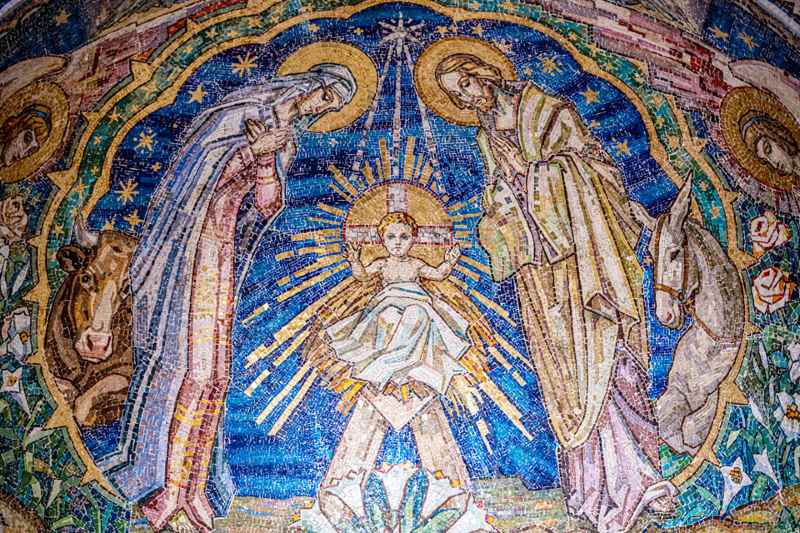
Superlative words like gorgeous and stunning and magnificent don’t begin to capture the splendor of these works of art, which in some cases took more than decade to create and install.
My overall favorites are the twin statues of Our Lady and St. Joseph with mosaic backgrounds.
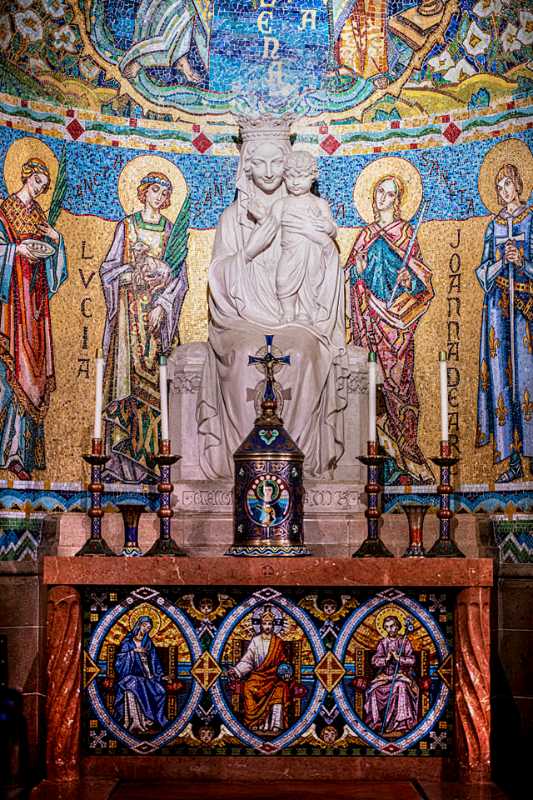
I’m sure I could go on all day about these gifts of grace that so many selfless artists and churchmen have given to the Church. If you wish to do a little more justice to these places of worship than my short newsletter, the two buttons below will take you to their respective websites. (The Spanish website has a button “EN” at the top to change the text to English.)
Holy Toledo!
On a final note, it’s not clear if the expression “Holy Toledo!” has its origin in Ohio or Spain. One theory says Spain is the most credible point of origin because the city was commonly referred to in the Middle Ages as “the Holy City of Toledo” due to its peaceful fusion of Jewish, Islamic, and Christian cultures.
Another theory believes that the expression originated in the wild times of the American Prohibition era where mobsters and bootleggers felt the city was a sort of safe haven for criminals and nicknamed it “holy Toledo” as a kind of tongue-in-cheek moniker. (It’s kind of unique, but I don’t think that theory ever caught on.)
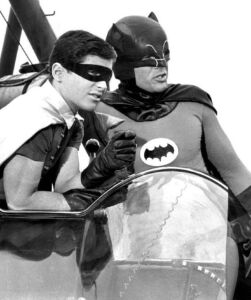 Or just maybe the term comes from the Batman and Robin series of the 1960s where Robin frequently reacted to surprising things like the CNN commentator: “Holy Toledo, Batman!” (which was just one of his many other “holy” expressions, if you recall. Maybe Robin was a closet Catholic. Hmmm.) But even if not its origin, the Batman series certainly did a lot to cement the expression in the public consciousness.
[One Sacred Windows reader reminded me that the character Klinger in the TV series M*A*S*H said “Holy Toledo!” a lot too!]
Wherever the expression might originate, I have to admit that it’s accurate. The Toledos in question have real holiness at the hearts of their cities, and although I have never personally visited either, I look forward to entering those hallowed sanctuaries one day and feeling the Peace of Christ fill my heart with inspiring beauty that raises the eyes and the soul upward.
In the midst of all that wonder, though, I’ll have to make sure I don’t spontaneously blurt out “Holy Toledo!” in the middle of Mass.
———-
Photo Credits: Map of Medieval Spain (Alexandre Vigo); Maps of distance and Toledo, Ohio: OpenStreetMap (free source); Batman and Robin (ABC Television, Public domain). Spanish Cathedral: Exterior (Nikthestunned); Floorplan (Attilios); via photographer Fernando (Cathedral at night; Reredos; Choir; Choir Interior; Rose Window). Ohio Cathedral: Exterior (Smithr1981); Stained Glass Windows (Amanda Sloan, The Beauty of Catholicism); Nativity mosaic and interior (cathedral website/Facebook); all other photos courtesy of Benjamin Cousino (Benjamin Cousino Photography).
[Note: This article is a reproduction of the Sacred Windows Email Newsletter of 2/22/26. Please visit our Newsletter Archives.]



Leave A Comment