

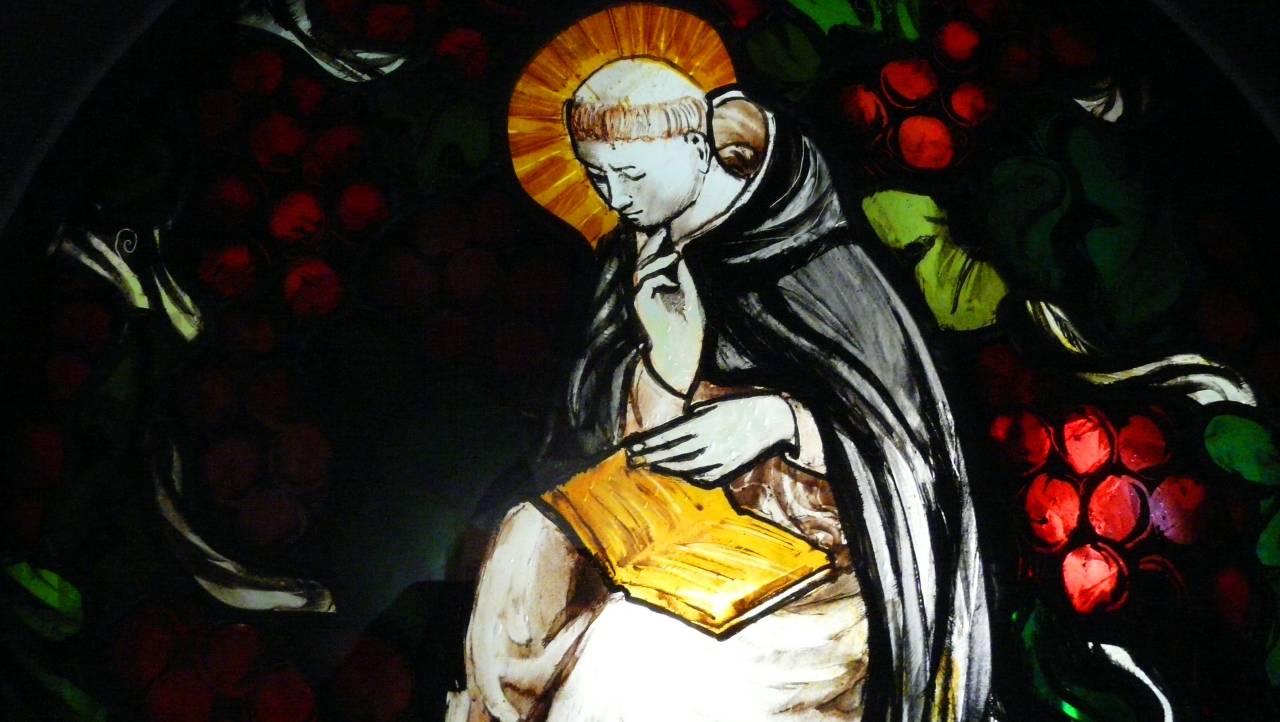
Every now and then you come across saints who makes you stop and say, “Wow.” Maybe it’s their shocking holiness, or their heroic accomplishments, or their deep virtue. Whatever it is, God speaks to you through them.
To be honest, if we really looked closely at the lives of saints, we’d probably be saying “Wow” all the time, but certainly there are moments when a particular holy man or woman reaches out to you and grabs you, as if to say, “You need to see this.”
 St. Raymond of Penyafort (or Peñafort) is one of those saints who grabs me by the collar and shakes me every time I read anything about him. I’ll give some details about his extraordinary life below.
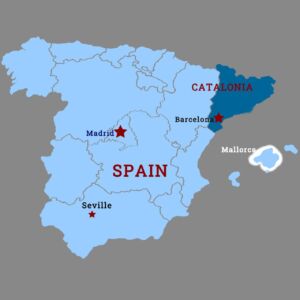
Some say St. Raymond was Spanish, but he was actually Catalonian, of the province of Barcelona where they speak Catalán. Catalonia has been part of Spain since Ferdinand and Isabel united the kingdom in 1492, a year Americans know well.
St. Raymond’s life spanned from 1175-1275—a full century! He takes his place with just a handful of centenarian saints in the Church calendar, a couple of whom might surprise you. The most famous was St. Anthony of the Desert who lived to 105. It is said that the famed St. Patrick of Ireland and St. Simon Stock to whom Our Lady gave the brown scapular also reached 100. The closest we have in the US is St. Katherine Drexel who “only” lived to 96.
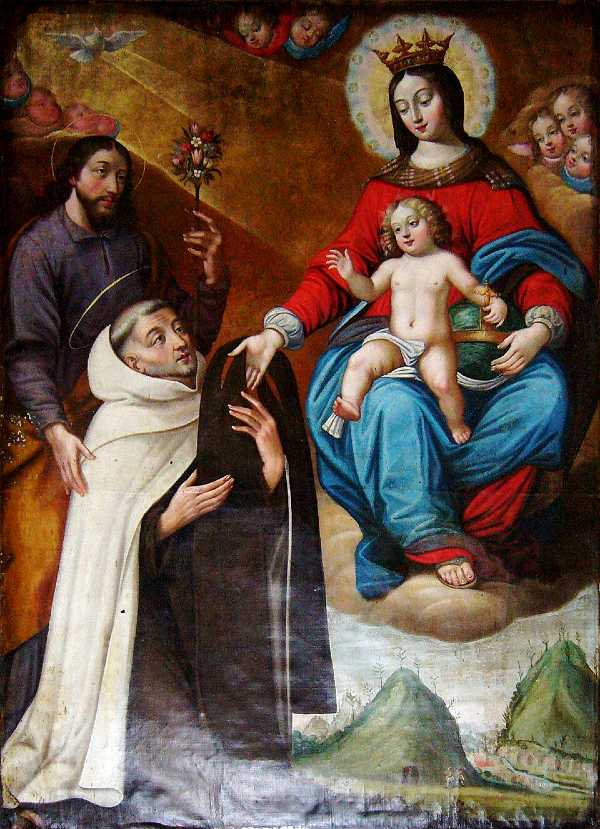
St. Simon Stock
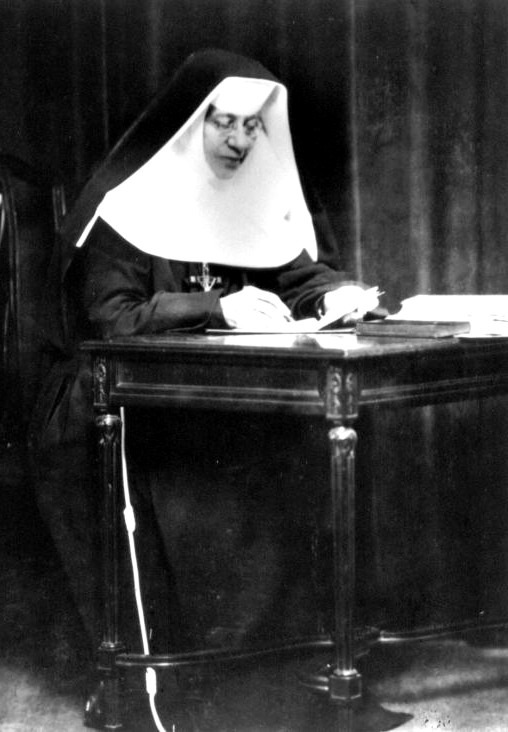
St. Katherine Drexel
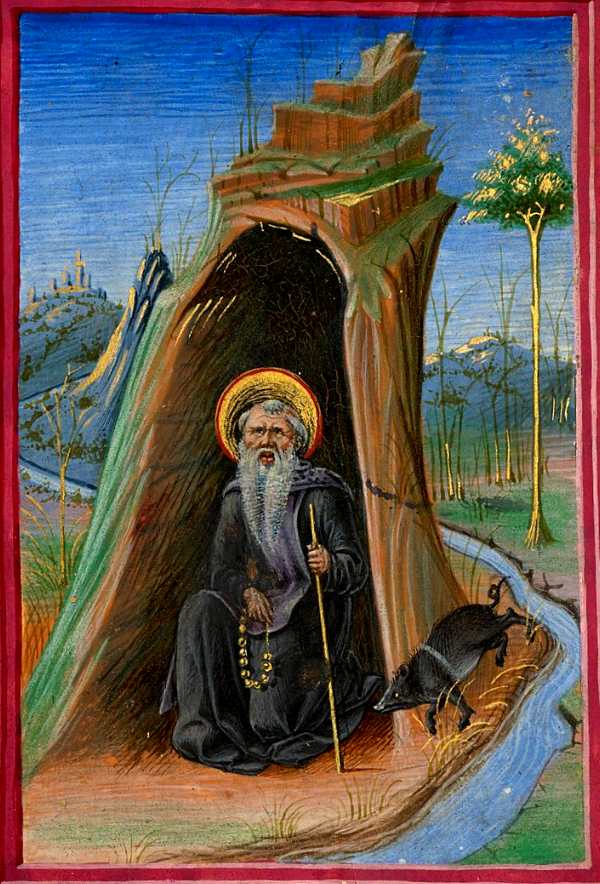
St. Anthony Abbot
A Clever and Resourceful Guy
Here’s one fact I find astounding about St. Raymond. He was elected as Master General of the Dominican Order twice. He joined the Dominican Order just after St. Dominic died and may have met his Founder personally. At age 63 he was selected as the Third Master General of the Order but only reluctantly accepted the job since he believed he was more fitted for the work of preaching and teaching than administration.
The officials of the Order were revising their Constitution at that time, so he very cleverly inserted a clause that allowed the Master General to resign if he did not wish to live out his lifetime in office as St. Dominic and Bl. Jordan of Saxony (the 2nd Master General) had done. Who was going to argue with the General?
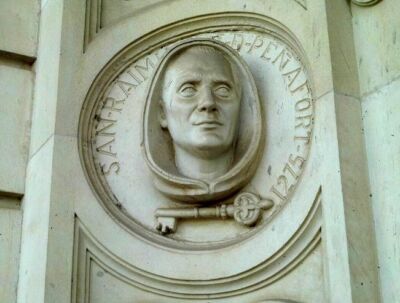 His first tour of duty as head of the Order lasted only two years during which he visited all the Dominican houses on foot. During that period, he asked St. Thomas Aquinas (also a Dominican) to write his first major work called the Summa Contra Gentiles as an aid to refuting and evangelizing the Muslims who had been dominant in Spain for centuries.
At age 65 he resigned his office to dedicate himself to the mission he had wanted to do all his life: to bring the Gospel of Jesus Christ to non-Christians. In typical Dominican fashion, he set up a school in North Africa to teach Hebrew and Arabic to missionaries and spent a great deal of time in hands-on efforts of preaching, debating, and converting those who didn’t yet believe in Christ.
He did that for 17 years until…he was elected again, at the age of 80, as Master General of the Order of Preachers. In a major twist of irony, St. Raymond spent the last 20 years of his life in this role and died in office.
Most people are ready to roll up their mats and retire to the good life at age 80. St. Raymond was starting a new career.
A Productive Priest
You might think that becoming the General of a major religious order (twice) would be a huge contribution to the Church in itself—and of course it was—but it was just one of a long list of accomplishments for this great saint.
Many of St. Raymond’s significant gifts to the Church preceded his time in office, so perhaps it’s easiest to list just a few of them to illustrate his long, productive career.
- He was already teaching philosophy at the University of Barcelona in his 20s, and by his mid-thirties held doctorates in both canon law and civil law. He was a full professor of law at the University in Bologna while still a layman.
 He was advisor to King James I of Aragon and was appointed Archdeacon to the Bishop of Barcelona when he was 44.
- Soon after that, he co-founded the Mercedarian religious order with St. Peter Nolasco, whose mission was to rescue Christians who had been enslaved by Muslims. All in a day’s work, apparently.
- At age 47 he became a Dominican.
- In his spare time, he wrote the Summa of Penitential Cases, a handbook for confessors, which was the definitive pastoral resource for priests in the late Middle Ages.
- At age 55, he was called to Rome to be the confessor to Pope Gergory IX, and it was this pope that asked him to make perhaps his greatest contribution to the Church, a code of law called the Decretals.
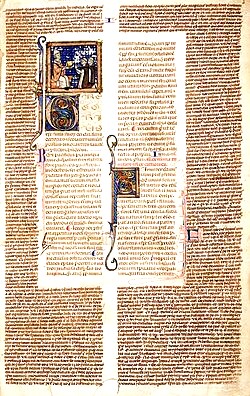
- This massive five-volume work collected all the decrees and laws of popes and councils from the previous 1200 years into a single source which served as the most organized and definitive collection of church law until in 1917 when the first Code of Canon Law was promulgated. For 700 years, St. Raymond was the go-to guy for questions of law. No surprise then that he is considered the Patron Saint of Canon Lawyers.
- At age 60 he was chosen to be Archbishop of Tarragona but he declined the honor.
- After such an incredible career that any man would be proud of, he was elected as Master General of the Order at 63, for the first time, as noted.
- At age 80, he became Master General for the second time and lived to 100.
A Holy Priest
But St. Raymond wasn’t just smart, he was holy and courageous. There’s a curious story about him accompanying his patron, King James I on a trip to Mallorca, an island in the Mediterranean off the coast of Spain (see map above). They went together on an official mission trip to convert the Muslims who lived on the island.
The king had the chutzpah to take along his mistress while on mission (away from his queen, tsk, tsk), and a saintly man like Raymond had a problem with that—um, yeah. Raymond wasn’t the kind of guy to turn a blind eye to sin in any state or by anyone.
St. Raymond had some chutzpah too, so he “spoke truth to power” as we would say today. He confronted the King and told him that not only was his behavior morally wrong, but it gave profound scandal and an awful example of Christianity to the non-Christians they were trying to convert.
Then the saint marched out of the court and tried to go back to Barcelona. But the peevish king wouldn’t let him. His Majesty ordered the closure of all ports and the grounding of all ships so the holy man couldn’t sail back to the mainland in protest and embarrass the king further.
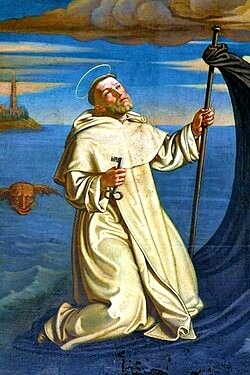 Well, that little stunt didn’t work out too well for King James. In the face of being barred from sailing, St. Raymond did a little sailing of his own.
As the story goes—witnessed by dozens of people on both the island and the mainland—the saint used his black Dominican cape to make a sail and propped it up with his walking stick as a mast. When it filled with wind, he stood on the bottom of it and sailed from Mallorca to Barcelona in the matter of about six hours.
That meant he had to average a speed of 26 mph over a 160-mile span of water!
If there weren’t so many eyewitnesses to the event, we might pass a story like that off as a pious medieval embellishment of the life of a holy man. But there you go.
The story ends with a happy consequence: it is said that King James was so impressed by St. Raymond’s incredible act of faith that the put away his mistress. (I would say that’s more likely to be a medieval embellishment of the record than the tale of gliding over 160 miles of water on a cape sail, but there you go.) Anyway…
A Total Priest and Leader
When all is said and done, how would I characterize this amazing man, Raymond of Penyafort? The thing that grabs me by the collar and shakes me most profoundly about him is Raymond’s lifelong zeal for Christ’s mission of converting hearts. He was an unstoppable, never-ending font of evangelization. In that sense, he was a total priest and leader.
His insatiable desire was to spread the Word, and we would expect that from a Dominican whose Order’s motto is “to share the fruits of contemplation with others” (Contemplata Allis Tradere). But Raymond did it for nearly a century in one form or another! Here are a couple key elements of his charism:
- He Equipped Others for the Mission: An effective leader does not do the work of twenty men but puts twenty men to work, as they say. Penyafort did much more than that by forming minds, providing pastoral resources for priests and missionaries, and “confirming the brethren” (Luke 22:31-32) everywhere he went.
- He Supercharged the Mission: He set up schools; codified and organized church law to strengthen the Church; drew on the genius of Thomas Aquinas for the mission; and deepened the integrity of one of the main religious orders of the Church in its early years.
- He Lived the Mission: Through his personal zeal, holiness of life, prophetic stances, and direction of souls—he was even the confessor to a pope! He took up the mantle of responsibility for the whole Dominican Order at age 80—who does all this?
Looking Back
I’m not sure what I will see when I come to the end of my life and look back over my years of effort to spread Faith in Christ, but I know what St. Raymond saw when 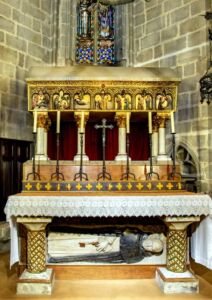 he looked back over his 100 years. Thousands of souls over many canturies eho had been nurtured by his teachings, strengthened by his sacrifices, sanctified by his zeal, and inspired by his example.
(Right: Tomb of St. Raymond of Penyafort in the Metropolitan Cathedral of the Holy Cross and St. Eulalia in Barcelona.)
He never lost sight of the only thing that matters in this world: Jesus Christ. And he remained sharp-eyed in his mission even to the age of 100.
Feature
Make sure to read about another extraordinary Dominican saint of the Middle Ages who followed in the wake of the great saints of his order: Dominic, Raymond, and Thomas.
The Medieval Angel of the Apocalypse

—
Photo Credits: All images via Wikimedia Commons: Raymond of Penyafort sculpture (CarlosVdeHabsburgo); Map of Spain-Catalonia (SantiagoFrancoRamos); St Simon Stock (public domain); St. Anthony of the Desert (Taddeo Crivelli); St Katherine Drexel (public domain); Decretals illuminated page; Sailing (Tommaso Dolabella, public domain); Tomb (Cathedral of the Holy Cross and Saint Eulalia).
[Note: This article is a reproduction of the Sacred Windows Email Newsletter of 8/9/26. Please visit our Newsletter Archives.]


.jpg)

Leave A Comment