

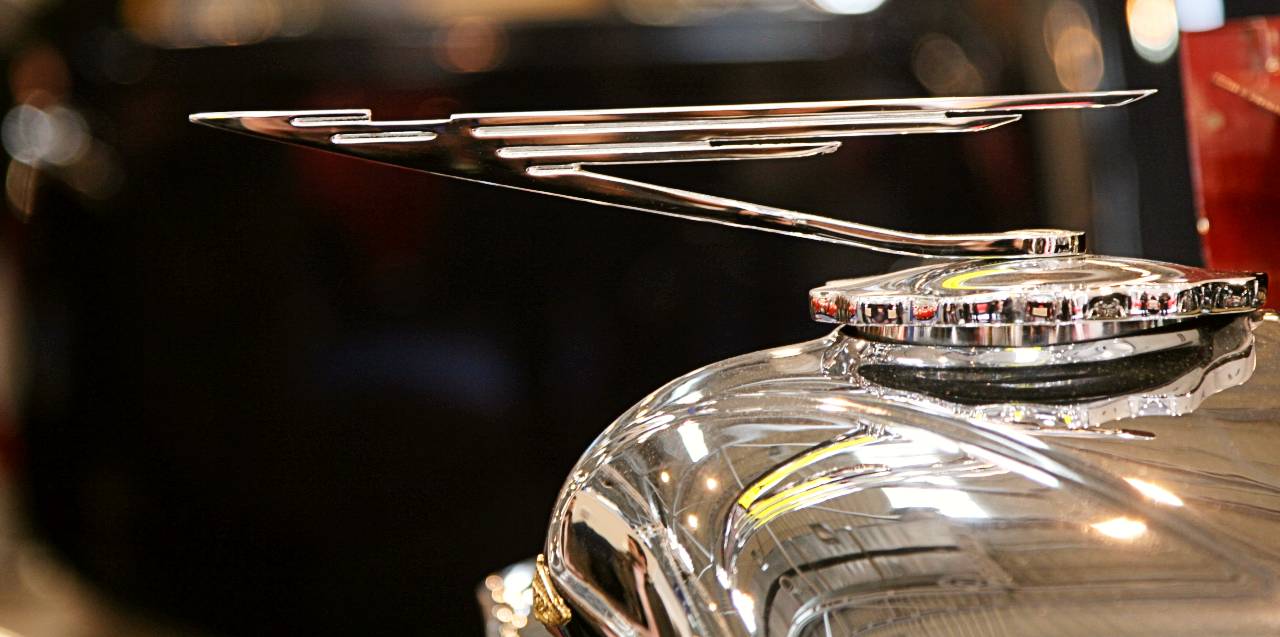
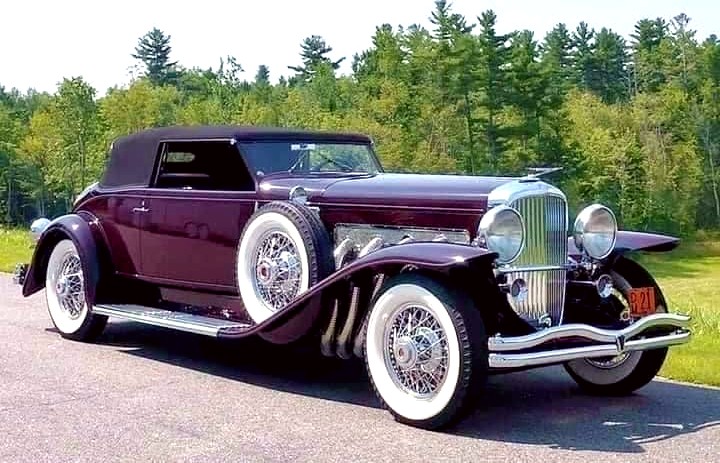
Have you ever experienced something so awe-inspiring that you shook your head, exhaled in amazement, and called it a “doozy”? Well, if not, get ready to do that when you see the cars below. They are “doozys” in a very literal sense.
The term expresses the overwhelming feeling you get when you contemplate not only the size of these unique American creations, but their precision engineering, their speed, and their majestic beauty. They are the Duesenbergs.
Rise and Demise
In the post-war boom of the 1920s, the German-born Duesenberg brothers, Frederick (1876–1932) and August (1879–1955), took full advantage of the bustling 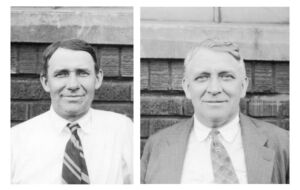 entrepreneurial culture in America and built a brand of car they termed “the world’s finest motorcar.” And they weren’t bragging. Others just called their brand the American Rolls Royce.
Prior to 1920, the brothers exclusively built race cars, but when they moved their shop to Indianapolis (I think there’s a racecourse there, if I’m not mistaken), they kept building race cars and then expanded into the luxury car business.
From 1920 to1937, they literally hand-built close to 1200 automotive masterpieces before they went out of business at the height of the Great Depression in 1937. It is estimated that about half of these cars are still in existence almost a century later. But the demise of the business is actually a very sad story.
The Roosevelt administration subsidized every other major car company in America during the Depression to keep cars rolling off the assembly lines, but they refused to help the Duesenbergs. Why? The millionaire Roosevelt didn’t want to be perceived as funding a project for the wealthy.
He must have forgotten that Duesenberg was the largest employer in Indianapolis at the time, and as a result, hundreds of working men and women lost their jobs there and in other locations at the time they needed work the most. Distorted ideologies create so much havoc in every age.
Fabulous Ingenuity
Yet, these cars are a sacred window of fantastic human genius and one of the hallmarks of the Industrial Age of America. The irony of Roosevelt’s decision is that  Duesenberg cars became even more valuable once they became a piece of history. Their rarity and superior quality now puts them in a class by themselves. They are the celebrated granddaddy of all classic cars.
This car, for example—the magnificent 1933 Duesenberg SJ Arlington Torpedo Coupe—got the nickname “Twenty Grand” because that was its selling price in 1933. That would be half a million dollars in today’s money, but you couldn’t buy it now even for that hefty sum. It’s one of the most sought-after cars in the world, and its recent price tag at auction was $2.5 million.
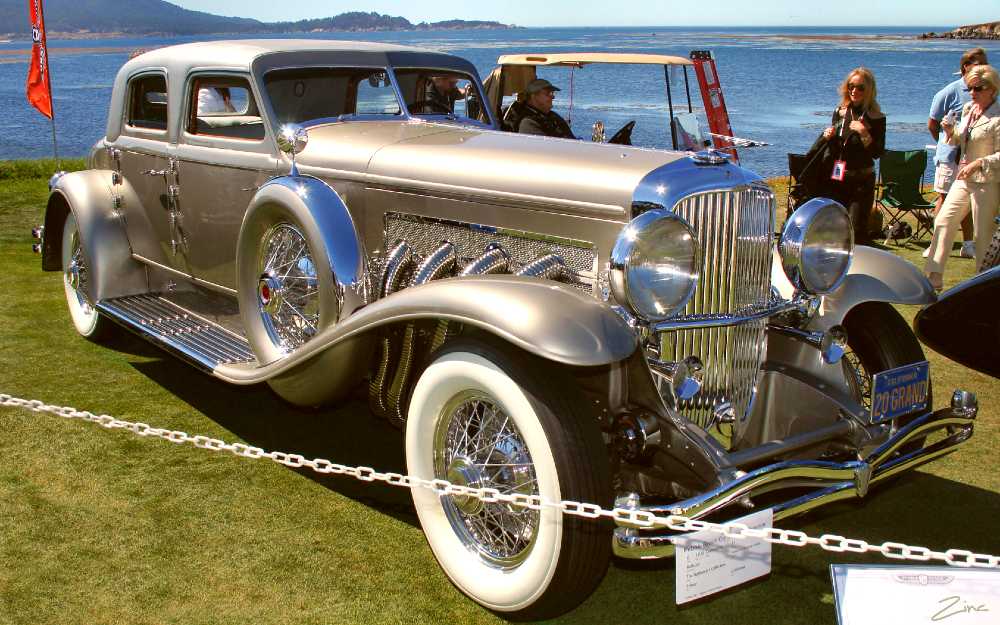
However, that seems like a discount compared to the 2018 sale of the 1935 Duesy roadster that was owned by Gary Cooper. It sold for $22 million making it the most expensive car ever sold at auction anywhere! (You’ll see an image of it below.)
An Angelic Analogy
It occurred to me that if God, in His mysterious Wisdom, ever wanted angels to come to earth and take the form of some human technology, they would probably appear as Duesenbergs. I know it’s a crazy idea but stay with me here. Some of the characteristics have undeniable resonances with angels, particularly in the titles and attributes.
Various ranks of the angelic host, for example, are named Principalities, Powers, Virtues, and Dominations, and Duesenbergs bear all these likenesses. Let’s take a look at them.
Princely
Well, this category hardly needs explanation. These amazing Duesenberg stars just ooze with elegance, the last of which is the above-named Torpedo in its appropriately regal setting:
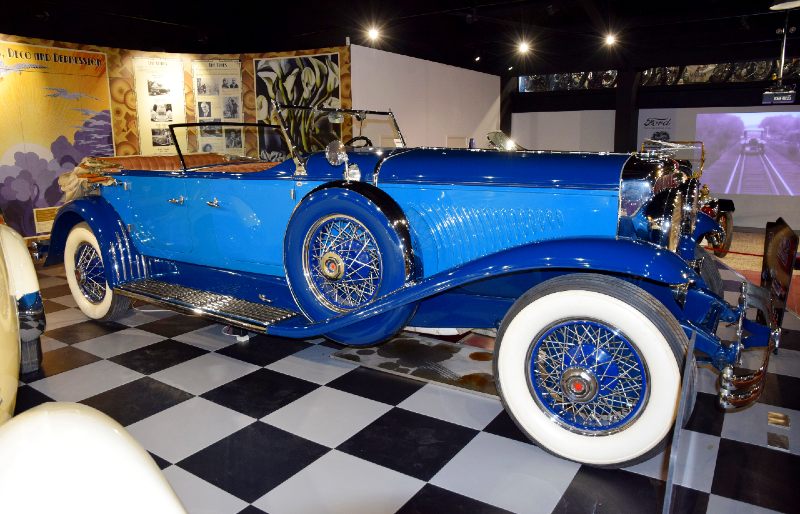
1931 Duesenberg Model J Derham Tourster
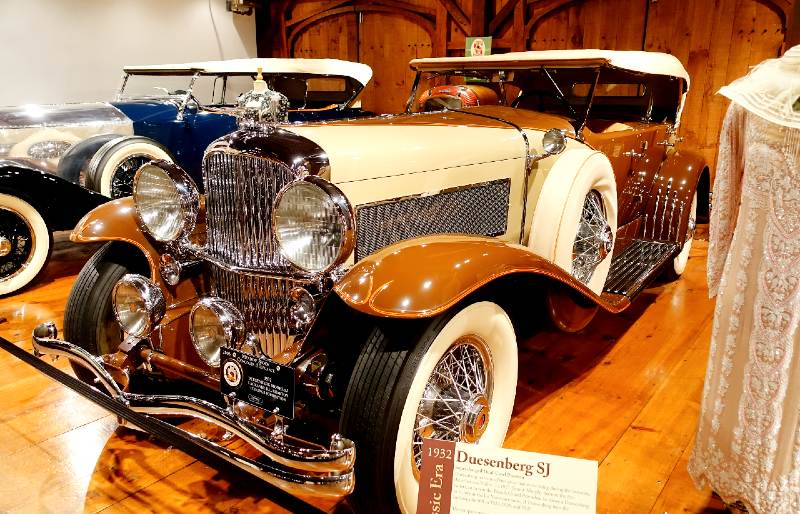
1932 Duesenberg Model SJ Caramel and Cream
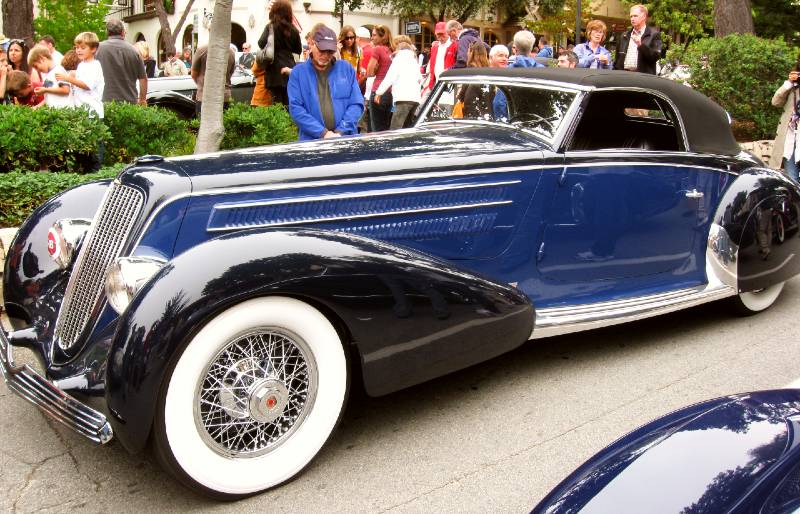
1930 Duesenberg Model J Graber Cabriolet
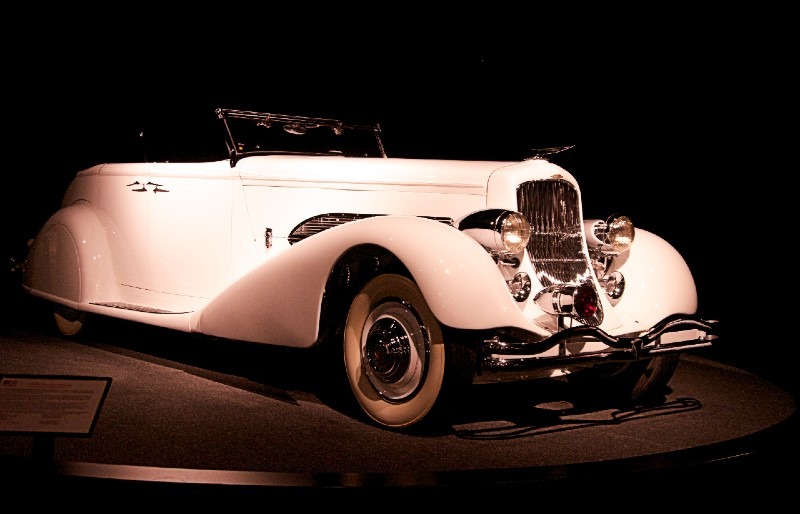
1936 Deusenberg Model SJ White Sedan
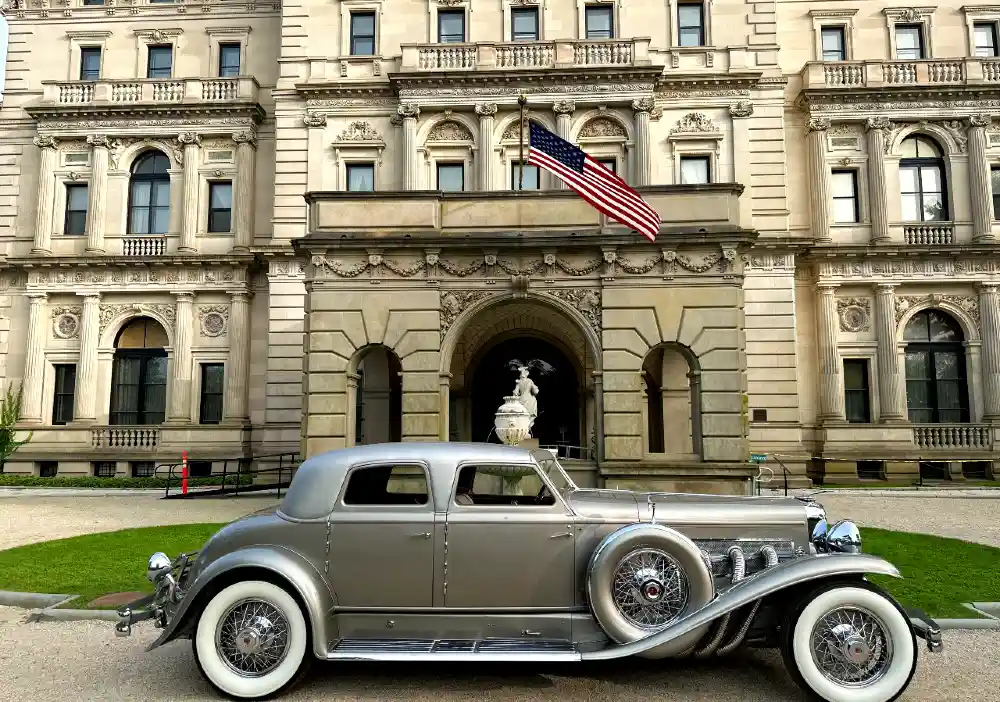
Virtuous
If the Virtue angels had anything to say about their technological garb, they would be absolutely bursting with personality. In fact, they might look like these doozys:
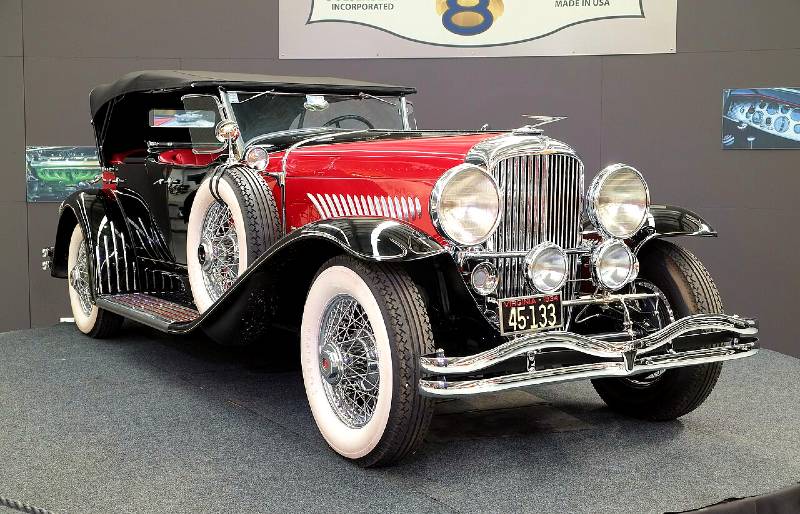
1934 Duesenberg Model J LaGrande Dual Cowl Phaeton
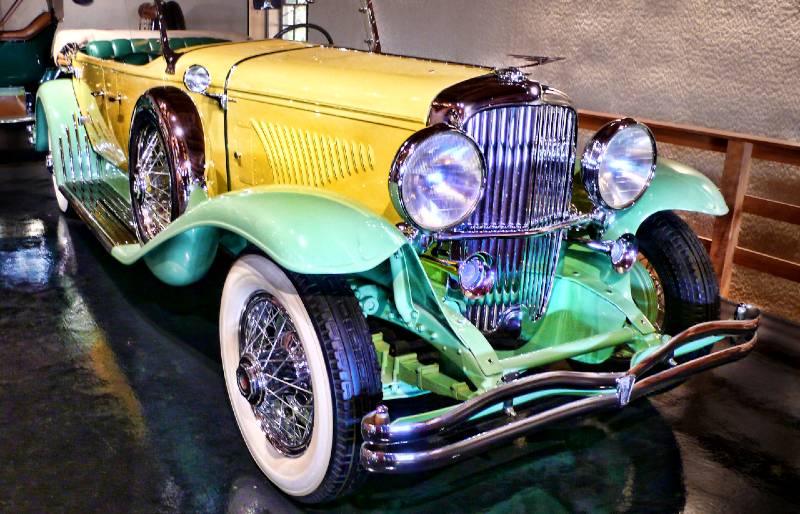
1931 Two-Tone Duesenberg Model J
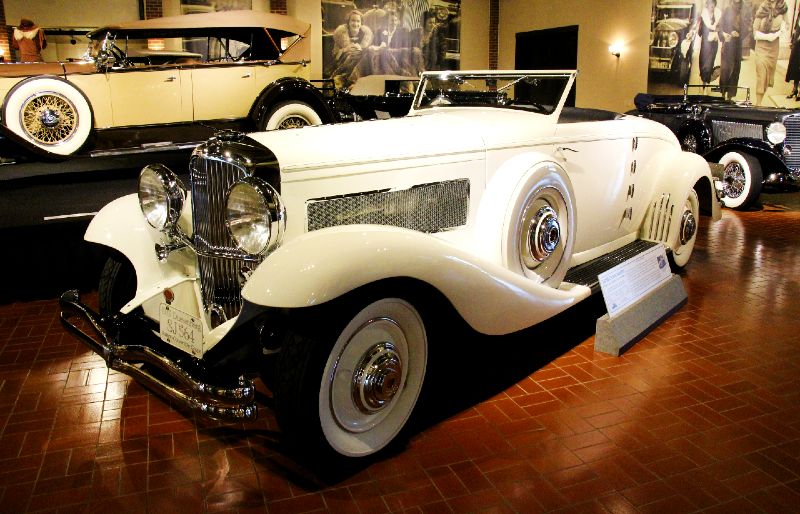
1935 Duesenberg Model JN Cabriolet
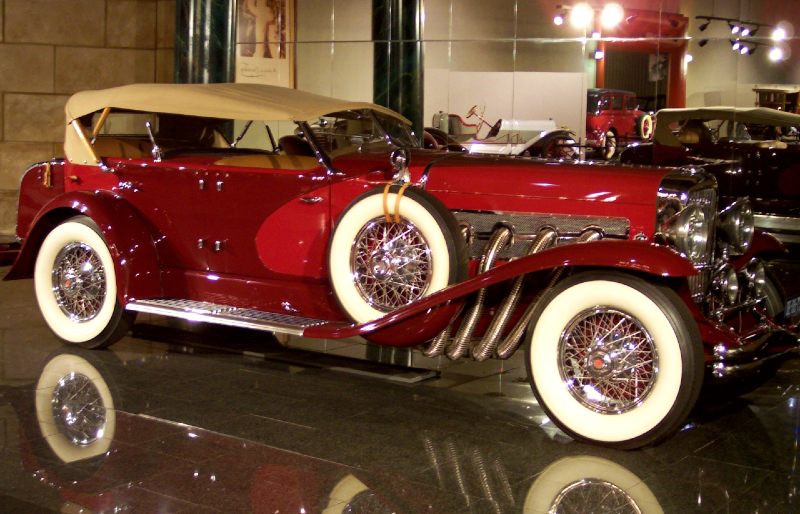
1935 Duesenberg Model SJ Lagrande Dual-Cowl Phaeton
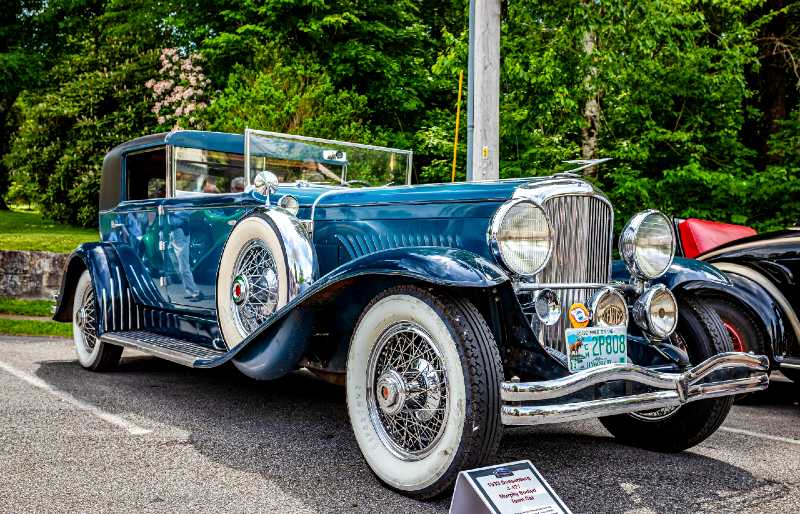
It’s hard to appreciate one element of the cars that is not evident in these pictures but that bowls you over if you are standing next to them: their length. Each of these cars is over 11 feet long, some closer to 12!
Duesenbergs were the ultimate luxury car of the era. One of their advertisements at the time featured a drawing of an elegantly-dressed, high society lady who is being talked about by her friends at a party. The caption reads, “She owns a Duesenberg.” Oooh la la.
The marketing worked. Some of the Twenties- and Thirties-era celebrities who owned Duesys were Clark Gable, Howard Hughes, William Randolph Hearst, Greta Garbo, and Ginger Rogers, among other lesser stars in the firmament of Hollywood’s Golden Age. Even Al Capone owned one!
Continuing the celebrity trend, former Tonight Show host and classic car collector, Jay Leno, owns four of them today.
Sheer Power
The Power angels would not be disappointed either. These were hefty cars. They each weighed two-and-a-half tons but could reach three tons with all the accoutrements. They projected pure power, which was anything but a facade.
The first several iterations of luxury Duesenbergs boasted an 8-cylinder, 265 horsepower engine, which was a full 80 to 100 more equine strength than the nearest competitor. (The Cadillac, for example, had a 16-cylinder engine but was no match in power.)
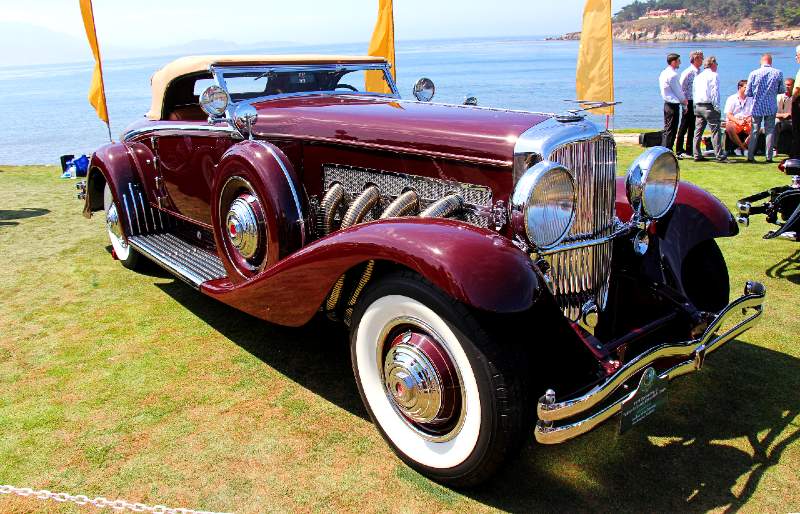
1934 Duesenberg Model SJ Convertible Coupe
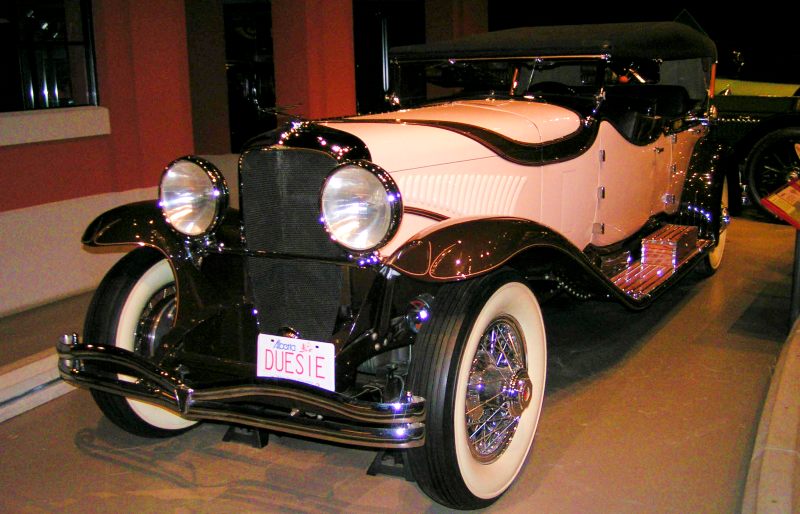
1929 Duesenberg Model J Wolfington Phaeton Royale
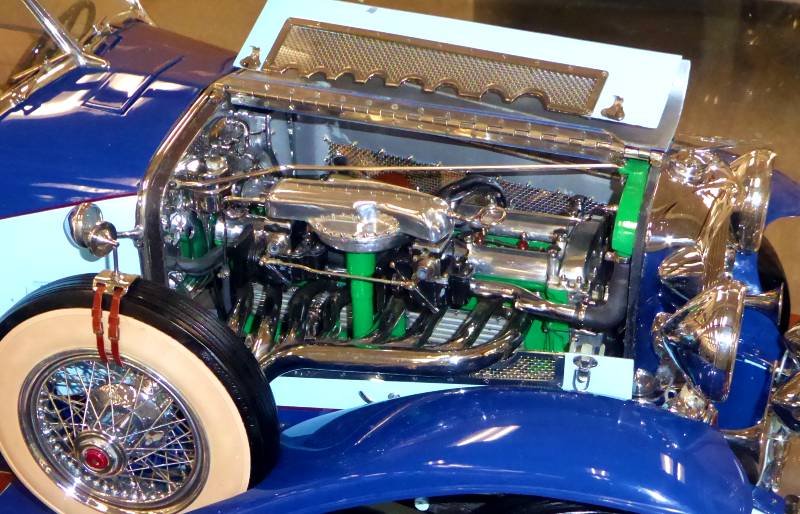
1932 Model SJ Duesenberg Engine by Louis Chenot
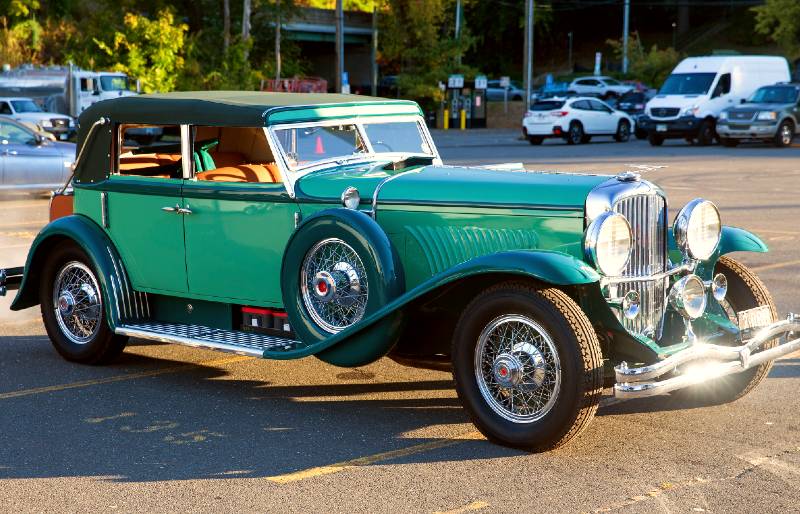
1931 Duesenberg Model J Derham Tourster
Later versions pushed the horsepower up to 320, then the two sold to Gary Cooper and Clark Gable towards the end of the era boasted 400 horsepower and could hit speeds of 140 mph.
One of their marketing slogans put it brilliantly, if a bit snootily: “The only car that could pass a Duesenberg is another Duesenberg — and that is with the first owner’s consent.” These brothers were not only clever mechanics but were marketing geniuses to boot.
Speed
Speaking of which, there’s no question that horsepower equals speed, and in this category the Duesenbergs absolutely dominated, which may have gotten the notice of the Domination angels. Here’s where the race car division proved its mettle in the early days of automotive speed racing.
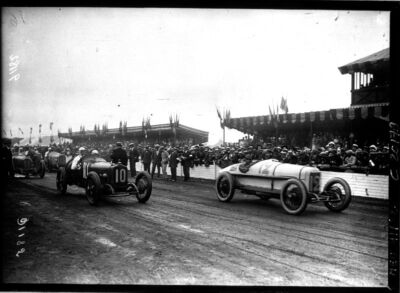
In 1920, a Deusenberg broke the land speed record at Daytona Beach topping 156 mph. In 1921, Jimmy Murphy drove a Deusy to win the French Grand Prix, being the first American car to do so. Here’s a picture of the victorious “Murphy Special” (white, #12) from the French National Archives:
And no other brand surpassed the Duesenbergs’ unmatched record at the Indy 500 in the ’20s. In 1921, seven of the top ten finalists were Duesenbergs!
They won the grand prize in 1922 (the same “Murphy Special”), 1924, 1925, and 1927, and throughout the decade, even when they didn’t come in first, they regularly placed in the top three. I’d say they gave the term “Roaring Twenties” new meaning.
It’s not surprising then, that in the 1930s the “roadster” style version of Duesenberg became wildly popular. As evidence of that, the Gary Cooper model is the white car immediately below, followed by a few more roadsters, including the shapely yellow model aptly called the “Meteor” (which was actually a speed competition car):
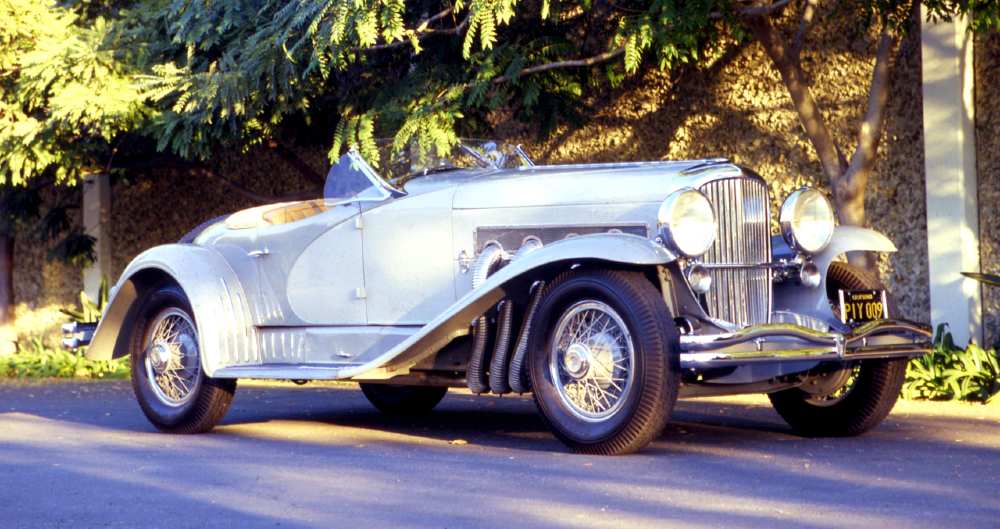
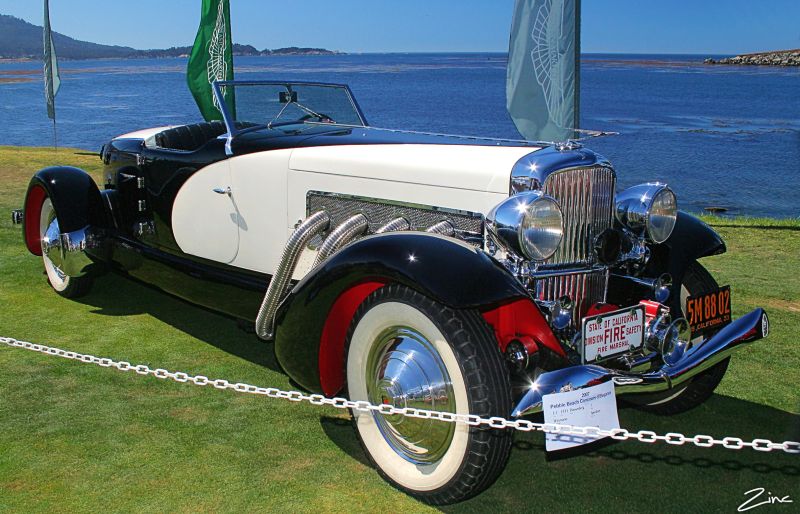
1933 Model J Supercharged Boattail Speedster
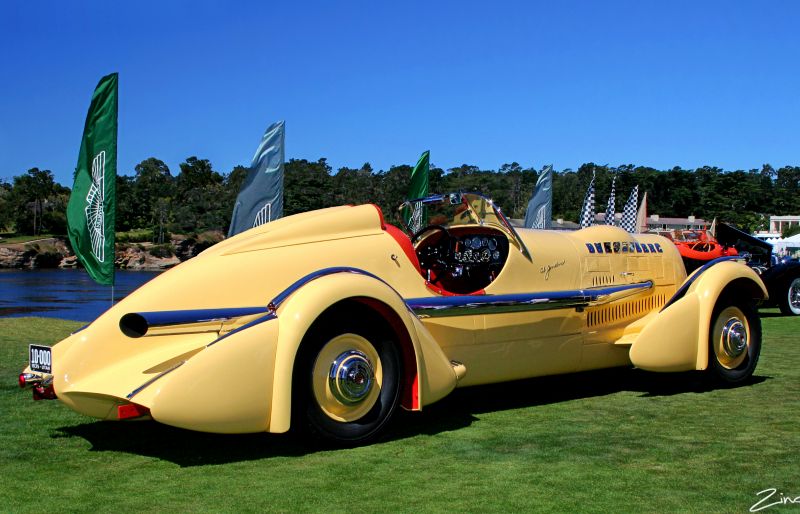
1935_Duesenberg_SJ_Speedster_OPT
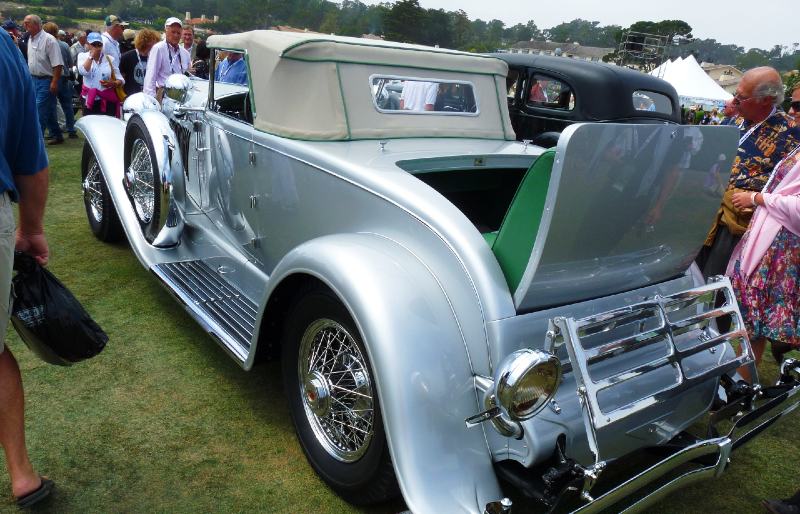
1929 Model J Murphy Convertible Coupe
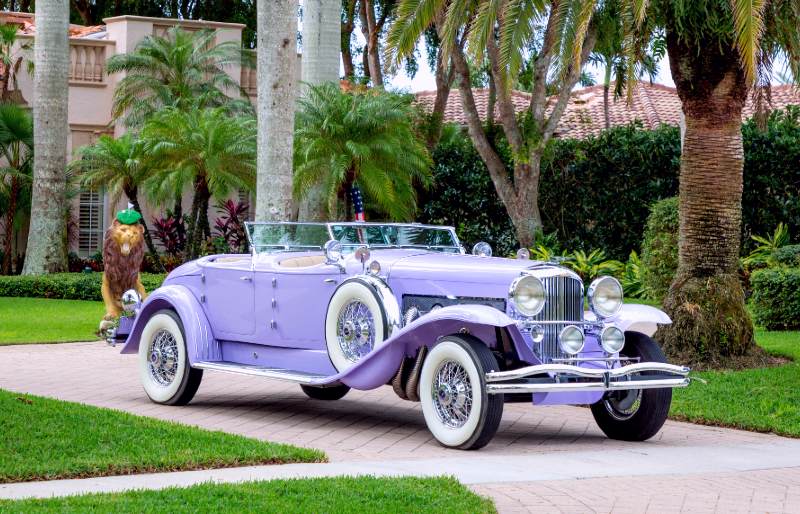
A Better World
In another sad irony, Fred Deusenberg died from the effects of a car crash in 1932—he was only 55—and never saw some of the most brilliant creations of his company. His brother never quite got over the loss of Fred and struggled to keep the business afloat.
After its dissolution in 1937, Augie kept his hand in various aspects of the racing business, but the luxury car business was gone, never to return. His son, Fritz, tried to revive the brand in the 1960s, but without success.
The Duesenberg brothers gave the world a gift, and like so many gifts and talents, their precious contributions were time-limited and bound by circumstances. What makes the story so remarkable is that the brothers were immigrants to our “land of the free” who used their innate talents to create meaning and beauty for the betterment of their world while they were able to do so. Wouldn’t it be nice if everyone did that?
Much more could be said about the Duesenberg history and accomplishments, but I think the raw imagery of their creations tells the main story.
I have this dream of going exploring in an old barn some day and coming across a vintage 1933 Duesenberg Riviera Phaeton SJ Coupe that’s been sitting there waiting to be discovered for sixty years. Given all I’ve said about the angels, I imagine it would be a kind of spiritual experience.
—–
Duesenberg Brothers (Public Domain); PRINCELY: Blue Derham Tourster (Hugh Llewelyn); Caramel and Cream Model SJ (Daderot); Blue Graber Cabriolet (LarryStevens); White Sedan (Brian Sims); Arlington Torpedo (Rex Gray); VIRTUOUS: Red-Black LaGrande (Pseudopanax); 1931 Yellow-Green Duesenberg (liz west); White Cabriolet (Sicnag); Red Lagrande (Stahlkocher); Blue Phaeton n.d. (Brian Welker, via Alamy); POWER: Concours Maroon Sedan n.d. (Jay Cross from Berkeley); Black-White Sedan (dave_7 from Lethbridge, Canada); 1932 SJ Duesenberg by Louis Chenot (Jim1138); Green Tourster (Mr.choppers); SPEED: 1921 Grand Prix (Bibliothèque Nationale de France); Gary Cooper Roadster (Smith Archive via Alamy); Black-White Speedster (Rex Gray); Yellow Mormon Meteor (Rex Gray); Rumble Seat Convertible (Craig Howell); Lavender Roadster n.d. (Brian Jannsen via Alamy); Hood Ornaments (Model A; Techno Classica 2008, by Thomas Vogt).
[Note: This article is a reproduction of the Sacred Windows Email Newsletter of 6/14/26. Please visit our Newsletter Archives.]

.jpg)


.jpg)

.jpg)
.jpg)
.jpg)

.jpg)
.jpg)

.jpg)
,_d%C3%A9part_de_Murphy_sur_Duesenberg_et_de_Henry_Segrave_sur_Talbot_n%C2%B0_10_-_d%C3%A9part_de_Murphy_sur_Duesenberg_et_de_Henry_Segrave_sur_Talbot_n%C2%B0_10_-..._-_btv1b9053680q.jpg)


.jpg)
.jpg)
.jpg)
Leave A Comment