

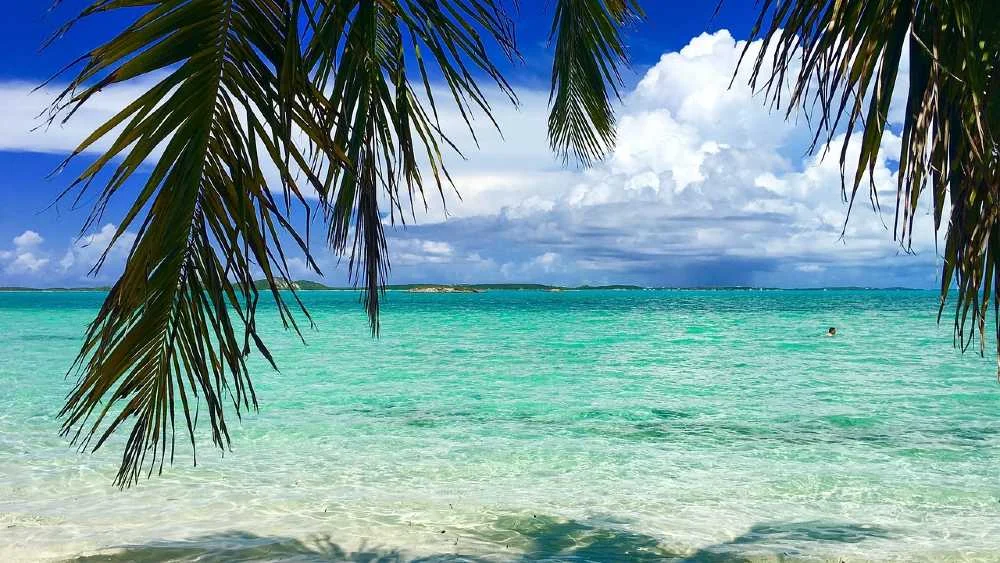
In Flat Florida where I live, we joke that the highest elevation in the state is Space Mountain in Disney World (180 feet high). Kidding aside, there’s some truth to that claim, at least as regards the southern half of the state.
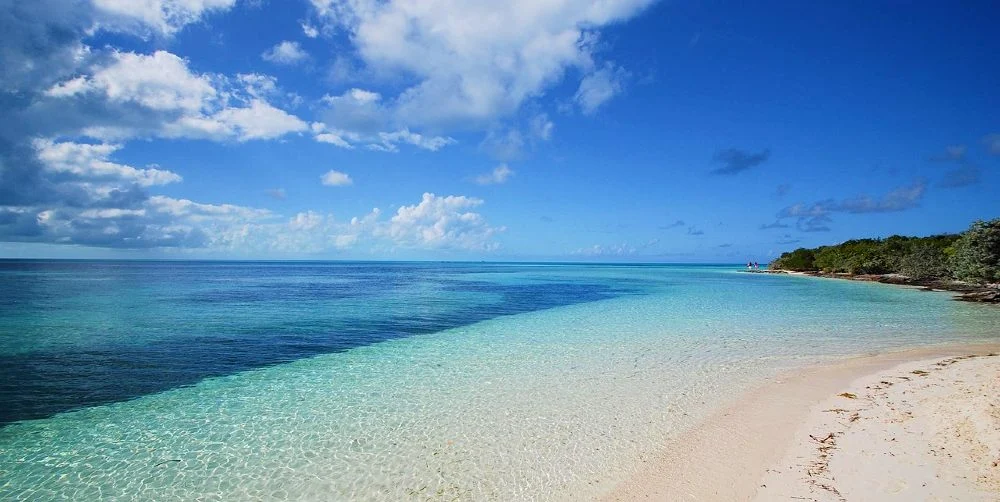
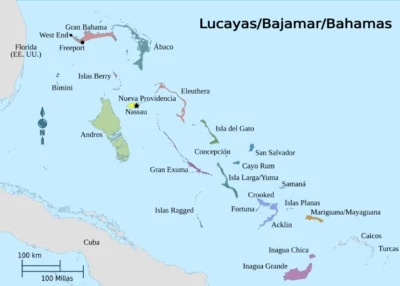 The Bahamas, just off Florida’s east coast, has the same problem. It’s a chain of some 700 islands and cays occupying the westernmost end of the Caribbean, and most of those blips and slips of land are flat as pancakes.
They were not formed by ancient volcanic eruptions like many Pacific islands, nor are they peaks of gigantic mountains sticking up out of the water. They are basically the flat tops of huge sand bars that seem to silently emerge from the azure waters of the Caribbean like an alligator raising his snoot and head above the surface just enough to get a good look at you.
The official elevation of the Bahamas is only 30 feet above sea level (average) barely keeping it from being swallowed up by the sea. Like most Caribbean islands, though, the Bahamas has the advantage of being fabulously beautiful. One of its islands is even named Paradise.
An Island Called Cat
There are a handful of sites on various islands that reach 100 feet of elevation or more, but not many. Only one point, however, reaches the 200-foot mark. The place is called Cat Island, which is probably not named for the feral cats that used to roam around on it but rather for the swashbuckling pirate named Arthur Catt who used the island as a hideout and allegedly buried treasure there. (Yeah, yeah, every notorious pirate has one of those legends.)
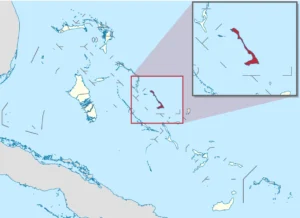 They say that Christopher Columbus discovered the island on his first trip to the Americas (1492) and named it San Salvador in honor of Jesus. The buccaneer legend, however, must have been a better bet for tourism because an act of the Bahamian Parliament changed the island’s original Spanish name to Catt Island in 1926. It was probably a business decision.
So, if I’ve got this right, a government exchanged the Savior for a criminal for 30 pieces of eight, is that correct? I’ve heard that story somewhere before.
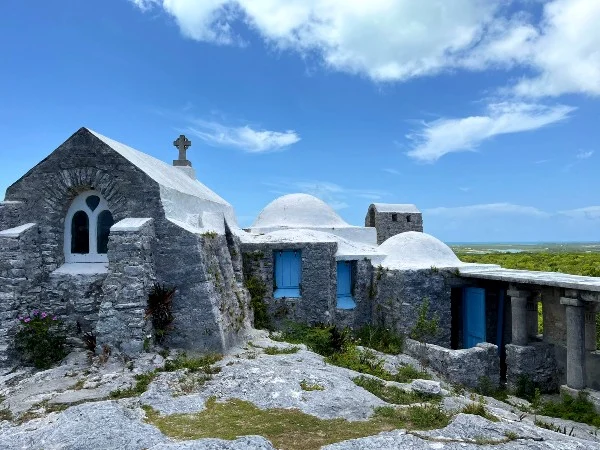
Anyway, the highest point on Cat Island is Mount Alvernia (206 feet above sea level), which is not only the highest elevation in the whole country but is also the site of an idyllic hermitage dedicated to St. Francis of Assisi. Here’s an image of the structure and the 200-foot path up to it.
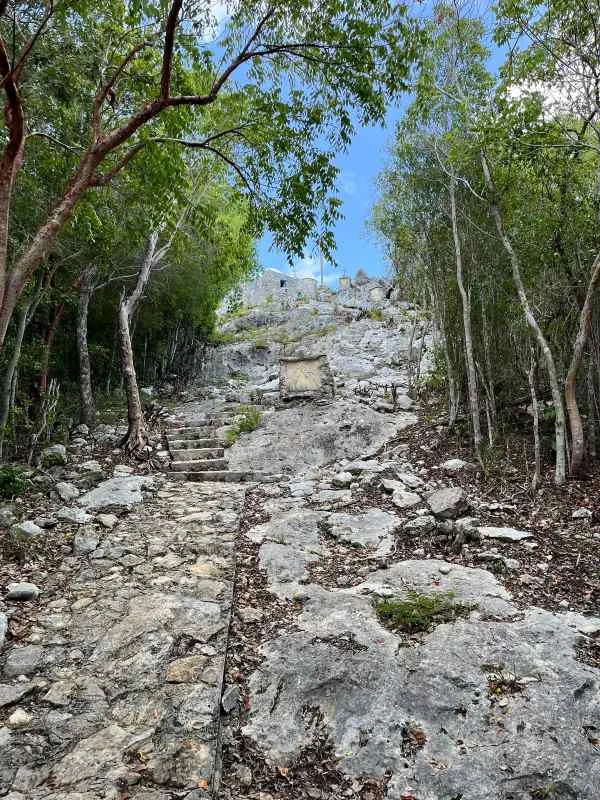
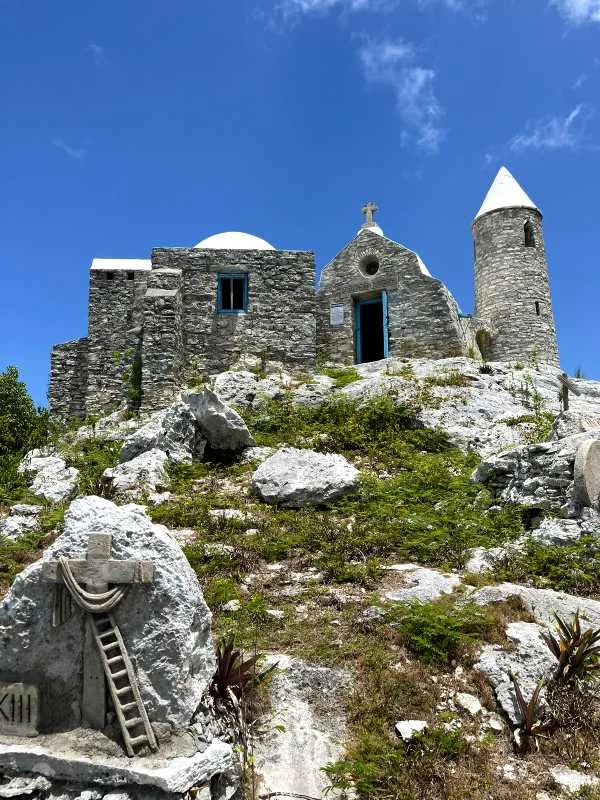
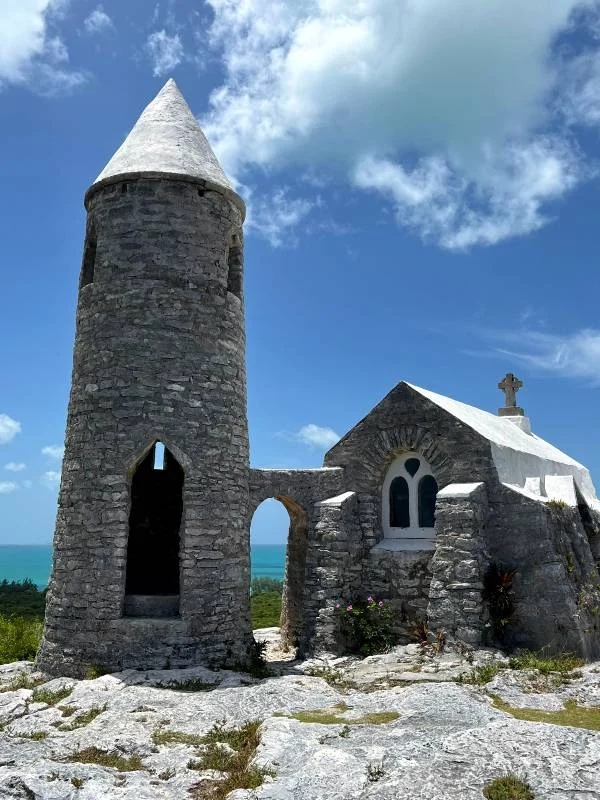
No air conditioning? Perish the thought! It’s a pretty stark place. Then again, it’s the home of a hermit. But St. Francis would approve. You may know that Francis received the stigmata of Christ in 1224 while praying on the top of a mountain called Alvernia in Central Italy. Hence the name.
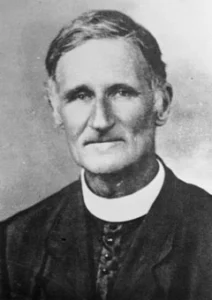 Architect, Priest, Hermit
A Catholic priest, Monsignor John Hawes (1876-1956), is the reason for that shrine. He gave the Bahamian mountain its name and built that hermitage at the top, where he lived the last 17 years of his life, calling himself Fra Jerome and doing good works for the people of the area.
Hawes was an Englishman by birth and worked as an architect in a secular career before becoming an Anglican priest in his 20s. However, in 1911, at age 35, he converted to Catholicism and then entered Holy Orders as a Catholic priest. When still a seminarian he met a bishop from Western Australia who invited him to come and do some work in his diocese. That would affect the whole course of the young priest’s life, as we’ll see.
A Gift to Give
Interesting thing: as a priest, he didn’t give up his architectural practice even though he wasn’t in it for business anymore. He built churches instead (on top of his 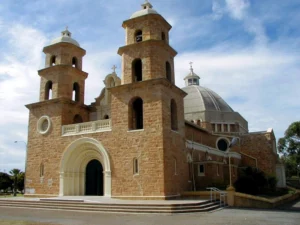 pastoral duties)! That’s a pretty good way to live out one’s priesthood, I would say. In addition to his sacramental ministry, he had a (natural) gift to give, and he gave it generously.
The good Monsignor was responding to the needs of the Church on several continents (England, Australia, Caribbean) during his half-century-long career. It’s always fascinating to me how an artist’s style goes a long way in showing the kind of person he was and the kind of vision he has for serving others or improving the world.
And we’ll see that in this quick survey of a few of his creations in the desert of Western Australia, where he spent the bulk of his priestly life building churches.
A Down-To-Earth Style
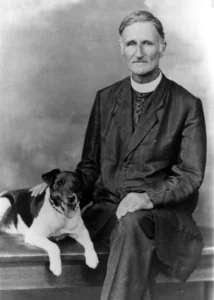 I’ll start by naming the thing I like best about this priest. He had a dog. Dogs usually bring you right down to earth, don’t they? The dog’s name was Dominie, a cute fox terrier, who famously worked side-by-side with the priest and was not afraid to pose for a photograph with him!
The people of the St Francis Xavier Cathedral in Geraldton, Western Australia, dedicated a bronze statue to the Msgr. Hawes and Dominie after the cathedral was completed.
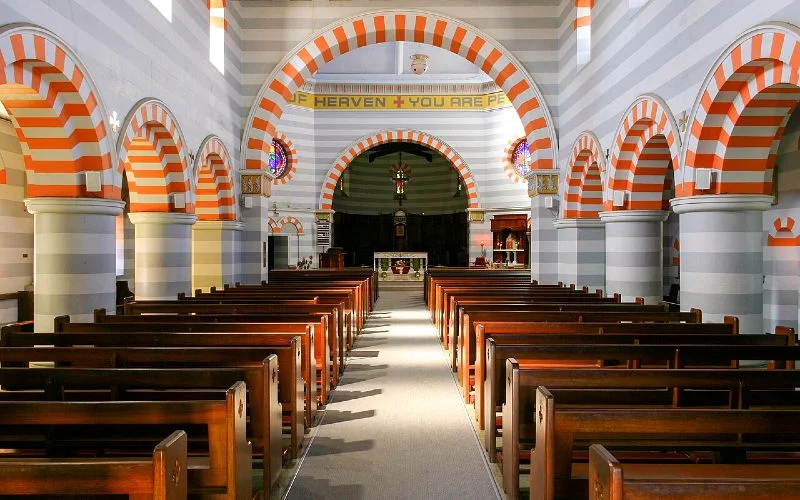
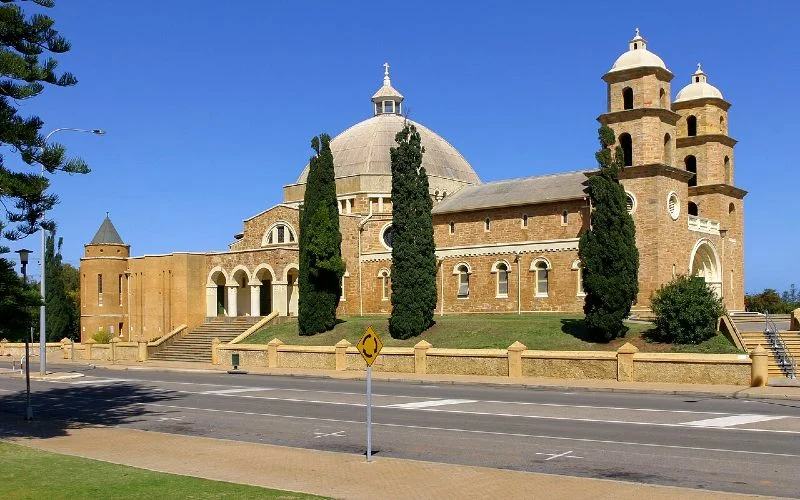
Look at the simple but lovely interior of the church with its massive pillars holding up Romanesque arches and that huge hexagonal dome above the sanctuary.
The white and gray horizontal lines on the walls lead the worshipper to focus attention forward on the holy Sacrifice taking place at the altar. The sandy brick exterior and the interior orange highlights give the space a feel of vibrancy that perfectly matches the desert terrain out of which it emerges as an oasis of spirit.
St Francis Xavier Cathedral in Geraldton, Western Australia
Other Churches
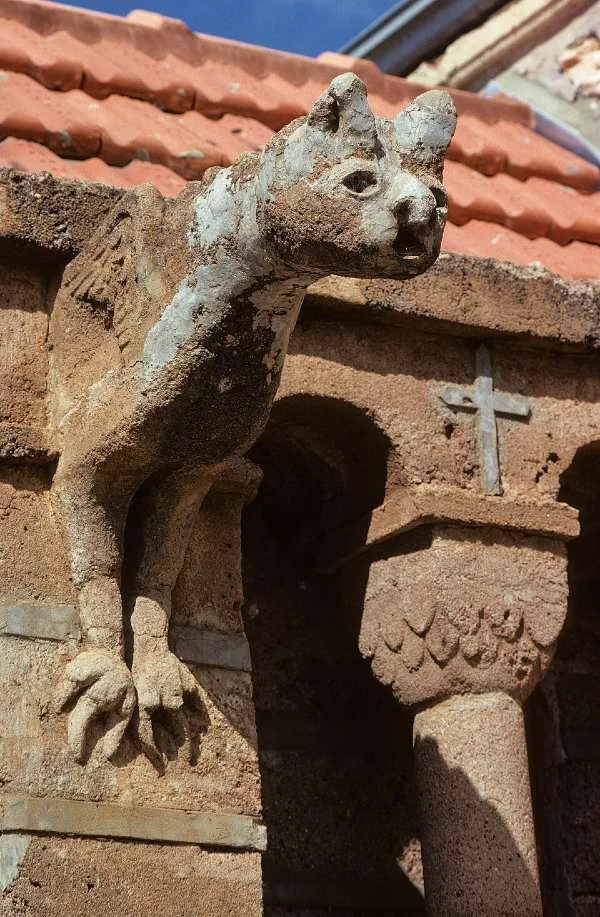
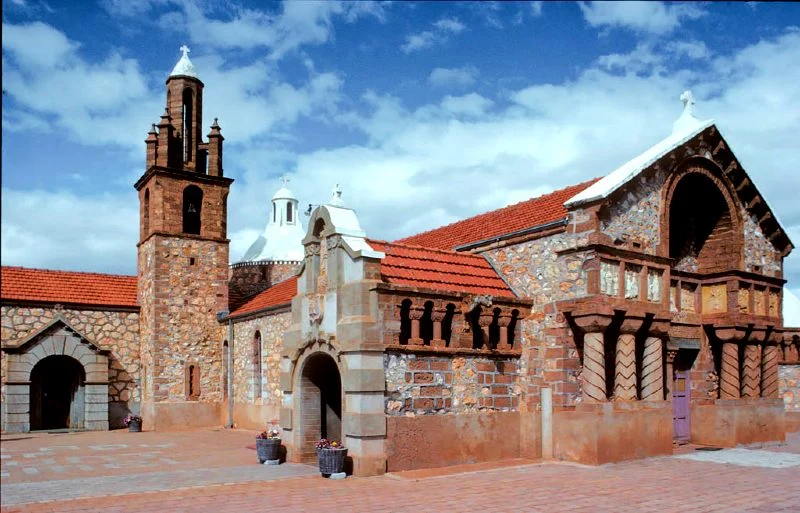
Monsignor Hawes designed and built numerous other churches of an equally “earthy” nature in Western Australia. Here are a few. I particularly like the gargoyle on this first one that looks a little bit like a kangaroo if you ask me!
Our Lady of Mt. Carmel Church in Mullewa, Western Australia (with rectory in back)
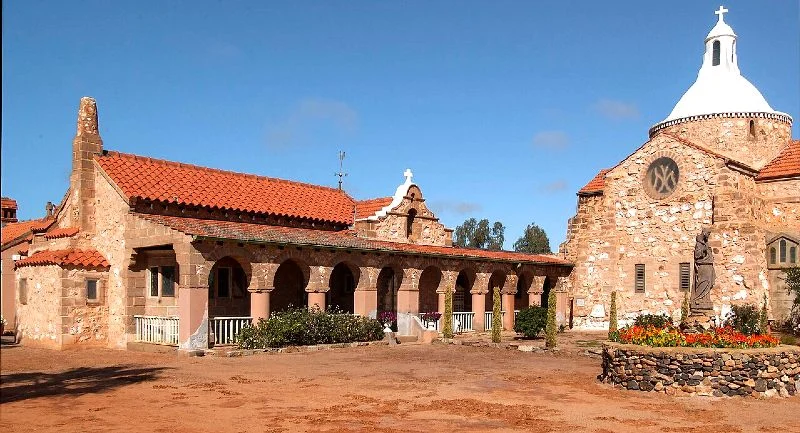
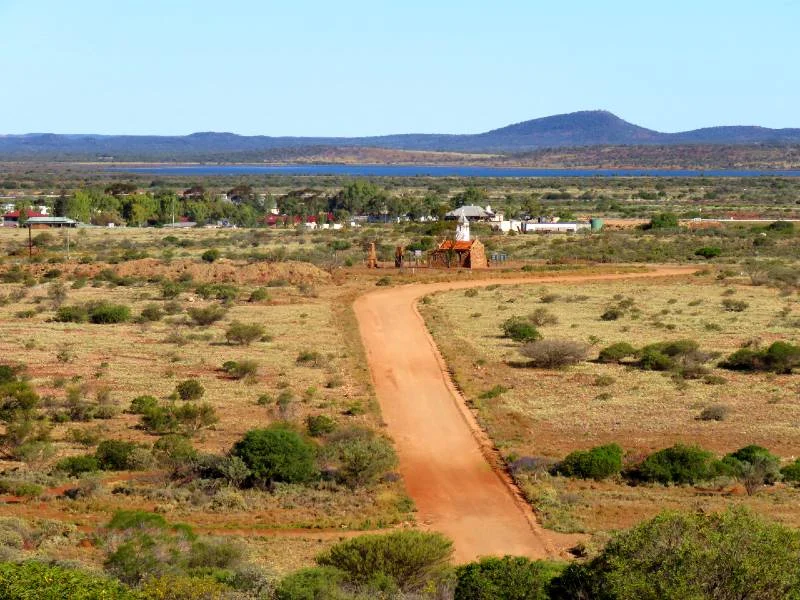
The Desert Road to the Convent of St. Hyacinth, Yalgoo, Western Australia
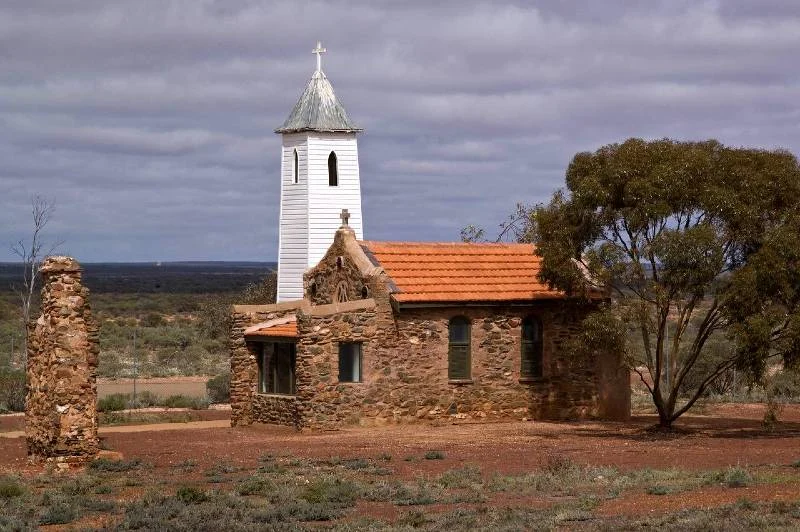
Church of St. Mary, Ara Coeli, & St Mary’s Star of the Sea, Carnarvon, Western Australia
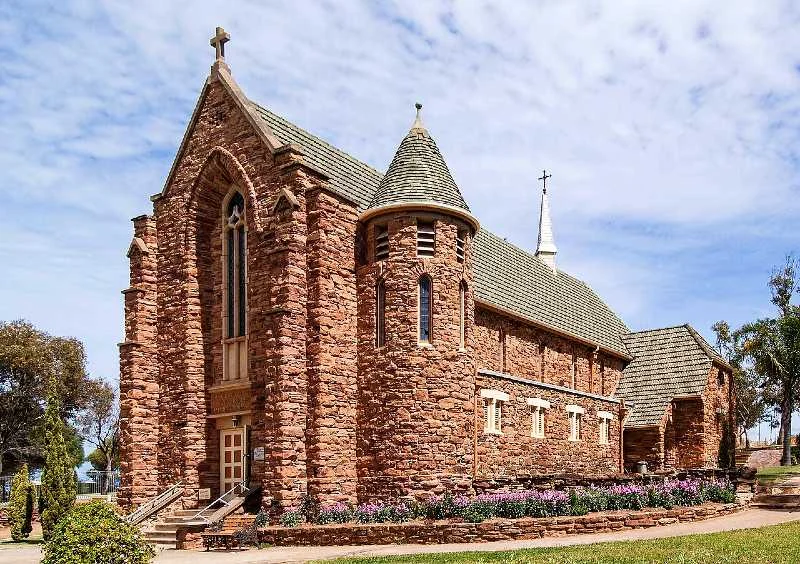
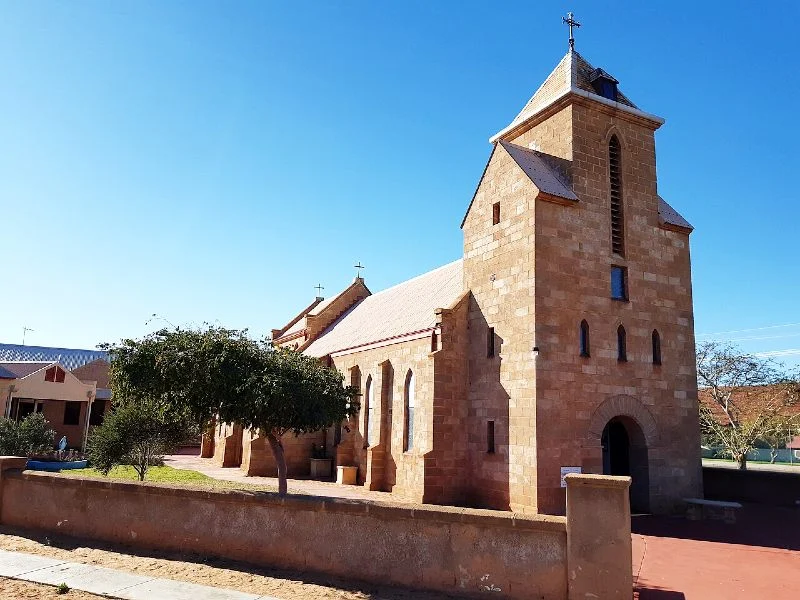
Space constraints prevent us from taking a wider tour of Monsignor’s work here, but it’s easy to see that his architectural style perfectly fit the environments in which the Catholic people of that region lived and worshiped. It’s all so humble, earthy, practical, and yet dignified and beautiful. He was a good shepherd who knew his sheep.
The Bahamas
Which brings us to the Bahamas. One must wonder what motivated an English priest to go from the deserts of Australia to a tropical paradise in the Caribbean halfway around the world. Again, it was a bishop.
Even before Hawes became a clergyman for the Church of England, he was asked by an Anglican bishop to build a church in Northumberland, England. That he did, but soon after that same Bishop was transferred to Nassau in the Bahamas, where a hurricane wiped out four churches in his diocese. He needed a good architect and knew just the guy to help him.
Hawes worked for two years in the Bahamas and repaired all the churches that had been damaged in the storm. Those years must have left a lasting impression on him because he always had a desire to return to the Bahamas.
Years later, once St. Francis Xavier Cathedral in Geraldton was finally finished and dedicated, 1938, Fr. Hawes (who had been made a Monsignor by this time due to his contributions to the church), set off for a pilgrimage to the Bahamas…and he never left.
The Hermitage
The final 17 years of his life in the Bahamas (1938-1956) were almost as productive as the previous period in Australia. During his time living on Cat Island as a hermit, he was asked to build a huge church, school, and convent in Nassau, another one on Long Island, and four churches on Cat Island, his home.
Just an amazing and prolific guy.
His final work was his hermitage on top of Mt. Alvernia where he lived literally like St. Francis in stark conditions of prayer, sacrifice, and charity as the perfect culmination of the vocation he had been given. He slept on a couple of planks, his air conditioning was the fresh Caribbean air, and his heart was open to all who came to him in need.
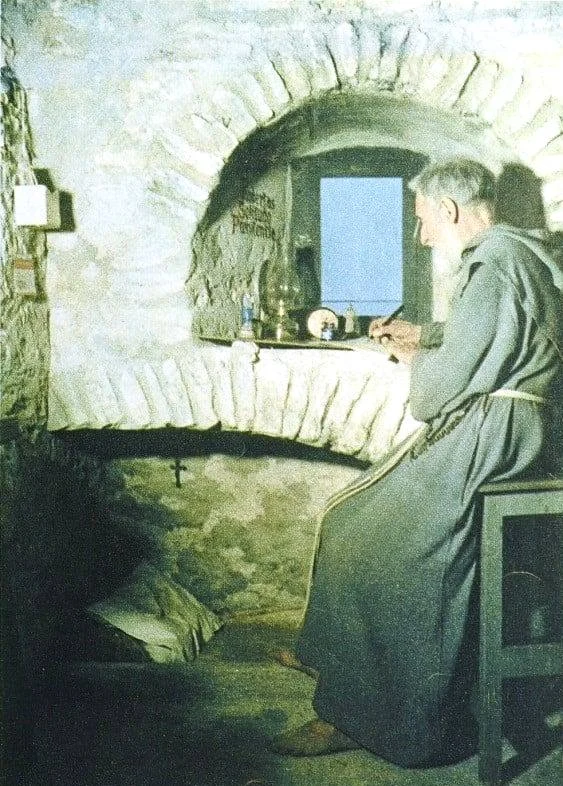
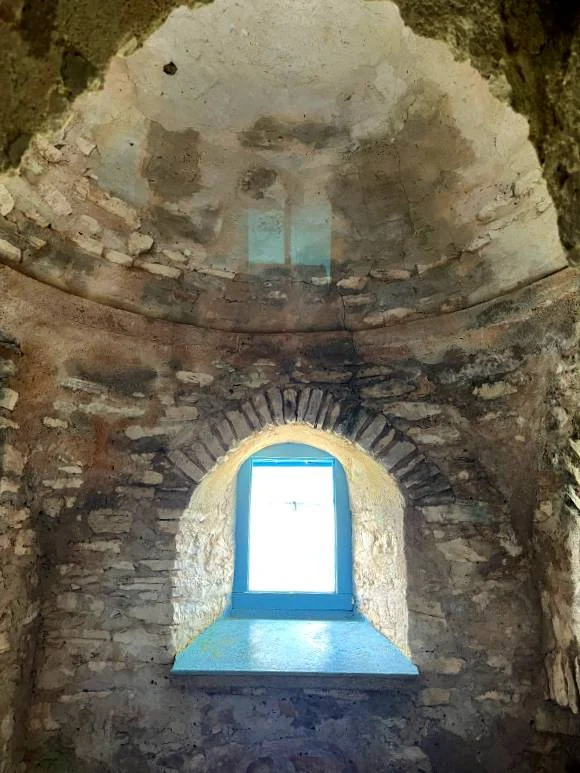
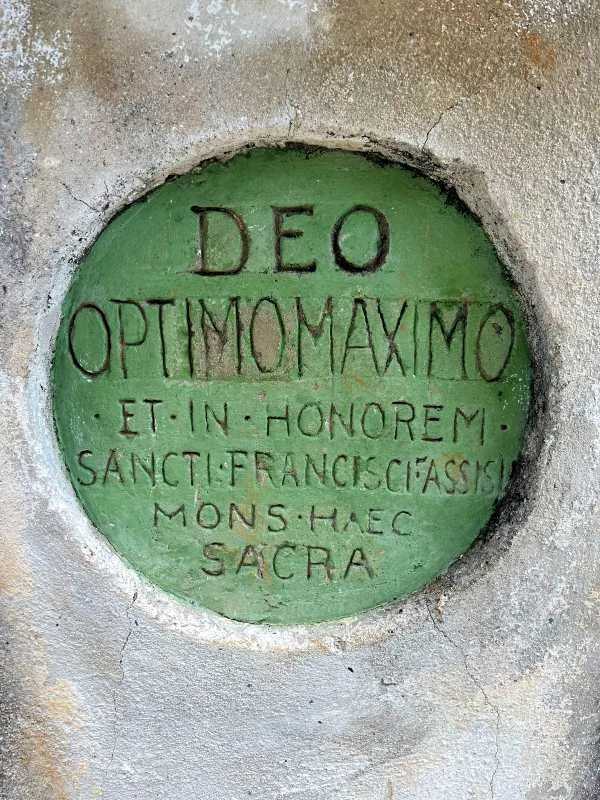
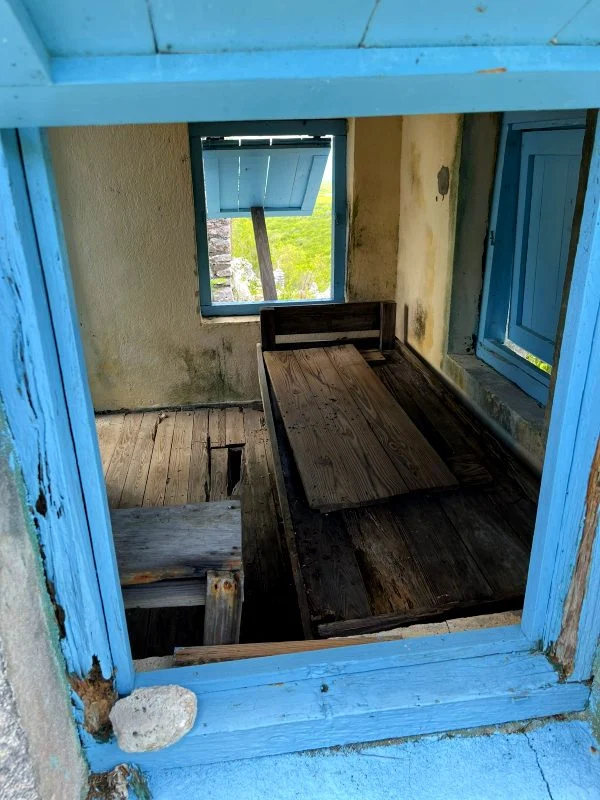
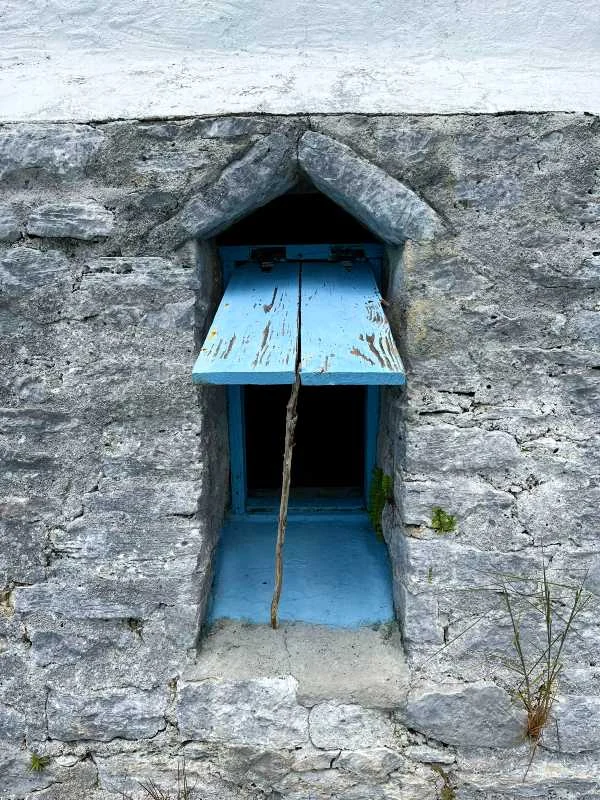
Being the highest point on the island, he could scan in every direction and see the wonders of nature.
A Sacred Window
Knowing as many priests as I have over the years, I’ve come the conclusion that the priestly vocation, well lived, can be a beautiful, stained glass sacred window of Faith, Hope, and Charity in the Church, with ripple effects on the world. The more these men dedicate themselves to the service of their brethren, the more souls fly to heaven. Each priestly life is an amazing gift.
And it’s got to be an added blessing when the priest can build churches too.
———-
Bahamas Map (Peter Fitzgerald, NordNordWest); Cat Island Map (TUBS); St Mary’s, Carnarvon (Calistemon); Our Lady of Mt. Carmel Mullewa (Michal Lewi); (Gargoyle); (Priesthouse); St Francis Xavier’s Cathedral, Geraldton. Western Australia: Exterior (Nachoman-au); Interior (Martin Kraft); Side view (Martin Kraft, license); St Mary in Ara Coeli, Northampton (Michal Lewi); Convent of St Hyacinth, Yalgoo (Michal Lewi); Remote view (Calistemon); Images of Mt Alvernia courtesy of Joseph Euteneuer; images of Msgr. Hawes courtesy of Diocese of Geraldton, Western Australia; other images courtesy of Pixabay.
[Note: This article is a reproduction of the Sacred Windows Email Newsletter of 10/4/26. Please visit our Newsletter Archives.]

.svg)


.jpg)


.jpg)
.jpg)


Leave A Comment