

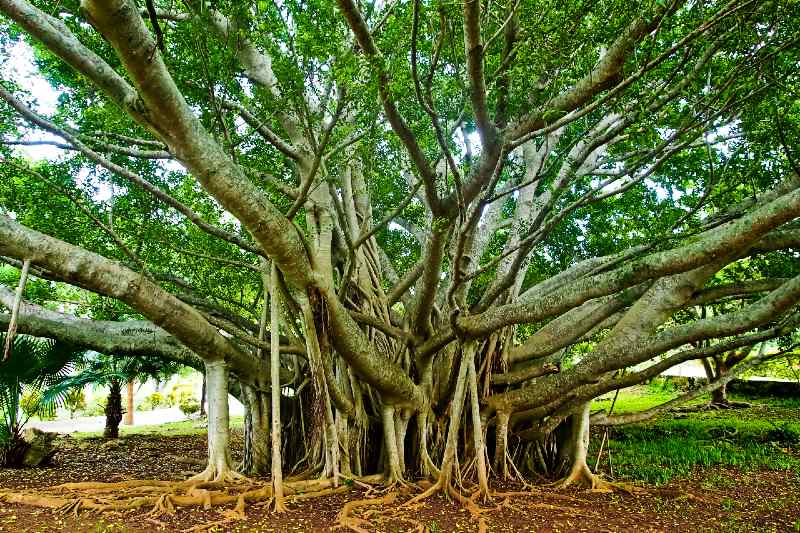
You almost can’t kill these trees. It’s not that they are unable to die but rather that they will generally outlast every community they take root in, outflank every attempt to limit them, and even survive and outgrow natural disasters that overrun them.
These are Banyan trees. The name comes from the word for “merchant” in Hindi, a class of native Indian entrepreneurs who conducted business underneath the canopies of these giant trees in India.
The Banyans are a ficus—“fig” in Latin—one of the most resilient types of trees on the planet, and there are over 800 separate species of them growing in just about every place in the world that has an abundance of heat and humidity.
That would, of course, include my home state of Florida which knows a little bit about heat and humidity. Our local brand of Banyan tree is called the Ficus Aurea, and I just love its English translation, the golden fig!
The massive structures are a wonderful, lush part of the natural landscape in Florida, and you can regularly take them for granted until something like this happens:
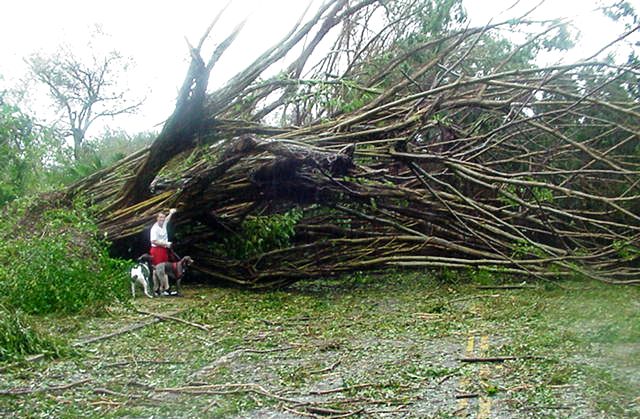
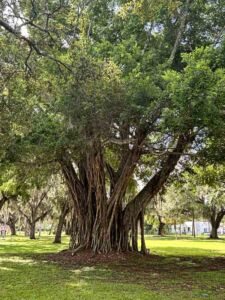
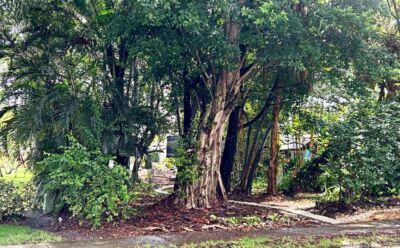 This sleeping giant was a Banyan tree in our neighborhood that literally got uprooted by Hurricane Frances in 2004. The city cut off all those branches and removed the trunk to clear the road, but they left the roots. That gave this arboreal whiz kid a chance to pick itself up from the battlefield like a fallen warrior and stand on its feet again. More than twenty years since, the roots turned into this champion that grows in the same spot today:
See what I mean about resilient? These trees are sacred windows of perseverance, survival skills, and attitude. God’s wonderful gifts of nature never cease teaching us how to handle life’s problems.
But for full disclosure, I have to mention that Banyans also have a dark side. If they were featured in mystery novels, they might be described as…
…Dangerously Beautiful
 Some of them, as beautiful and impressive as they are, have a decidedly negative habit of…um…how do I say this delicately…strangling (gulp) other trees. Just to make the point, one of their sub-species is named ficus suffocans.
Of course, it’s a family trait they like to keep hidden, but it happens to be their nature and it’s a little hard to hide the husks of strangled trees all over the place. You can’t blame them for being a little embarrassed about this element of their lineage. I mean, if Jack the Ripper was a part of your family line, would you brag about it?
The strangler versions of this species get the name because they grow in a kind of parasitic symbiosis with other trees. To start, birds drop seeds from the banyan figs into the crevices of nearby trees, and when the seeds grow, they form crawling roots that envelop the trunk of the host tree like a boa constrictor slowly suffocating its 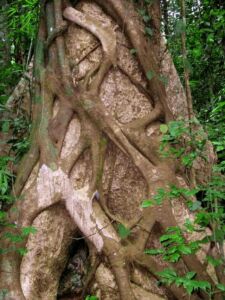 prey. Eventually, they end up killing the tree by…yes… extremely slow strangulation. (I didn’t say they were nice trees, just interesting.) Here’s what I mean.
Kinda creepy right? I wonder if anyone will ever make a horror movie called Terror at The Villages: Florida Strangler Ficus on the Loose, or something like that. I’ve volunteered to write the screenplay, but no one from Hollywood has contacted me yet.
The only positive side to this natural violence is that when the host tree dies, it eventually decays from the inside and creates a hollow tube which serves as a home for little animals. So, at least there’s that.
Oh, and by the way, the only neighbors who are immune to this homicidal habit of the Banyan species are palm trees. They’re like, “Give it your best shot, fig.” Palm trees have their own attitudes.
Wasps
Now, the other dangerous elements of the fig environment are the wasps that make these trees their natural habitat. There are some wasp species whose only job is to burrow into Banyan figs and lay their eggs. When the females emerge from the figs a few weeks later, they carry the pollen from one tree to another and help to gestate the seeds that have sprouted elsewhere.
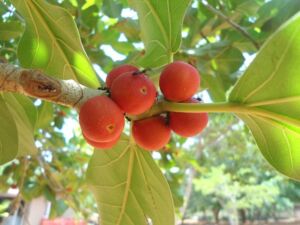 It’s a dysfunctional arrangement, I know—the wasp uses the fig, the fig uses the wasp—totally psychologically unhealthy for sure, but what can you expect from creatures who strangle and sting people for a living?
Here is the fig fruit of the banyan tree. I’m not including a picture of the wasps because I got stung by one when I was a kid and have never forgiven the species as a whole. In this article, I’m branding them as accessories to the crime of strangulation, so maybe I finally have my justice.
Root Survivors
Anyway, thankfully, strangulation is not the whole story of this amazing natural wonder. The banyans normally grow by extension. They tend to inhabit thickets where sunlight can be hard to access, so they send out branches horizontally. Then, from nodes of these extended branches, they drop new trunks (called aerial roots) down to the ground to derive nutrients and moisture from the soil and then keep stretching outward to get more sun.
In some places they are called “trees of a thousand trunks” and even “walking trees” due to their ability to go places.
This talent for self-propagation makes the banyans by far the largest trees on the planet by area (not by volume, which is a category dominated by the redwoods). I’ll show you what I mean. Here’s The Great Banyan in Kolkata, India, which is reputed to be the largest tree in the world by surface area. It covers nearly 48,000 square feet (3.5 acres) and is confirmed to be over 250 years old. Wow!
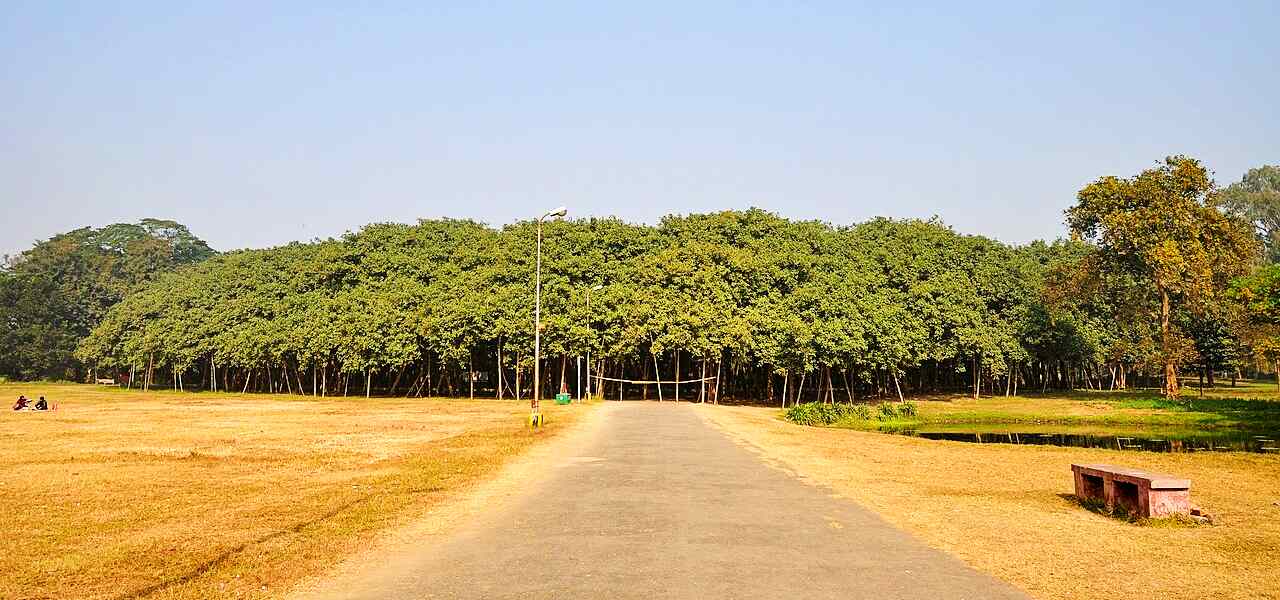
It’s actually a massive tree system that is 1476 feet in diameter, a network that has literally cloned itself and extended itself outward in every direction for 250 years.
What makes it look like one huge tree are all the aerial roots (those drop-down trunks) that have sunk into the earth over the centuries and look a little like pillars holding up the roof of a great cathedral. More than 3500 of these trunk-roots hold the massive canopy up and give the appearance, from a distance at least, of one massive tree that I’m sure would make the Elves of Tolkien’s Mirkwood very happy.
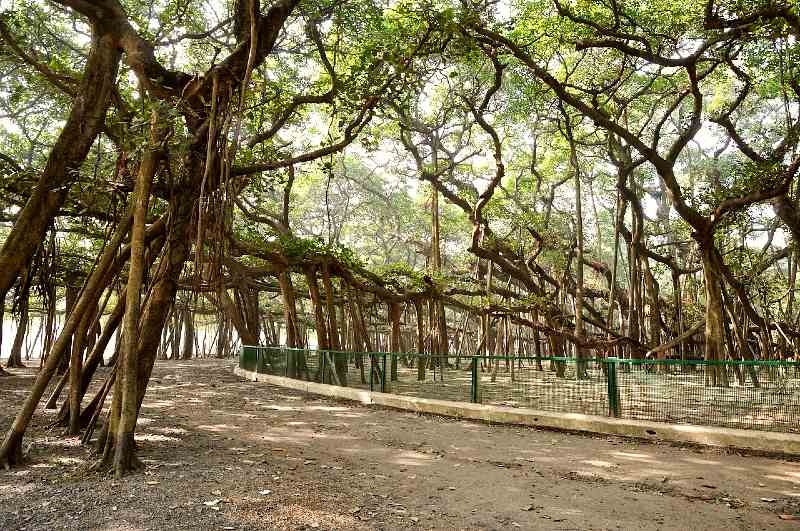
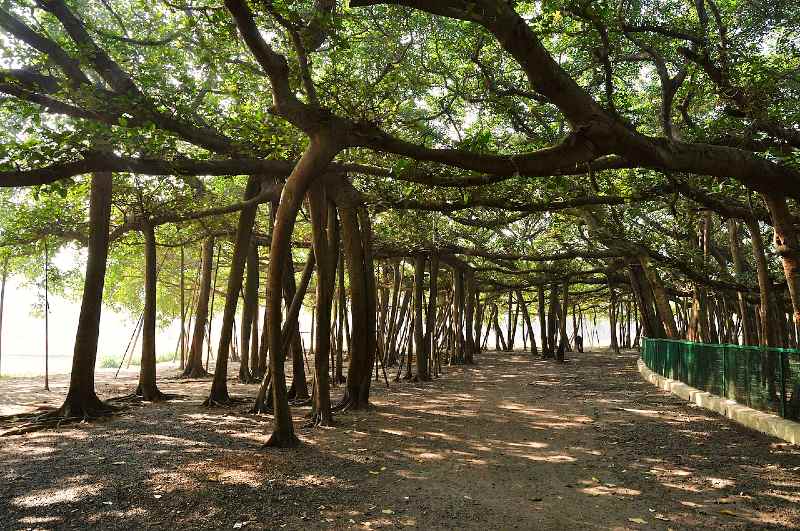
Note the wide pathway underneath the branches. The Indian government created a road that spans the entire circumference, so tourists can literally drive their cars through and around the tree.
And there’s one more amazing thing about The Great Banyan. Believe it or not, this tree no longer has a trunk. You read that correctly.
The original 51-foot-diameter trunk was destroyed by cyclones and fungus sometime in the last century, and the massive tree now has no center. Its clonal root and branch system sustains it as the largest single living organism on planet earth. Amazing!
As I said, this dangerous beauty is a real survivor.
Other Beauties
The variety of these beautiful trees is equally impressive. Florida has a few doozies, and the state of Hawaii is home to several more amazing banyans in our country, but the trees in Asia and the Caribbean give us some good competition. Here are just a few examples among many.
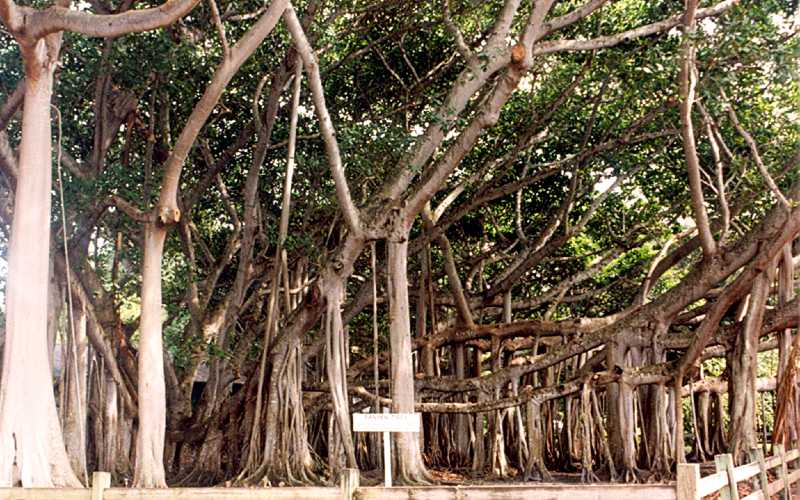
Thomas Edison Museum Ft. Meyers Florida
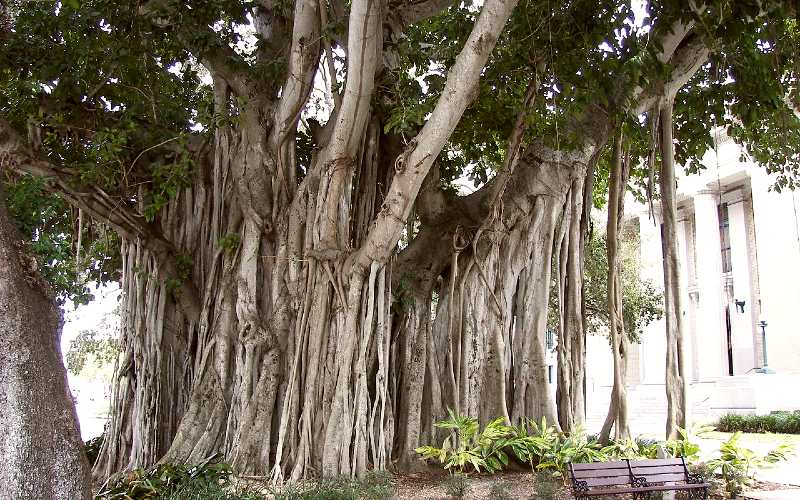
Lee County Courthouse Ft. Meyers Florida
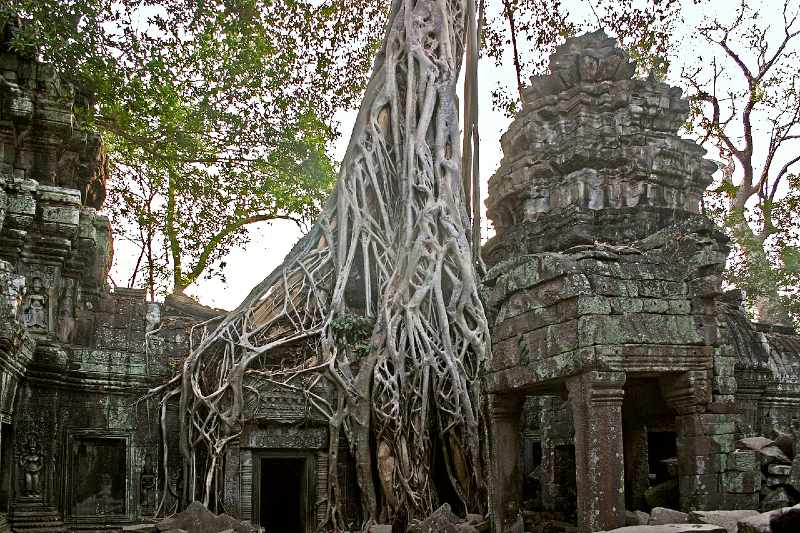
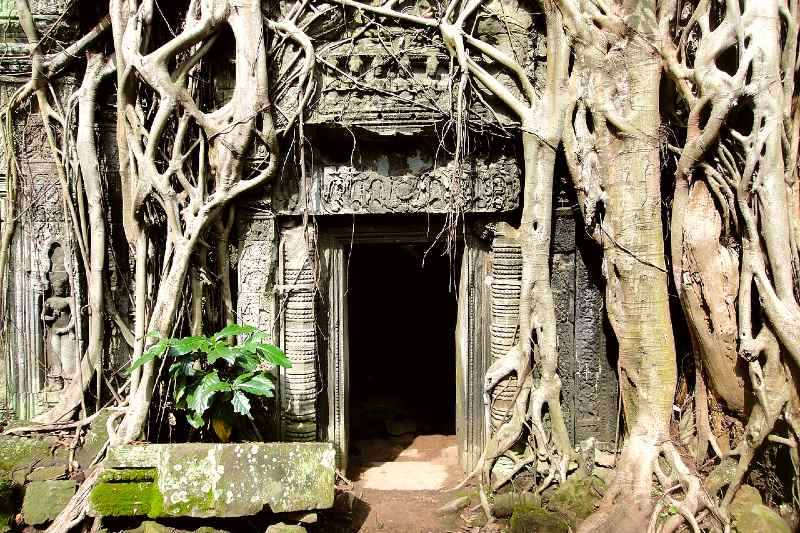
Ta Prohm Abandoned Buddhist Temple, Siem Reap, Cambodia
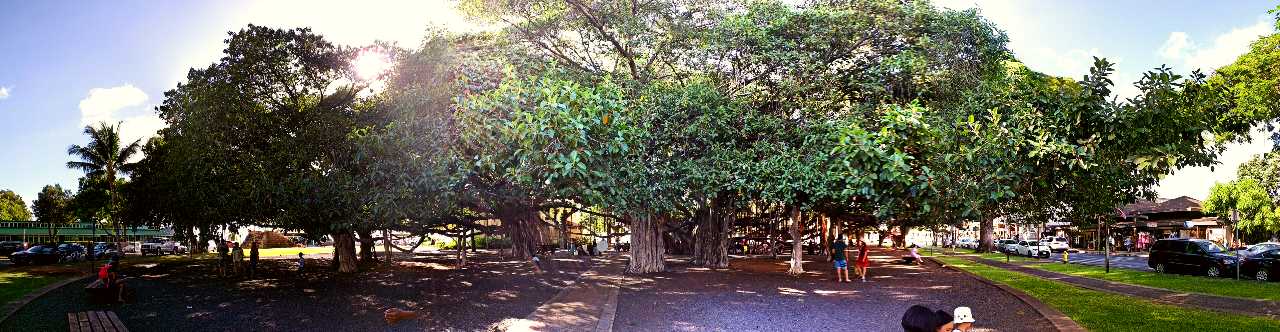
Lahaina, Hawaii
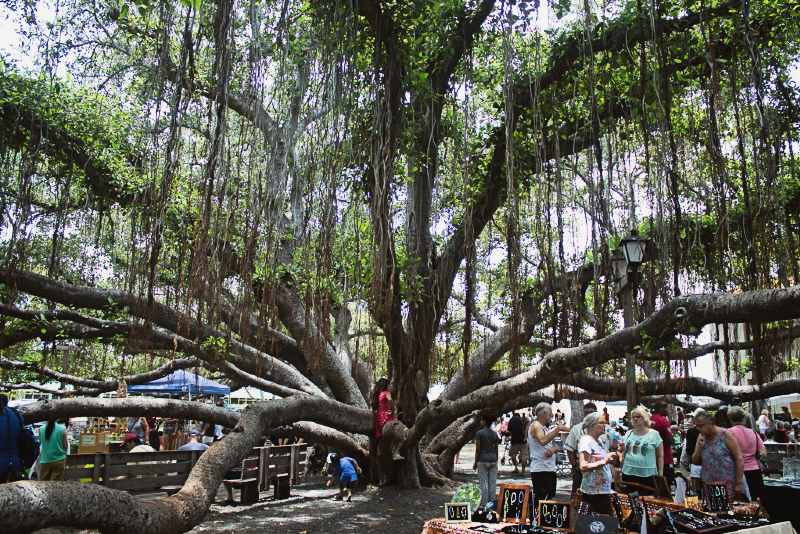
There are so many more to show, but the point is clear. Resiliency, survivability, durability, beauty, and a little bit of predatory strangling make the Banyan tree one of the most fascinating elements of God’s natural creation.
We can see the stark beauty of God’s own Mind in a creation like this. Let’s always remember that Nature is meant to be a book for us. If the book of Scripture gives us His divine revelation, the world manifests His natural revelation for those who have eyes to see Him as the Origin of all. The psalmist certainly had eyes to see it:
The heavens declare the glory of God; the firmament proclaims the works of his hands. (Ps 19:2)
I’ll end by noting that, theoretically, the banyans pose no danger to humans and could never strangle a member of our species—if for no other reason than that the process would take too long. (I have a sneaking suspicion they would if they could.)
But, apart from that, if you should ever decide to pick a fig from one of them, just make sure to look carefully at the fruit before you grab it. You could be in for a “stinging” experience.
———-
[Note: This article is a reproduction of the Sacred Windows Email Newsletter of 9/20/26. Please visit our Newsletter Archives.]
Photo Credits: Feature: Bermuda Tree @shutterstock; Great Banyan Kolkata (images by Biswarup Ganguly); Buddhist Temple (Gerd Eichmann and Romain Pontida); Thomas Edison Museum (Roger W from Sarasota); Strangler Fig (Shyamal); Courthouse Ft Myers (Wknight94); Fruits (Adityamadhav83); Lahaina (interior, Andym5855); Lahaina (panorama, mliu92 from San Mateo); Images of Ficus Aurea by Peter Darcy.




.jpg)


.jpg)
.jpg)
Leave A Comment